


NASA has launched one of the two climate satellites under PREFIRE (Polar Radiant Energy in the Far-InfraRed Experiment) mission.
- The PREFIRE Mission consists of two shoebox-size cube satellites, or CubeSats.
- The mission will measure how much heat the Arctic and Antarctica radiate into space and how this influences the planet’s climate.
- It will help scientists better understand the heat budget of the planet.
Heat Budget of the Earth
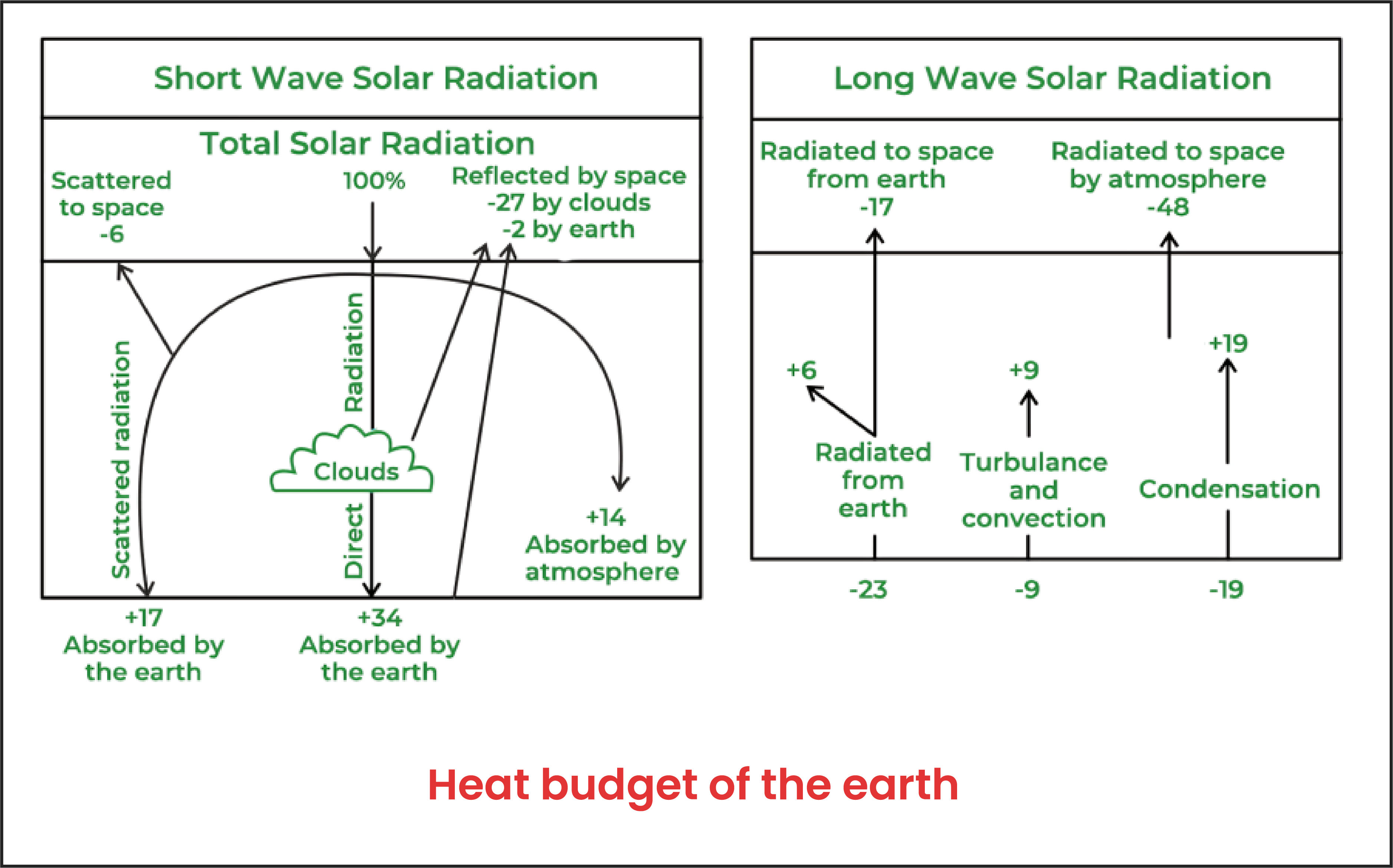
- It is the balance between the amount of heat incoming to Earth from the Sun and the amount of heat outgoing from Earth into space.
- Factors responsible for the disturbance of heat budget are Green House Gases emissions, reduction in thickness of the ozone layer, melting of glaciers etc.
Impact of imbalance of Heat budget
- Heat gets accumulated in Earth’s components like the atmosphere, land, etc which is fuelling global warming.
- Melting of ice causes a decrease in Earth's white surface area, leading to less solar energy to be reflected (lower albedo).
- Albedo is the reflectivity of solar radiation from a surface.
- Ocean absorbs excessive heat affecting the Oceanic Circulation like Atlantic Meridional Overturning Circulation.

