The report titled “India’s Data Imperative: The Pivot Towards Quality” highlights that over the past decade, India has emerged as a global leader in digital public infrastructure.
- As per the report, as India enters the next phase of its digital journey, the focus must shift from merely scaling to prioritising quality data.
- Quality data consists of six core attributes—accuracy, completeness, timeliness, consistency, validity, and uniqueness.
Why Quality Data is Needed for Governance?
- Fortify digital governance: High-quality data powers efficient digital platforms, such as UPI and Aadhaar, and ensures the smoother delivery of government services.
- Prevent Wastage: Errors or duplicate entries can inflate welfare budgets by 4–7% annually.
- Cultivate public trust: Poor data leads to incorrect targeting, delays, and citizen frustration. Quality data avoids such mismatches, and rejected claims.
Pervasive Challenges in Leveraging Quality Data for Governance
- Faulty Data Capture: Field programs often prioritise speed over correctness, resulting in a culture where 80% accuracy is considered “good enough.”
- Fragmented Data Storage: Some systems utilise modern cloud tools, but many rely on outdated databases that lack audit trails and a standardised structure.
- Inconsistent Data Sharing: Different departments employ varying formats and update schedules, resulting in slow and expensive data integration.
- Poor Archival Practices: Old, outdated records are rarely removed, cluttering systems, slowing performance, and increasing the risk of data leaks.
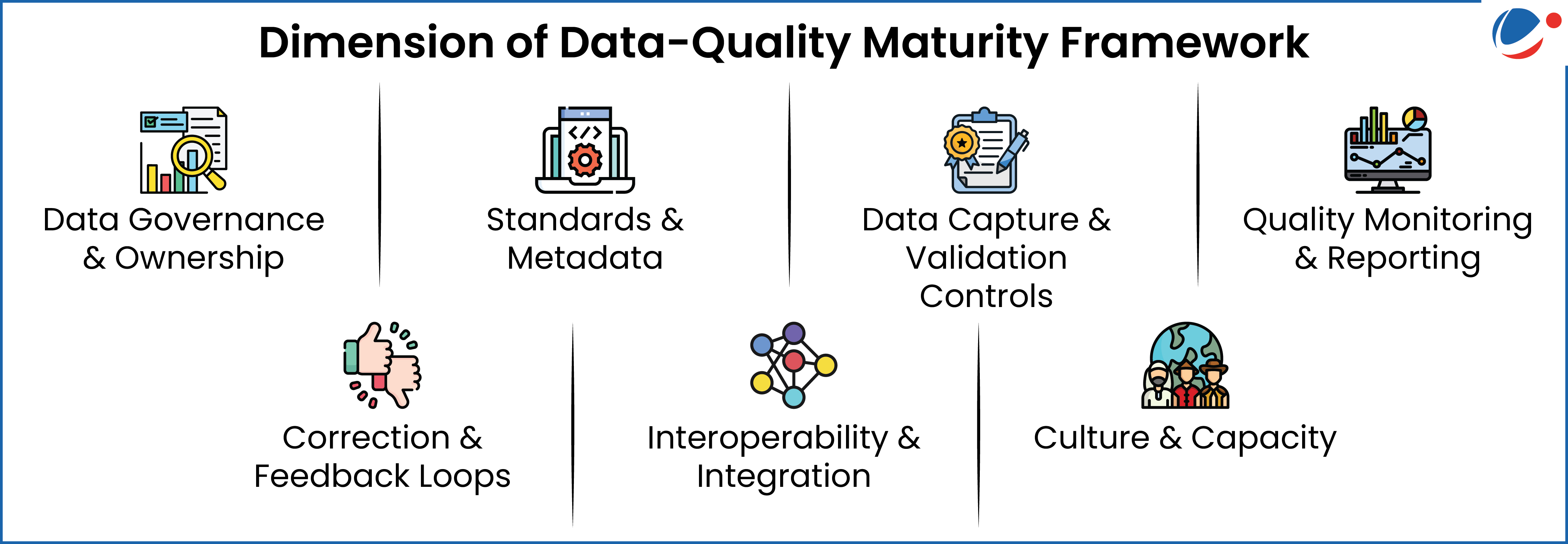
The report introduces a Data-Quality Scorecard to monitor and improve datasets, as well as a Data-Quality Maturity Framework (having seven dimensions, five levels of maturity) to help departments assess and upgrade their data systems.