


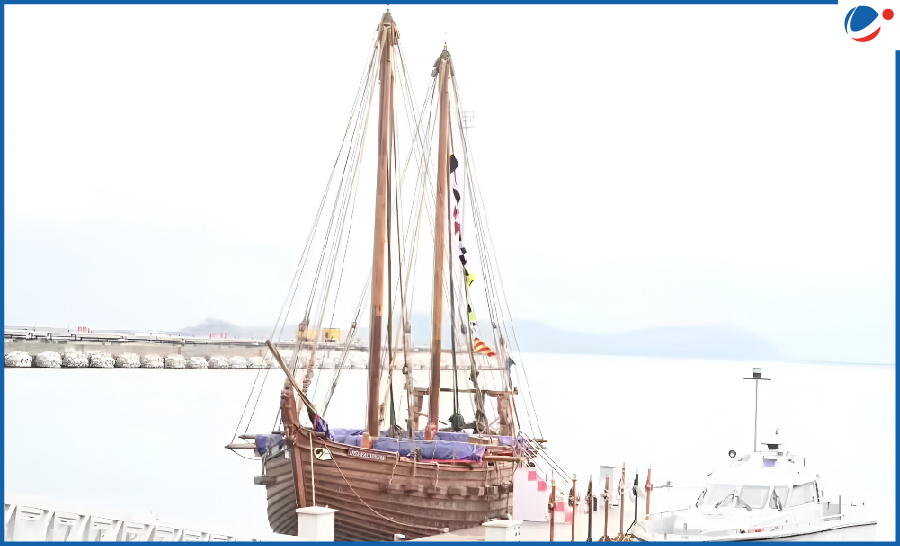
The Navy’s pioneering stitched sailing vessel built using traditional techniques (Tankai method), believed to date back to the 5th century CE has undertaken her maiden overseas voyage to Oman.
- The ship is named after Kaundinya, a legendary Indian mariner associated with voyages from India to Southeast Asia.
About INSV Kaundinya
- It is modeled primarily on ships depicted in the Ajanta cave paintings (cave no 17) as no original blueprints survive for such vessels.
- It has been built under a tripartite agreement project (2023) between Ministry of Culture, Indian Navy and Hodi Innovations (funded by the Ministry of Culture).
- Unlike modern naval vessels, Kaundinya has no engine, relying entirely on wind power through sails.
- Nature and Purpose of the Vessel: Although owned and operated by the Indian Navy, It is not a combat ship.
Tankai method
- It is a traditional Indian shipbuilding technique characterized by: no metal use, stitched wooden planks instead of nails, coir rope, coconut fibre, and natural resin as fastening and sealing material.
- In this method the hull is stitched first, internal ribs are added later, which gives the ship high structural flexibility, enabling it to absorb powerful ocean waves instead of cracking under pressure.
 Cultural Symbols on INSV Kaundinya
|

