


Revision was done with a view to expand access to research, innovation in startups, establish India as a manufacturing-led economy and hub for emerging technologies.
Key Provisions of Revised Framework
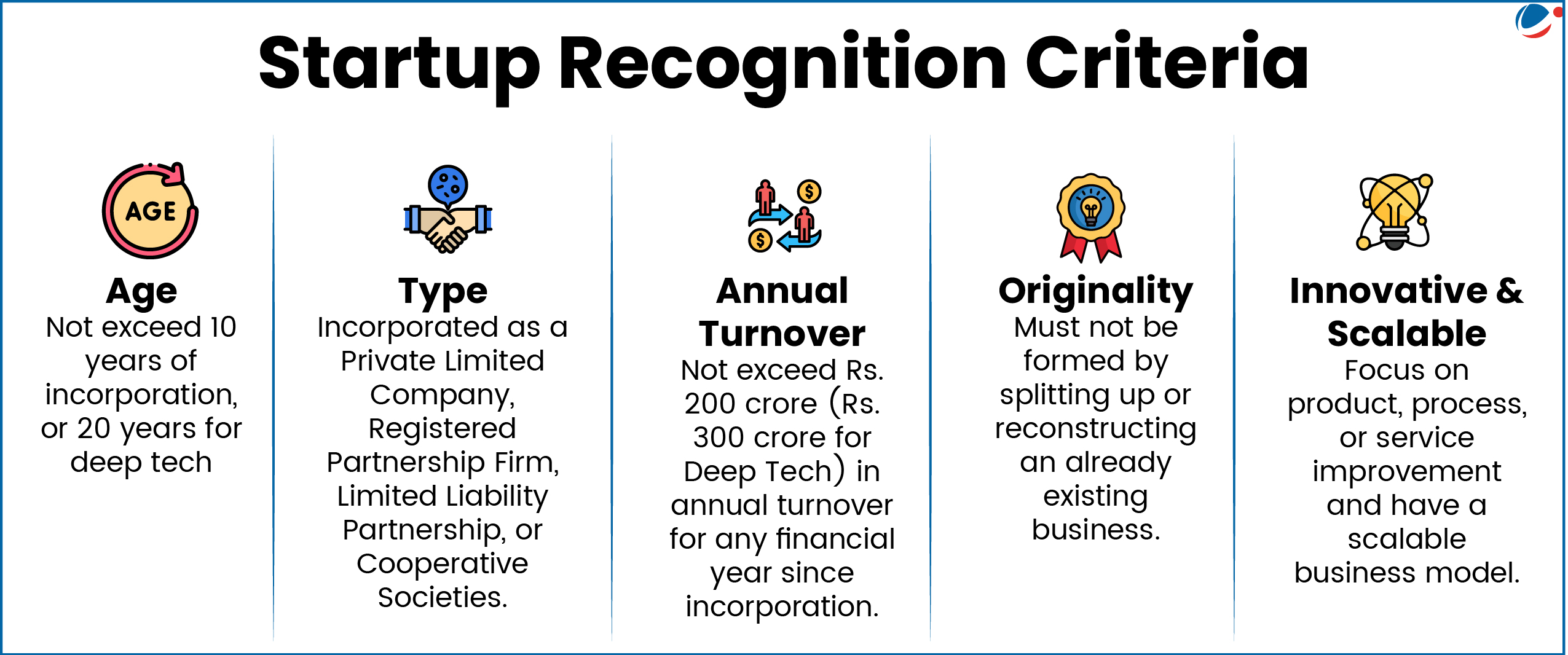
- Enhanced Turnover Threshold: Increased from ₹100 crore to ₹200 crore.
- Introduction of dedicated Deep Tech Startups Category: For entities working on cutting-edge and breakthrough technologies.
- This category has been accorded expanded eligibility criteria with age limit extended from 10 to 20 years from date of incorporation/registration, turnover limit enhanced to ₹300 crore.
- Inclusion of cooperative societies as eligible entities: Extended to both Multi-State Cooperative Societies (under Multi-State Cooperative Societies Act, 2002) and Cooperative Societies (under State and Union Territory Cooperative Acts).
Recognised Startups and Startups Ecosystem in India
- Recognised Startups: Startup granted official recognition by Department for Promotion of Industry and Internal Trade (DPIIT), based on eligibility criteria notified from time to time.
- Benefits of a Recognised Startup: Not required to include cash flow statement with financial statements; 100% tax exemption on profits for three years under Income Tax Act 1961; etc.
- Status in India: Over 2 lakh DPIIT-recognised startups (December 2025), with around 50% of originating from Tier-II and Tier-III cities.
- Key Initiatives for Startup Support: Startup India Initiative; Atal Innovation Mission (AIM); GENESIS (Gen-Next Support for Innovative Startups); NIDHI (National Initiative for Developing and Harnessing Innovations), etc.



