


Atlas provides global, regional and national estimates of rising obesity among children and adolescents.
- Obesity is classified by the World Health Organization (WHO) as a chronic, relapsing disease characterising abnormal or excessive fat accumulation that presents a risk to health.
- Its diagnosis is made by measuring people’s weight and height and by calculating the Body Mass Index (BMI): weight (kg)/height² (m²).
- For school-age children (aged 5-19 years), obesity is greater than 2 standard deviations above the WHO Growth Reference median.
Key Highlights of the Report
Global Scenario
- Obesity: Prevalence of obesity among school-age children (aged 5-19 years) has increased from 4% in 1975 to nearly 20% in 2022.
- The majority resides in middle-income countries.
- Implications: Obesity in childhood frequently persists into adulthood, increasing the risk of Non-Communicable Diseases (NCDs) such as diabetes, heart disease, and certain cancers.
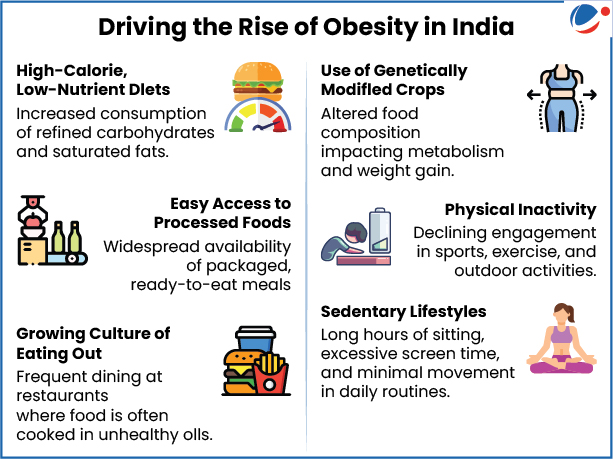
- High Burden Countries: Ten countries (with highest burden in China, India, and US) alone account for over 200 million school-age children with high Body Mass Index (BMI).
Indian Scenario
- High Burden: India ranks second globally for children who are overweight and living with obesity.
- 41 million school-age children in India have high BMI.
- High chronic disease indicators: In 2025, about 8.39 million children had BMI-attributed metabolic dysfunction-associated liver disease (MASLD), while 2.98 million suffered from BMI-attributed hypertension.



