
India developing three different types of Small Modular Reactors (SMRs): Union Minister | Current Affairs | Vision IAS

Upgrade to Premium Today

Start Now
MENU
Home
Quick Links

High-quality MCQs and Mains Answer Writing to sharpen skills and reinforce learning every day.

Watch explainer and thematic concept-building videos under initiatives like Deep Dive, Master Classes, etc., on important UPSC topics.

A short, intensive, and exam-focused programme, insights from the Economic Survey, Union Budget, and UPSC current affairs.

ESC

In Summary

  • India is developing three SMR models: BSMR 200 MWe (PWR, SEU fuel, Tarapur), SMR-55 MWe (PWR, modular, Tarapur), and 5 MWth HTGR (hydrogen generation, Vizag).
  • SMRs offer modularity, scalability, and enhanced safety with passive features, supporting India's Nuclear Energy Mission for five operational SMRs by 2033 and 100 GW capacity by 2047.
  • The SHANTI Act, 2025, aims to modernize India's nuclear legal framework to support this nuclear energy expansion.

In Summary

SMRs are miniaturised versions of large nuclear power plants, producing nuclear energy up to 300 MWe per module, about one-third of traditional nuclear power reactors (IAEA). 

SMRs of India

  • While SMRs are an entirely new concept, Bharat Small Reactors (BSRs) are based on India's existing PHWR (Pressurized Heavy Water Reactor) technology.
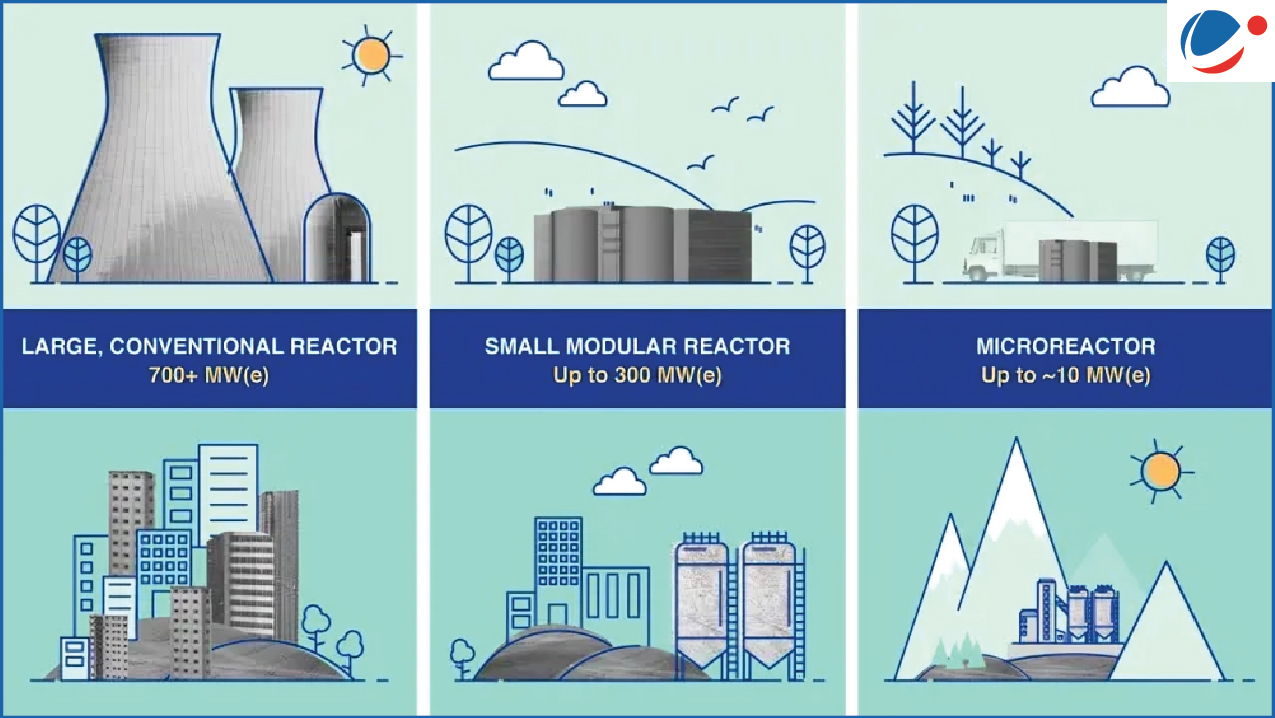
  • 3 SMRs models being developed by Department of Atomic Energy (DAE): 
    • Bharat Small Modular Reactor (BSMR) 200MWe: Indigenously developed by Bhabha Atomic Research Centre (BARC) (unit of DAE and Nuclear Power Corporation of India Limited (NPCIL).
      • Based on PWR technology; slated to utilise Slightly Enriched Uranium (SEU) as fuel to be constructed at Tarapur Atomic Power station site, Maharashtra.
    • SMR-55MWe: Also modelled on PWR technology, featuring a block-type, highly modular design to be constructed at Tarapur.
    • Up to 5 MWth High temperature gas cooled reactor: Meant for hydrogen generation to be constructed at BARC Vizag, Andhra Pradesh.

Significance of SMRs for India

  • Modular: Can be manufactured in factory parts and assembled at designated site reducing gestation period and bringing economies of scale. 
  • Scalability: Deployed Incrementally as per increased energy demand. 
  • Safer: Inherent and passive safety features entailing no human intervention to shut down the system. 
  • Others: Low carbon energy; cater to higher energy demand in the wake of rise Artificial Intelligence, etc. 

India’s Nuclear Push

  • Nuclear Energy Mission: Announced in Union Budget 2025–26 focused on research and development (R&D) of  SMRs aiming to develop at least five indigenously designed and operational SMRs by 2033.
  • Nuclear Energy Target: 100 GW nuclear power capacity by 2047
  • SHANTI Act, 2025: Consolidating and modernising India’s nuclear legal framework.
Watch Video News Today

Explore Related Content

Discover more articles, videos, and terms related to this topic

RELATED VIDEOS

1
News Today (Dec 19, 2025)

News Today (Dec 19, 2025)

YouTube HD

RELATED TERMS

3

SHANTI Act, 2025

A comprehensive umbrella law governing India's nuclear power sector, replacing previous legislation. It aligns with international nuclear commerce norms and permits both public and private entities to establish nuclear power plants and engage in related activities, including the transport, storage, and export of nuclear materials.

Nuclear Energy Mission

A government initiative focused on advancing nuclear energy research and development, particularly in the area of Small Modular Reactors (SMRs), with specific targets for operational SMRs by a set date.

MWth

Megawatt thermal. A unit of thermal power, often used to describe the heat output of reactors, particularly those designed for non-electricity generation purposes like hydrogen production.

Title is required. Maximum 500 characters.

Search Notes

Filter Notes

Loading your notes...
Searching your notes...
Loading more notes...
You've reached the end of your notes

No notes yet

Create your first note to get started.

No notes found

Try adjusting your search criteria or clear the search.

Saving...
Saved

Please select a subject.

Referenced Articles

linked

No references added yet
