
India inducts 3rd Nuclear-Powered Submarine ‘INS Aridaman’ | Current Affairs | Vision IAS

Upgrade to Premium Today

Start Now
MENU
Home
Quick Links

High-quality MCQs and Mains Answer Writing to sharpen skills and reinforce learning every day.

Watch explainer and thematic concept-building videos under initiatives like Deep Dive, Master Classes, etc., on important UPSC topics.

A short, intensive, and exam-focused programme, insights from the Economic Survey, Union Budget, and UPSC current affairs.

ESC

In Summary

  • INS Aridaman, an advanced SSBN, enhances India's nuclear-powered submarine program, initiated over 30 years ago with Russian assistance.
  • Nuclear-powered submarines complete India's nuclear triad, bolster strategic deterrence, and ensure a survivable second-strike capability under its No-First Use policy.

In Summary

Part of India's Arihant-class submarines, INS Aridaman is a more advanced ballistic missile submarine (SSBN) than its predecessors INS Arihant (2016) and INS Arighaat (2024).
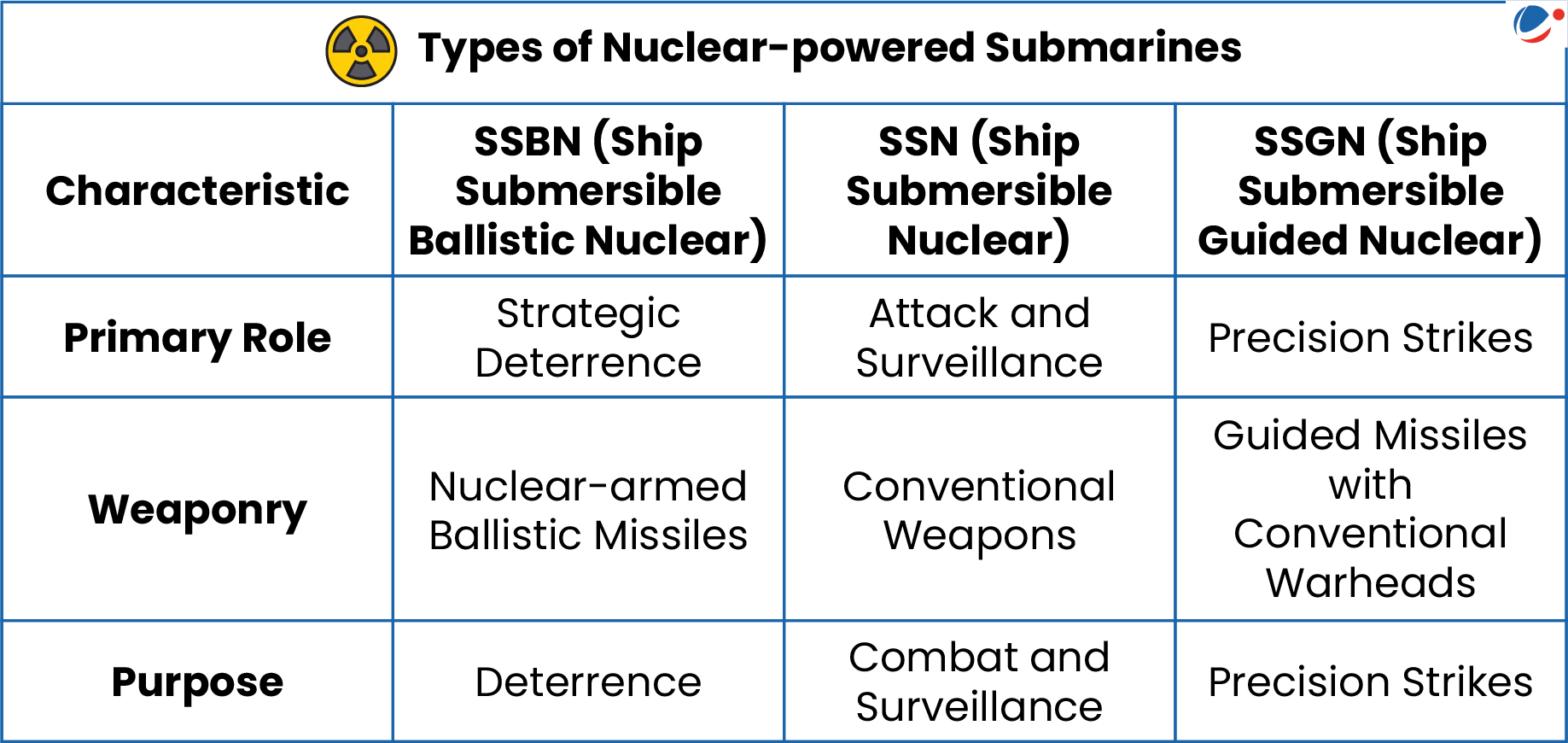
About India’s Nuclear Powered Submarine Programme

  •  The Advanced Technology Vessel (ATV) programme was initiated more than three decades ago, involving both private firms and the Defence Research & Development Organisation, with help from Russia.
  • It primarily focused on developing the ballistic missile submarines (SSBNs), which are nuclear propelled, and can carry multiple sets of submarine-launched ballistic missiles (SLBMs), tipped with single or multiple nuclear warheads. 
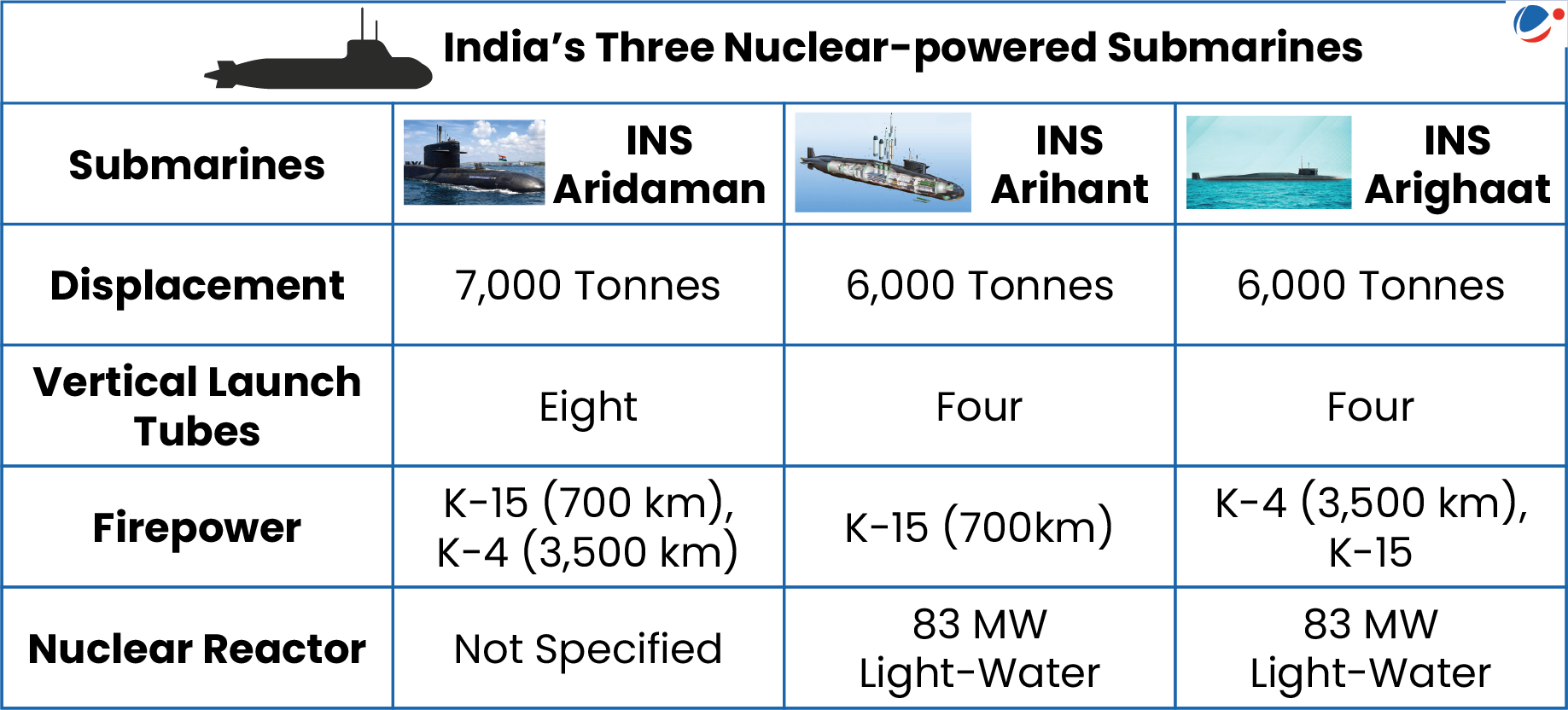
Significance of Nuclear Powered Submarines for India

  • Nuclear Triad Completion: The submarine cements India's position in the select group of nations (alongside the US, Russia, China, and France) capable of launching nuclear weapons from land, air, and sea.
  • Strategic Deterrence: Carries nuclear ballistic missiles, strengthening India’s deterrence against regional adversaries China and Pakistan.
  • Stealth & Endurance: Nuclear propulsion allows long underwater missions, making it highly survivable and hard to detect.
  • Extension of Nuclear doctrine: Showcases guarantee of India's second-strike capability with No-first Use policy.

Watch Video News Today

Explore Related Content

Discover more articles, videos, and terms related to this topic

RELATED VIDEOS

1
News Today (Aug 30, 2024)

News Today (Aug 30, 2024)

YouTube HD

RELATED TERMS

3

No-first Use policy

A declaration and policy by a nuclear-weapon state that it will not be the first to use nuclear weapons in a conflict. India adheres to this policy, emphasizing its defensive posture.

Second-strike capability

The ability of a nuclear power to respond to a nuclear attack by retaliating with its own nuclear weapons, even after suffering a first strike. This is a key element of strategic deterrence.

Strategic Deterrence

The capability of a nation to prevent an attack by maintaining a credible threat of retaliation. In the context of nuclear weapons, it aims to dissuade adversaries from launching a first strike.

Title is required. Maximum 500 characters.

Search Notes

Filter Notes

Loading your notes...
Searching your notes...
Loading more notes...
You've reached the end of your notes

No notes yet

Create your first note to get started.

No notes found

Try adjusting your search criteria or clear the search.

Saving...
Saved

Please select a subject.

Referenced Articles

linked

No references added yet