


The ₹48,000-crore project by Adani Power Limited will be the largest power plant in the northeast.
- It will comprise four units of 800 MW each and is scheduled to be commissioned in phases, beginning December 2030.
Significance of the Project
- Energy Security for the Northeast: Will reduce the power deficit in Assam and neighbouring states, helping turn the region into an energy exporter.
- Economic Stimulus: Acts as a catalyst for local industrialization, attracting ancillary industries, infrastructure growth, and service businesses.
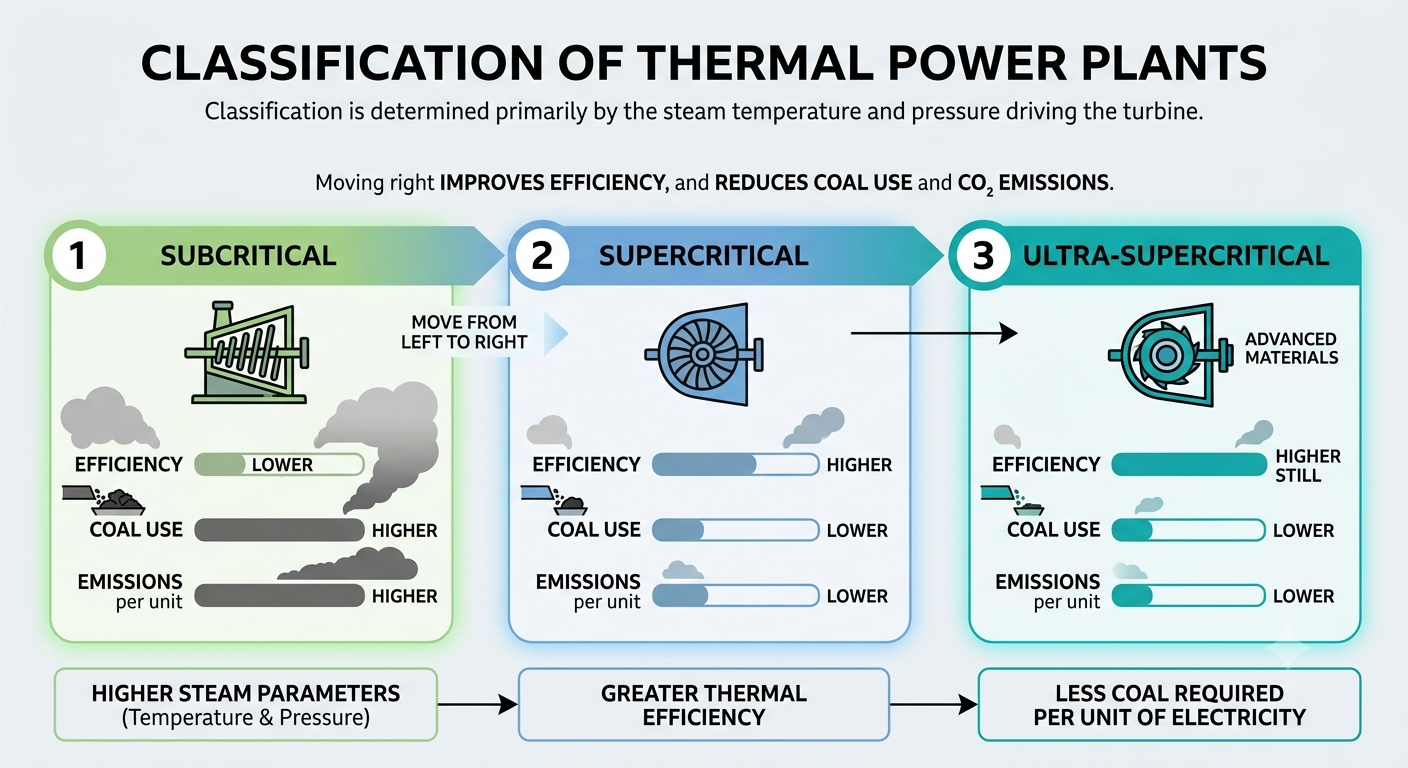
- Employment: It is expected to generate up to 20,000 jobs during construction and ~5,000 jobs once operational.
Thermal Power Plants (TPPs)
Benefits
- Reliable power: Provides round-the-clock, dispatchable electricity and grid stability.
- Energy Security with Coal: India is world's second-largest coal producer and consumer. Coal supports over 70% of India’s electricity generation.
- Economic growth: Reliable power supports industrialisation and economic activity.
Concerns
- Emissions: Coal combustion produces substantial CO₂, challenging decarbonisation. Ageing infrastructure reduces efficiency.
- Water & air pollution: High water use and pollutants such as SO₂, NOₓ and particulate matter affect ecosystems and health.
- Fly ash: Large quantities create storage and disposal challenges.
Conclusion
India’s thermal power sector must evolve through greater efficiency, modernisation of TPPs, using technologies, ensure emission compliance and integrate renewable energy to ensure reliable, sustainable energy security.

