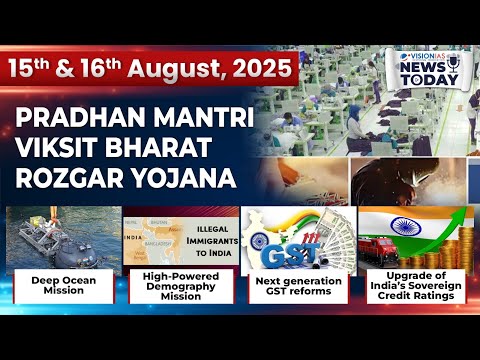
Impact of the GST Cut on Indian Economy
The Goods and Services Tax (GST) cut implemented on September 22 has been widely praised for its significant reduction in taxes on consumption items. Official estimates suggest a tax loss of Rs 1 trillion over the next 12 months. However, a detailed analysis using unit-level NSS 2022-23 consumption data reveals a much larger potential loss.
Analysis of GST Tax Rates
- Pre-reform effective GST tax-rate: 11%
- Post-reform effective GST tax-rate: 6.2%
- The reduction results in a projected tax loss of Rs 10 trillion, far exceeding the experts’ Rs 1 trillion estimate.
Methodology
The analysis involved matching household-level consumption data from NSS 2022-23 with pre- and post-GST tax rates for 364 consumption items across 37 categories. The effective tax rate (ETR) was calculated based on these data.
Progressive Impact of Tax Cut
- Food: ETR declines from 9.5% to 3.4%
- Education and Medical Expenditures: ETR declines from 12.4% to 4.8%
- Household Services: ETR declines from 39.5% to 11.3%
Future Projections
Assuming constant consumption patterns, the projected tax collections for 2025-26 with the new effective GST rate of 6.2% will be around Rs 13 trillion, resulting in a Rs 10 trillion loss.
Experts vs. Analysis
Experts argue for minimal loss due to increased consumption and compliance, potentially yielding higher revenues. However, this analysis predicts only a modest increase in GST revenue by Rs 0.31 trillion, resulting in net collections of Rs 14.3 trillion, still Rs 9 trillion less than government estimates.
Economic Implications
- The GST cut is not seen as a bad policy move as it addresses the high tax-to-GDP ratio, which is a constraint on growth.
- India’s tax-GDP ratio is approximately 18-19%, compared to 13% in East Asian economies and 15% in China.
- The GST and income tax cuts could reduce India’s tax-GDP ratio to around 15.5-16.5%, aligning it closer to China’s.
Policy Recommendations
For sustained growth and achieving the vision of Viksit Bharat, the government should pursue trade, tariff, and investment reforms alongside minimal government intervention.