


Nobel Peace Prize 2024 has been awarded to Japanese organization Nihon Hidankyo for its efforts to achieve a world free of nuclear weapons.
- It is a grassroots movement of atomic bomb survivors from Hiroshima and Nagasaki
About Nobel Peace Prize
- Awarded to those who worked for "fraternity between nations, for abolition/reduction of standing armies and holding & promotion of peace congresses".
- In 2017 it was awarded to International Campaign to Abolish Nuclear Weapons (ICAN) for its ground-breaking efforts for Treaty on the Prohibition of Nuclear Weapons (adopted by UN in 2017).
Article Sources
1 sourceThe Union Minister inaugurated India’s first Demonstration Facility for Biopolymers in at Jejuri in Pune (Maharashtra).
- It is a pioneering effort in developing indigenously integrated technology for the production of Polylactic Acid (PLA) bioplastic.
About Biopolymer
- Biopolymers are materials that have been manufactured from biological sources like fats, vegetable oils, sugars, etc.
- Advantages over Synthetic Polymer
- Biodegradation: Decomposition is easily done by bacteria in soil environment.
- Carbon neutrality: CO2 released when biopolymers degrade can be reabsorbed by crops grown to replace them.
Article Sources
1 sourceAuroras were captured at India’s highest observatory in Hanle, Ladakh.
About Aurora
- They are Multicoloured lights that appear in the upper atmosphere (ionosphere).
- They are common occurrences at high northern and southern latitudes, less frequent at mid-latitudes, and seldom seen near the equator
- Aurora in Northern Hemisphere is called aurora borealis and in Southern Hemisphere it is called aurora australis.
- Caused by the interaction of solar wind with oxygen and nitrogen gas in atmosphere.
- They are a spectacular sign that our planet is electrically connected to the Sun.
Cabinet Committee on Security (CCS) has reportedly approved Phase III of SBS initiative.
- It will include launching various AI-powered spy satellites over five years to improve surveillance.
- It will support the specific operations and missions of the three-armed services.
About SBS
- SBS capability is crucial for monitoring man-made objects in orbit.
- SBS operates continuously regardless of weather, time of day, or atmospheric conditions that can hinder ground-based systems.
- 1st phase of SBS was launched in 2001 and 2nd phase was launched in 2013.
Recently, a Kerala man was diagnosed with the bacterial disease murine typhus.
About Murine Typhus
- Also known as endemic typhus, flea-borne typhus or flea-borne spotted fever.
- Disease Distribution: Occurs worldwide, primarily in tropical and subtropical climates where rats and rat fleas are present.
- Caused by: Flea-borne bacteria Rickettsia typhi.
- Transmission to Humans: When infected flea feces come into contact with cuts or scrapes in skin.
- Transmission can also happen through exposure of mucous membranes to infected flea feces.
- Murine typhus is not spread from one person to another, or from person to fleas.
- Symptoms: Include fever, chills, headache, and rash.
Article Sources
1 sourceA new type of drone called “dragon drone” has been used in the recently Russia-Ukraine war.
Dragon Drones
- It is a type of unmanned aerial vehicle that can release a substance called thermite which is a mixture of aluminum and iron oxide.
- Thermite: When ignited, it produces a self-sustaining reaction that makes it almost impossible to extinguish.
- Thermite was used in both the world wars. On humans, it causes severe, possibly fatal, burns and bone damage.
- Thermite isn't banned internationally, but using incendiary weapons in civilian areas is prohibited by the UN's Convention on Certain Conventional Weapons.
Article Sources
1 sourceRecently, researchers identified people with an undiagnosed rare genetic disorder using data from a biobank.
About Biobanks:
- It is a repository of biological samples, such as blood, DNA, cells, tissues, and/or organs alongside their genetic data.
- These samples are collected from consenting individuals and intended for use in research to store biological data from publicly funded research.
- Previously ‘Indian Biological Data Bank’ has been set up at Regional Centre for Biotechnology in Faridabad.
- Issues with Biobanks: This include uninformed consent, withdrawal rights, privacy, and data protection.
- India’s regulation of biobanks is inconsistent with no law to protect the rights of individuals.
Indian suppliers are third largest provider of organization’s health and nutrition support to children globally.
About UNICEF:
- Genesis: Created in 1946 by UN General Assembly
- HQ: New York, USA
- Mandate: Advocate for children’s rights, to help meet their basic needs and to expand their opportunities to reach their full potential.
- It works over 190 countries and territories to protect the rights of every child.
- It’s charged with supporting the Convention on the Rights of Child, a global human rights treaty for children.
- Funding: Entirely funded by voluntary contributions from governments, intergovernmental organizations, private sector etc.
- Publication: State of World’s Children
- In 1965 UNICEF was awarded the Nobel Prize.
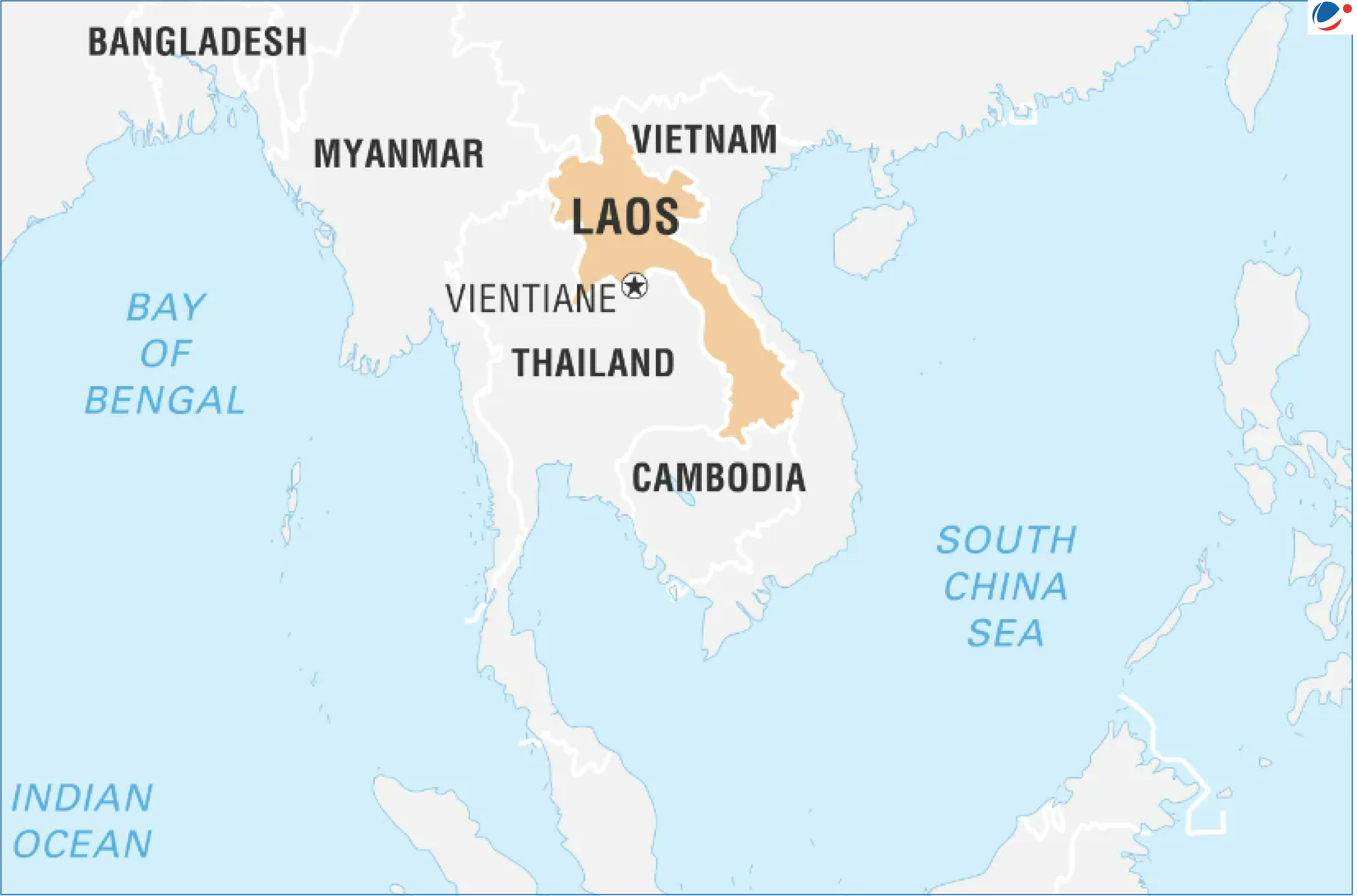
Prime Ministers of India and Lao PDR held bilateral talks on the sideline East Asia Summit.
Key highlights
- Restoration of Vat Phou UNESCO site by the Archaeological Survey of India (ASI).
- Three Quick Impact Projects (QIPs) under the Mekong-Ganga Cooperation which include:
- Preservation of heritage of Lao Ramayan;
- Restoration of Wat Pakea Buddhist temple;
- Support to shadow puppetry theatre on Ramayan.
- India will provide a grant of $1 million for Lao PDR nutrition security with food fortification through the India-UN Development Partnership Fund, marking its first Southeast Asian project.


