


“The World Heart 2025: Obesity and Cardiovascular Disease report” published by World Heart Federation highlighted the rising prevalence of obesity and gaps in access to treatment worldwide.
Key Observations
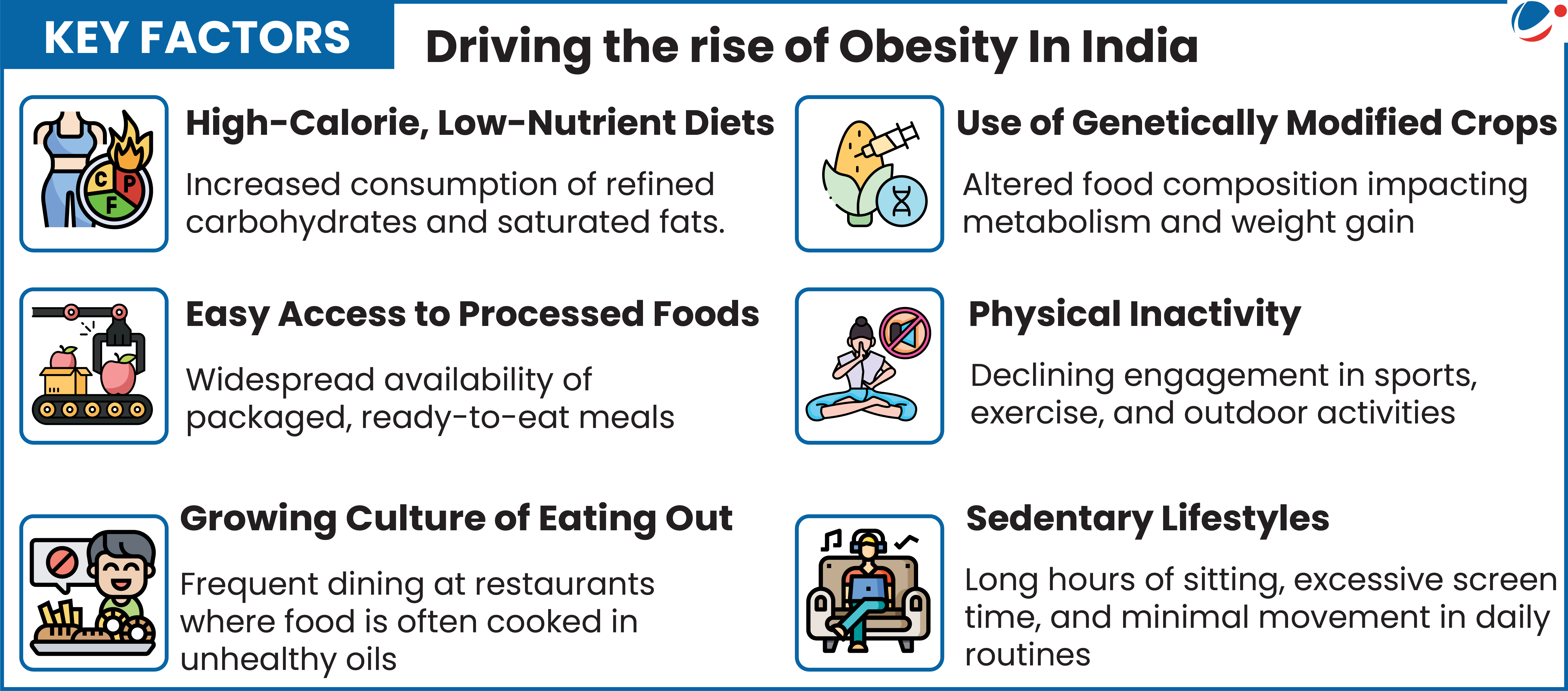
- Obesity in adults globally has quadrupled since 1990: In 2022, 878 million adults lived with obesity, compared with 194 million in 1990 due to various factors (refer image).
- Future threat: As per current trends, nearly 2/3rd adults (over 25 years) could be overweight/ obese by 2050.
About Obesity
- Obesity is defined as an abnormal or excessive fat accumulation that presents a risk to health. The commonly used metric to classify obesity is Body Mass Index (BMI), where a BMI of 25 or above is considered overweight, and a BMI of 30 or above is classified as obese. (WHO)
- BMI is calculated by dividing a person's weight in kilograms by their height in meters squared (kg/m²).
- Overall, 24% of Indian women and 23% of Indian men are obese. (NFHS-5)
Key recommendations
- System-level interventions: Policies that regulate food marketing, tax sugary drinks, subsidise healthy food options, etc.
- Medication: Governments should increase efforts to expand the availability and affordability of obesity medications, such GLP-1RAs.
- Other: Lifestyle intervention, dietary modifications, Cardiovascular guidelines should incorporate obesity-specific recommendations, etc.


