
Wildlife Institute of India(WII) releases its 1st Pan-India Assessment and Monitoring of Endangered Species (Vultures) | Current Affairs | Vision IAS
MENU
Home

Periodically curated articles and updates on national and international developments relevant for UPSC Civil Services Examination.

Quick Links

High-quality MCQs and Mains Answer Writing to sharpen skills and reinforce learning every day.

Watch explainer and thematic concept-building videos under initiatives like Deep Dive, Master Classes, etc., on important UPSC topics.

ESC

In Summary

The WII's first nationwide vulture assessment highlights declining populations, geographic contraction, reliance on protected areas, and threats like habitat loss and poisoning, emphasizing the need for urgent conservation actions.

In Summary

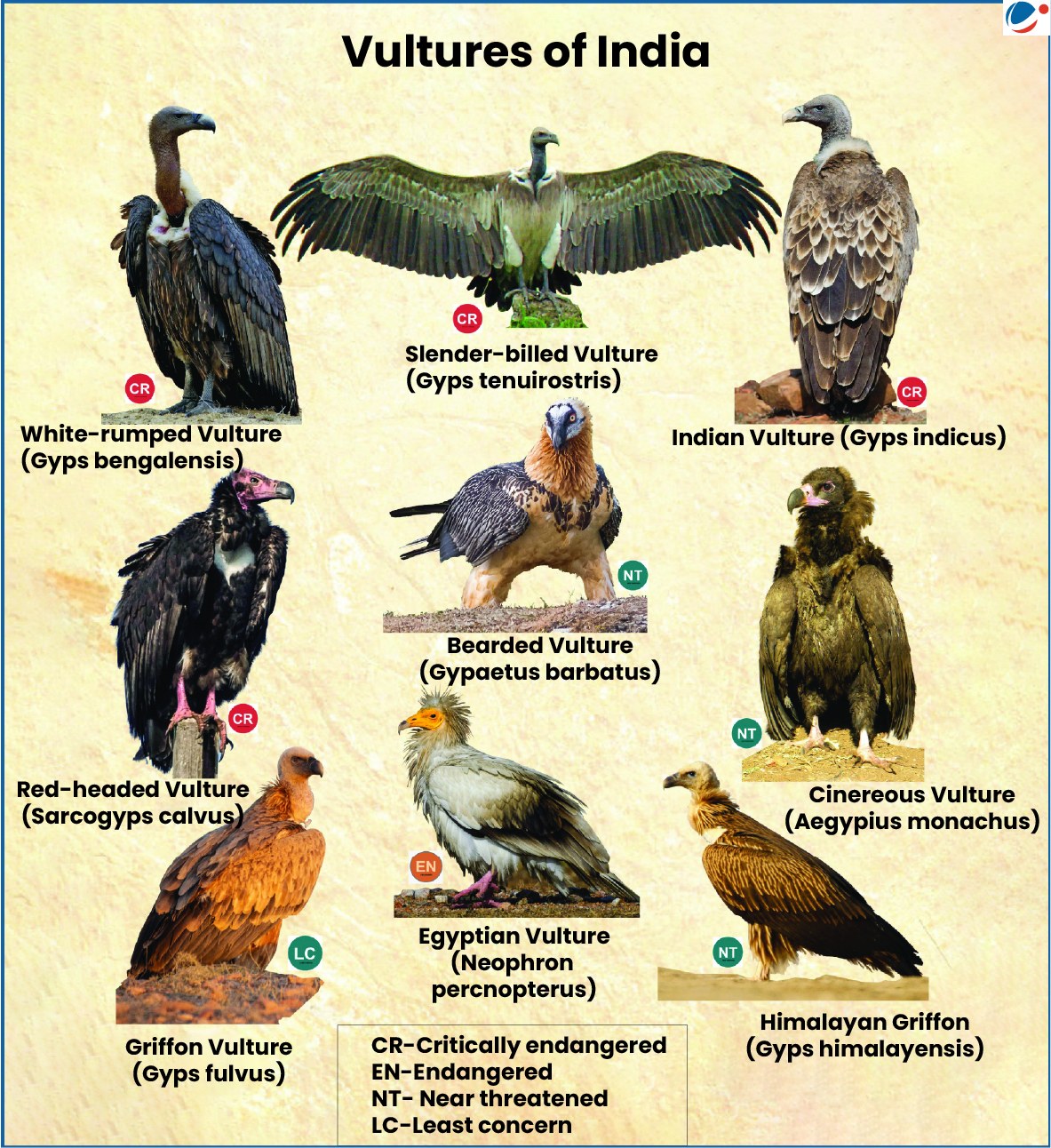
This first nationwide assessment estimated breeding adult populations focusing on four Critically Endangered species i.e., the White-rumped, Indian, Slender-billed, and Red-headed vultures.  

Major Findings

  • Geographic Scope: The survey documented vulture presence at 216 sites across 17 states.
  • Contraction of Range: It revealed absence of nesting in nearly 70% of historical sites previously known across the country.
  • Dependence on Protected Areas (PAs): PAs hold 54% of all documented nests.
  • Species specific findings
    • Indian Vulture (Gyps indicus): Found mainly in Madhya Pradesh & Rajasthan (largest at Mukundra Hills); reliant on secure cliff sites
    • White-rumped Vulture (Gyps bengalensis): Concentrated in Kangra Valley, Himachal Pradesh
    • Slender-billed Vulture (Gyps tenuirostris): Breeding mostly in Upper Assam
    • Red-headed Vulture (Sarcogyps calvus): Found in Madhya Pradesh; depends on dense, undisturbed forests; population extremely low and fragmented.

Vultures

  • Large carrion-eating birds, mainly found in tropics and subtropics; 9 species in India.
  • Significance: Clean environment by consuming carcasses, controlling wildlife diseases.
  • Conservation Status: Protected under Schedule I, Wildlife Protection Act, 1972.
  • Threats: Habitat loss, food scarcity, diclofenac poisoning, electrocution.
  • Conservation Initiatives: Ban on diclofenac, ketoprofen, aceclofenac; Action Plan for Vulture Conservation (2020–25)
Watch Video News Today

Explore Related Content

Discover more articles, videos, and terms related to this topic

RELATED VIDEOS

2
Carbon Markets

Carbon Markets

YouTube HD
What is Artificial Rain? | Deep Dive With VisionIAS

What is Artificial Rain? | Deep Dive With VisionIAS

YouTube HD
Title is required. Maximum 500 characters.

Search Notes

Filter Notes

Loading your notes...
Searching your notes...
Loading more notes...
You've reached the end of your notes

No notes yet

Create your first note to get started.

No notes found

Try adjusting your search criteria or clear the search.

Saving...
Saved

Please select a subject.

Referenced Articles

linked

No references added yet