


An inscription engraved on a slab at the Sri Mahalakshmi Temple offers fresh insights into the 12th century, highlighting close ties.
About Hoysala Dynasty (10th to 14th Century)
- Region: Parts of Southern Deccan and Kaveri (Cauvery) River valley
- Capital: The initial capital was Belur, later shifted to Halebidu (also known by the name Dwarasamudra/ Dorasamudra).
- Founders: Nripa Kama II (started as a feudatory of the Western Gangas).
- Administration: The kingdom was divided into Nadus, Kampanas, Vishayas and Deshas (in descending order).
- The Sacred Ensembles of Hoysalas in Karnataka,
- These were declared as the 42nd UNESCO World Heritage Sites (WHS).
- Includes the temples of Chennakeshava (Belur), Hoysaleshwara (Halebidu), and Keshava (Somanathapur).
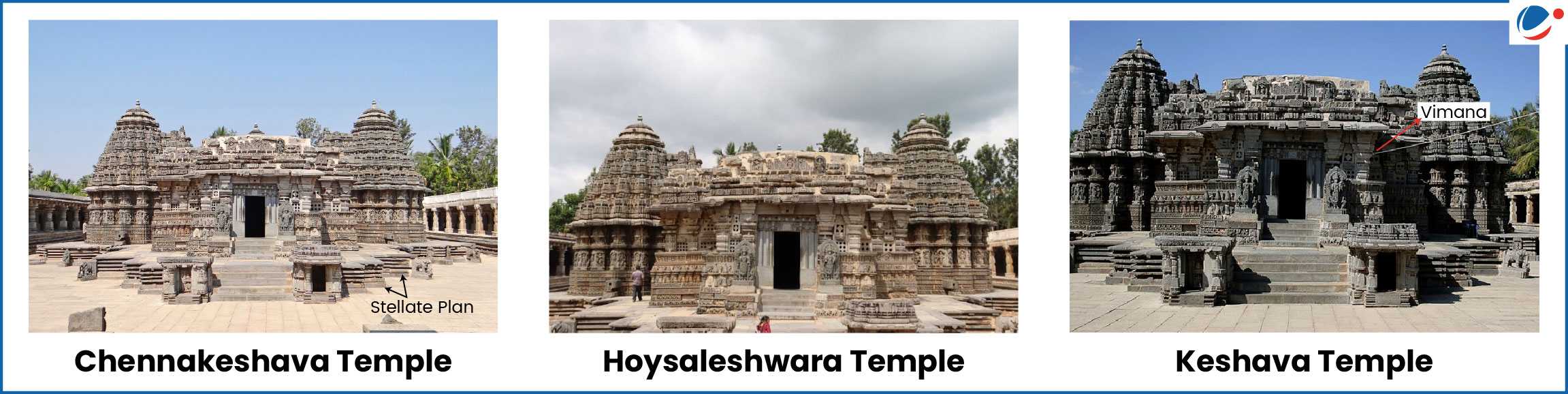
- Hoysala Architecture Style
- Followed the hybrid or Vesara temple style (Basic blend of Dravidian and Nagara style).
- Show a strong influence of ‘Bhumija’(a variety of North Indian shikhara).
- Style: Followed a stellate plan (looking like a star) built on a raised platform (adhisthana).
- Material used: Soapstone, which is soft and amenable to carving.
- Shrine types: Ekakuta (single sanctum), Dvikuta (double sanctum), Trikuta (triple sanctum) and Rare Panchakuta (five shrines)
- Followed the hybrid or Vesara temple style (Basic blend of Dravidian and Nagara style).


