


U.S. airstrikes on Iran under “Operation Epic Fury” have resulted in the killing of Iran’s Supreme Leader, Ayatollah Ali Khamenei, sharply escalating tensions in the Middle East.
- The strikes triggered Iranian retaliation through missile and drone attacks, sharply escalating regional tensions.
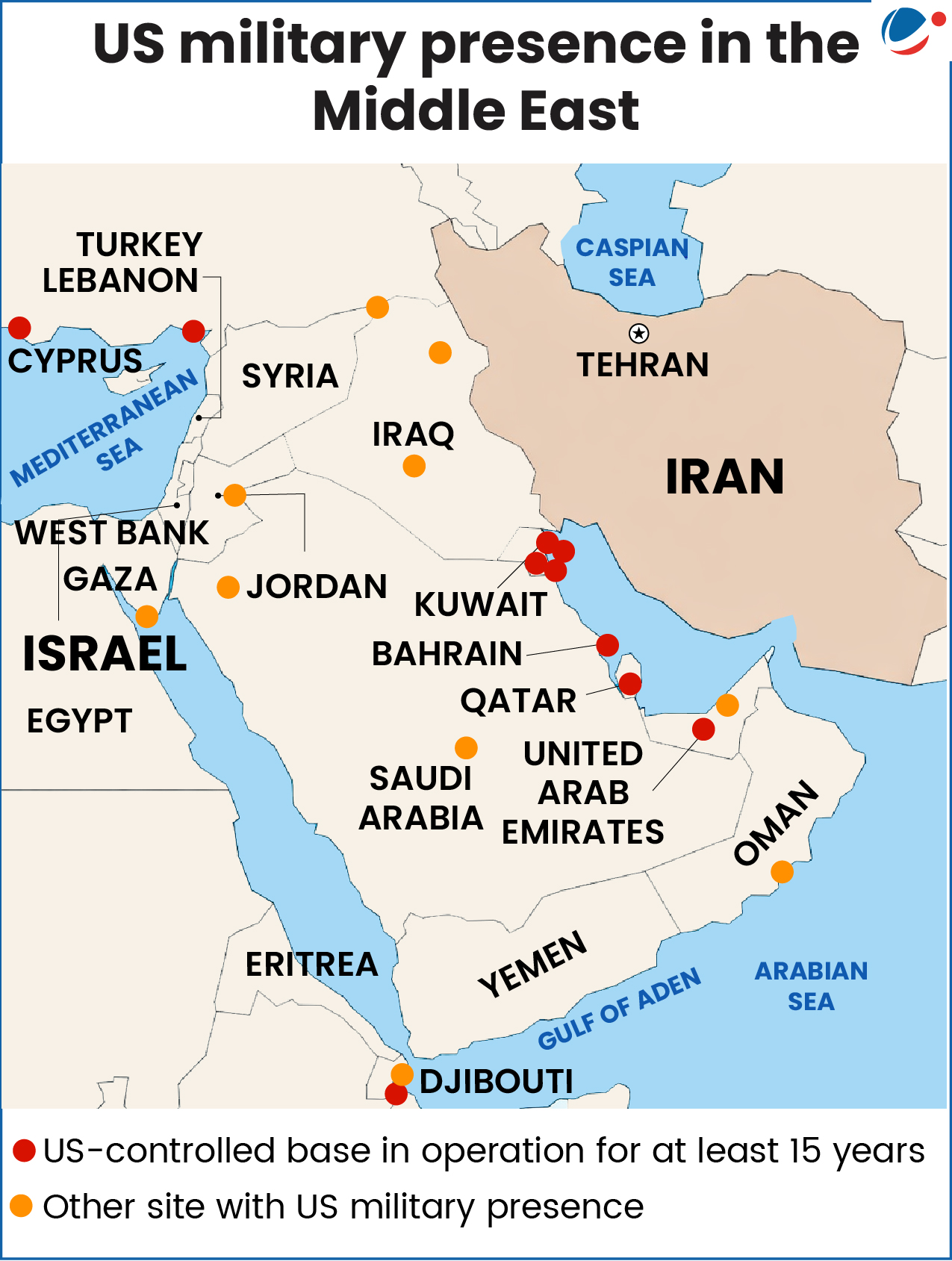
Background of the Current Escalation
- Post-1979 Hostility: U.S.–Iran relations have remained strained since the 1979 Islamic Revolution, marked by sanctions, diplomatic breakdowns and ideological rivalry.
- Nuclear Dispute: Escalation over Iran’s nuclear programme, especially after the U.S. withdrawal from the 2015 Joint Comprehensive Plan of Action (JCPOA) and the re-imposition of sanctions.
- Proxy Warfare & Regional Influence: Iran’s support to allied groups like Hamas and Hezbollah, etc., in Lebanon, Syria, Iraq and Yemen has expanded its regional footprint, raising security concerns for the U.S. and Israel.
Consequences of Conflict
- Regional Instability: Escalation increases the risk of a wider Middle East conflict. E.g., missile and drone strikes against U.S. military bases and allied locations across Gulf countries such as the UAE.
- Threat to Energy Security: E.g. Iran has effectively closed the strategic Strait of Hormuz, a critical maritime chokepoint through which 20% of the world's oil passes annually.
- Global Trade & Connectivity: Maritime insecurity in the Gulf can increase freight and insurance costs, disrupt key shipping lanes, and disturb global supply chains dependent on West Asian energy flows.
- Nuclear Escalation Risk: Conflict raises the risk of strategic miscalculation and potential nuclear escalation.
- Impact on India: India imports nearly 85% of its crude oil, with a significant share sourced from West Asia; rising oil prices can widen the current account deficit and fuel inflation.
- Additionally, around 8–9 million Indians live in the Gulf region, making diaspora safety, remittance stability, and potential evacuation major policy concerns.


