
Tropical Cyclones over Oceans Experiencing Marine Heatwaves far more Destructive: Study | Current Affairs | Vision IAS

Upgrade to Premium Today

Start Now
MENU
Home
Quick Links

High-quality MCQs and Mains Answer Writing to sharpen skills and reinforce learning every day.

Watch explainer and thematic concept-building videos under initiatives like Deep Dive, Master Classes, etc., on important UPSC topics.

A short, intensive, and exam-focused programme, insights from the Economic Survey, Union Budget, and UPSC current affairs.

ESC

In Summary

  • Marine Heat Waves (MHWs) are defined as sea surface temperatures rising 3-4°C above average for at least five days, doubling in frequency since 1982.
  • MHWs disrupt fish ecosystems, stress non-mobile species like corals, worsen algal blooms, and increase extreme weather events, including rapid intensification of Tropical Cyclones (TCs).
  • TCs, known as cyclones, hurricanes, or typhoons, form over oceans with sea temperatures above 27°C and require Coriolis force and upper divergence.

In Summary

Such a scenario resulted in 60% more billion-dollar disasters compared to those without heatwave influence. 

  • MHWs enhance maximum sustained wind speeds (up to 20% higher compared to non-MHW Tropical Cyclones (TCs)) and promote heavy precipitation (up to 12% higher) causing rapid intensification.
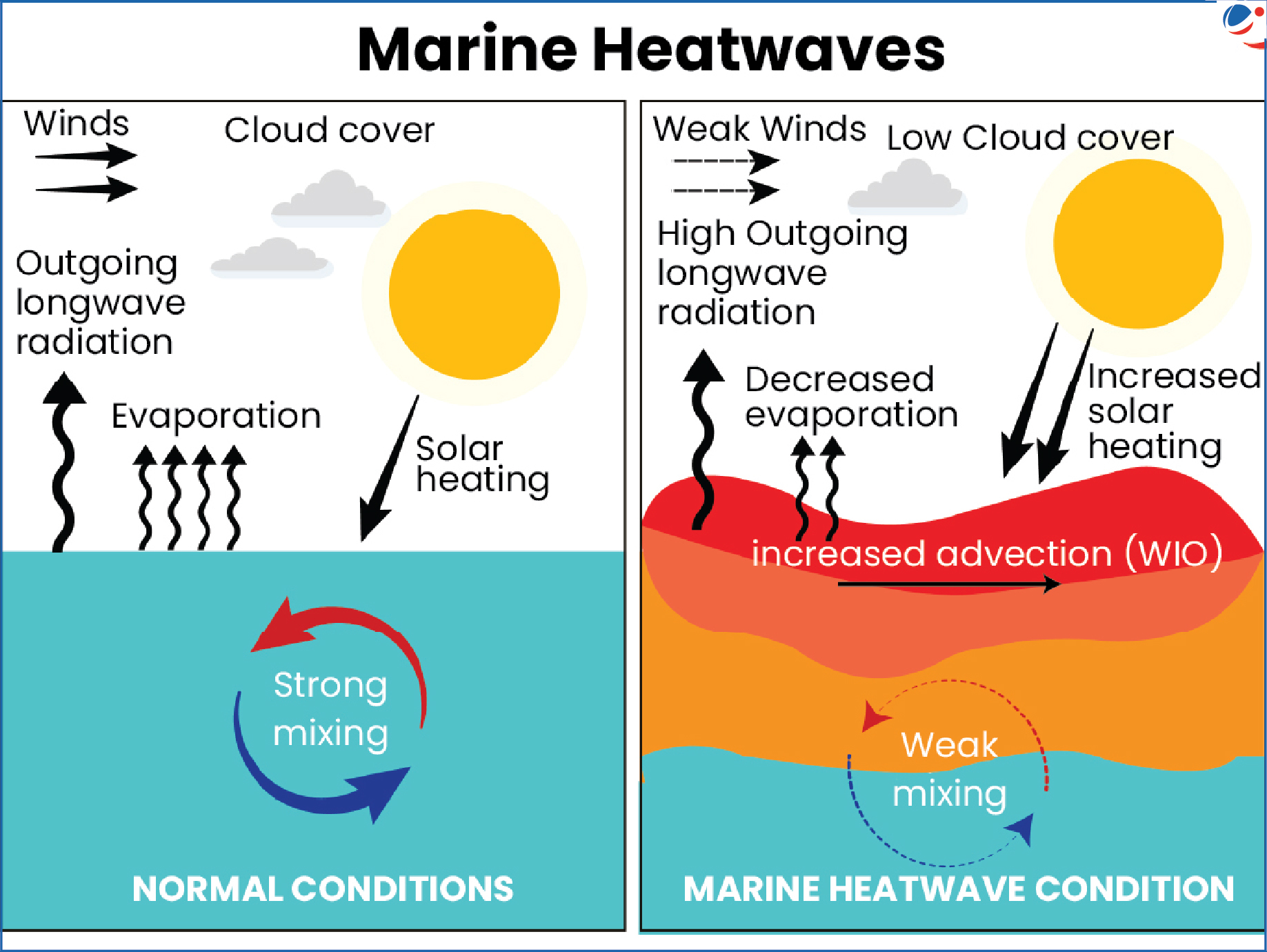
About Marine Heat Waves

  • Meaning: Occurs when surface temperature of particular region of sea rises to 3 or 4 degree Celsius above average temperature for at least five days. 
    • Can last for weeks, months or even years. 
    • Number of MHWs has doubled since 1982.
  • Impact of MHWs: Shift in population of marine species (disruption in fish ecosystem); Impact on Non-mobile species (coral, algae and sponges are more prone to extreme stress); Exacerbation of harmful algal blooms; Increased likelihood of extreme Weather events. 
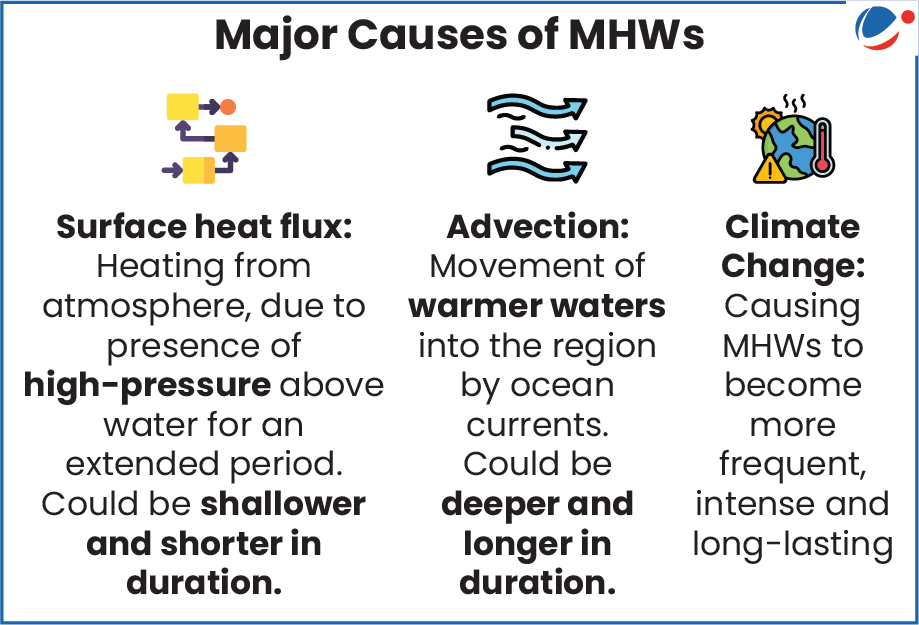
About Tropical Cyclones

  • Meaning: Violent storms originating over oceans in tropical areas and move to coastal areas bringing about large scale destruction by violent winds, heavy rainfall and storm surges.
  • Known By Different Names: Cyclones  (Indian Ocean), Hurricanes (Atlantic), Typhoons (Western Pacific and South China Sea), and Willy-willies (Western Australia). 
  • Favourable Conditions for Formation: 
    • Large sea surface with temperature higher than 27° C. 
    • Presence of the Coriolis force. 
    • Small variations in vertical wind speed. 
    • A pre-existing weak low-pressure area or low-level-cyclonic circulation. 
    • Upper divergence above sea level system.
Watch Video News Today

Explore Related Content

Discover more articles, videos, and terms related to this topic

RELATED VIDEOS

2
News Today (Apr 06, 2024)

News Today (Apr 06, 2024)

YouTube HD
News Today (May 15, 2024)

News Today (May 15, 2024)

YouTube HD

RELATED TERMS

3

Storm Surges

An abnormal rise of water generated by a storm, over and above the predicted astronomical tide. Storm surges are often the most devastating aspect of a hurricane or cyclone, causing widespread flooding and destruction.

Harmful Algal Blooms

Rapid growth of algae in bodies of water, often caused by excess nutrients. Marine Heat Waves can exacerbate these blooms, leading to ecological damage, fish kills, and potential health risks to humans and wildlife.

Upper Divergence

A meteorological condition where air is moving outward and upward at higher altitudes above a developing weather system. For tropical cyclones, upper divergence helps to ventilate the storm, allowing it to strengthen by drawing more air upwards from the surface.

Title is required. Maximum 500 characters.

Search Notes

Filter Notes

Loading your notes...
Searching your notes...
Loading more notes...
You've reached the end of your notes

No notes yet

Create your first note to get started.

No notes found

Try adjusting your search criteria or clear the search.

Saving...
Saved

Please select a subject.

Referenced Articles

linked

No references added yet