


The Iran conflict strengthens the case for the IMEC while simultaneously complicating its execution.
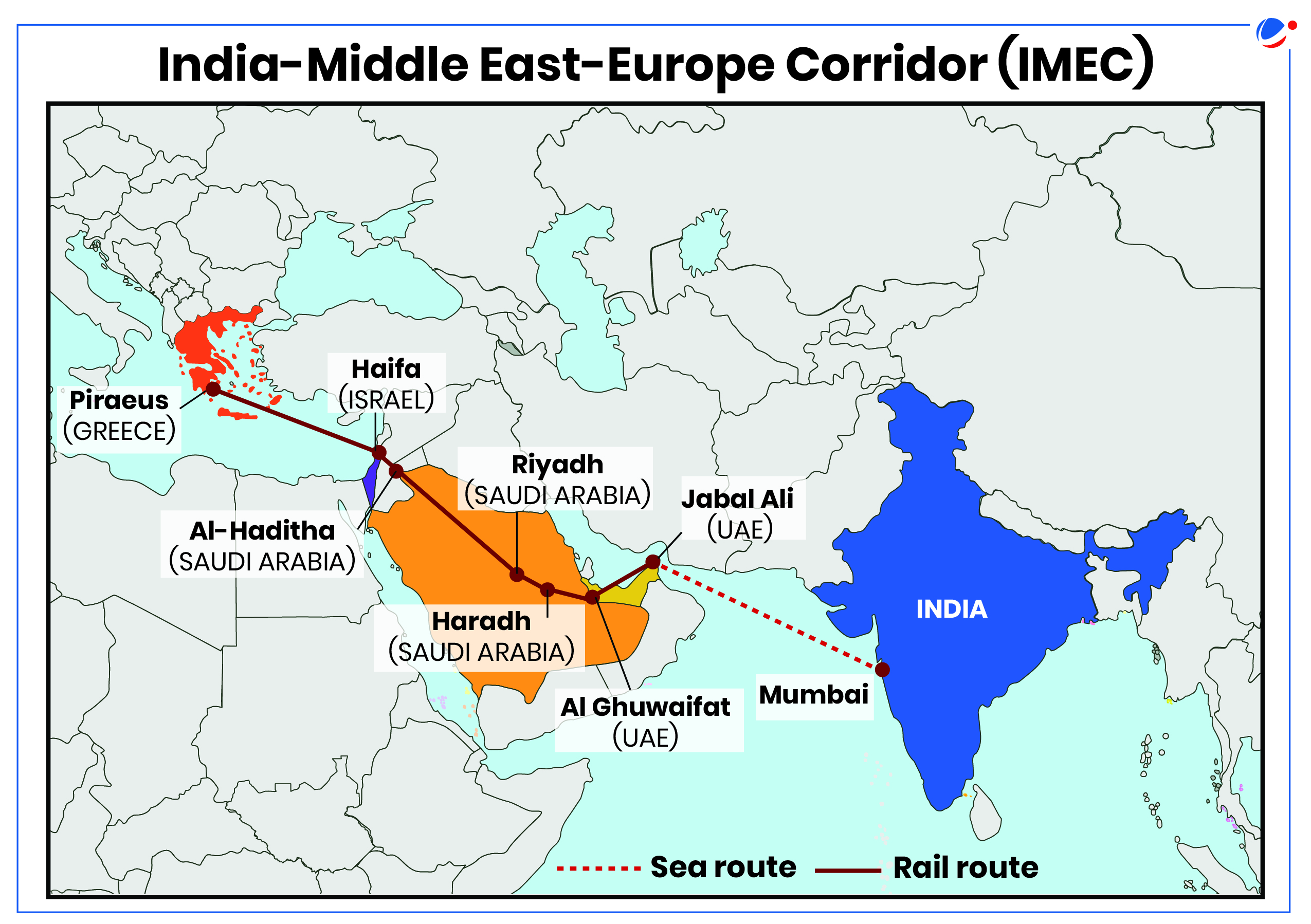
About India-Middle East-Europe Economic Corridor (IMEC)
- IMEC is a multi-modal connectivity project aimed at developing infrastructure of ports, railways, roads, sea lines and pipelines to enhance trade between India, the Arabian Peninsula, the Mediterranean region and Europe.
- Announcement: During the G20 Summit 2023, held under the presidency of India.
- Signatories: India, the United States, Saudi Arabia, the United Arab Emirates, France, Germany, Italy, and the European Union.
- Two Key Corridors:
- The East Corridor connects India to the Arabian Gulf (linking South Asia and the Middle East).
- The North Corridor extends from the Gulf to European markets.
- Significance for India: Estimated to reduce transportation time by 40% and logistics costs by 30%, providing an alternative to congested routes (such as the Suez Canal).
Current Vulnerabilities in IMEC:
- Escalation of Iran- Israel War: have intensified into a broader regional war, threatening IMEC’s proposed transport corridors.
- Trade Route Disruption: Strategic chokepoints (Strait of Hormuz) have triggered spikes in oil prices and shipping risks, undermining IMEC's economic feasibility.
- Breakdown of Regional Cooperation: Strained critical diplomatic ties between Israel and Arab nations, stalling coordinated infrastructure development.
- Execution Challenges: Diverse stakeholder interests (between UAE and Saudi Arabia) further complicate the funding and timely execution of IMEC projects.
Way Forward
|




