
Personality in News: Maulana Barkatullah Bhopali | Current Affairs | Vision IAS

Upgrade to Premium Today

Start Now
MENU
Home
Quick Links

High-quality MCQs and Mains Answer Writing to sharpen skills and reinforce learning every day.

Watch explainer and thematic concept-building videos under initiatives like Deep Dive, Master Classes, etc., on important UPSC topics.

A short, intensive, and exam-focused programme, insights from the Economic Survey, Union Budget, and UPSC current affairs.

ESC

In Summary

  • Barkatullah University, Bhopal, proposed a name change to honor Maulana Barkatullah Bhopali.
  • Maulana Barkatullah Bhopali was a scholar, journalist, and revolutionary nationalist known for anti-colonial activism.
  • He was associated with the Ghadar Party, published anti-colonial journals, and co-founded the Pan-Aryan Association.

In Summary

The Executive Council of Barkatullah University, Bhopal, has proposed changing its name.
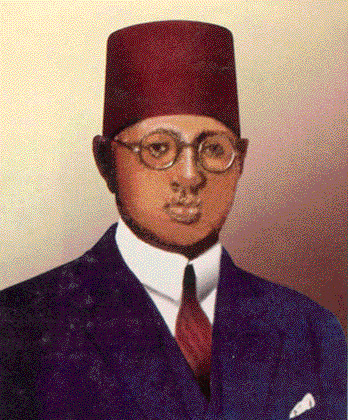
Maulana Barkatullah Bhopali (1854–1927) 

  • Born: 7 July 1854 in Bhopal, Madhya Pradesh.
  • Scholar of Arabic, Persian, Urdu; also learnt German, French, and Japanese.
  • Known as a journalist, Islamic scholar, revolutionary nationalist, and international anti-colonial activist.

Key Contribution in India's Freedom Struggle

  • Associated with Indian revolutionaries at India House, London.
  • Prominent member of the Ghadar Party.
  • Published journals such as The Islamic Fraternity and El Islam to promote anti-colonial ideas in Japan.
  • Co-founded the Pan-Aryan Association (1906) in US.
  • First Prime Minister of Independent India: Along with some associates, including Raja Mahendra Pratap, set up India’s first ‘government in exile’ in Kabul in 1915. 
  • Values: Hindu-Muslim unity, International Solidarity, Scientific Temper, Freedom of thought etc.

Watch Video News Today

Explore Related Content

Discover more articles, videos, and terms related to this topic

RELATED TERMS

3

Pan-Aryan Association

An association likely formed by individuals promoting a broader sense of unity and shared heritage, potentially across various Asian and Middle Eastern regions, with a focus on liberation from foreign influence during the early 20th century.

Anti-colonial activist

An individual who actively campaigns against colonial rule and advocates for the self-determination and independence of colonized nations. They often employ political, social, and sometimes armed resistance.

Government in exile

A political group claiming to be the legitimate government of a country, but unable to exercise power in that country, typically because it is under foreign occupation or in a state of civil war. The Provisional Government of India formed in Kabul in 1915 is an example.

Title is required. Maximum 500 characters.

Search Notes

Filter Notes

Loading your notes...
Searching your notes...
Loading more notes...
You've reached the end of your notes

No notes yet

Create your first note to get started.

No notes found

Try adjusting your search criteria or clear the search.

Saving...
Saved

Please select a subject.

Referenced Articles

linked

No references added yet