


India’s Zero Tolerance Against Terrorism approach focused on dismantling terror ecosystems through legal, institutional, operational and diplomatic measures.
Four Pillars of India’s Counter Terror Strategy
- Legislative Empowerment: Strengthened law through:
- Unlawful Activities (Prevention) Amendment Act 2019 (Allowed designation of individuals as terrorists),
- National Investigation Agency (NIA) Amendment Act 2019 (expanded jurisdiction), PMLA reforms,
- Bharatiya Nyaya Sanhita (BNS), 2023 (first time terrorism and organised crime defined).
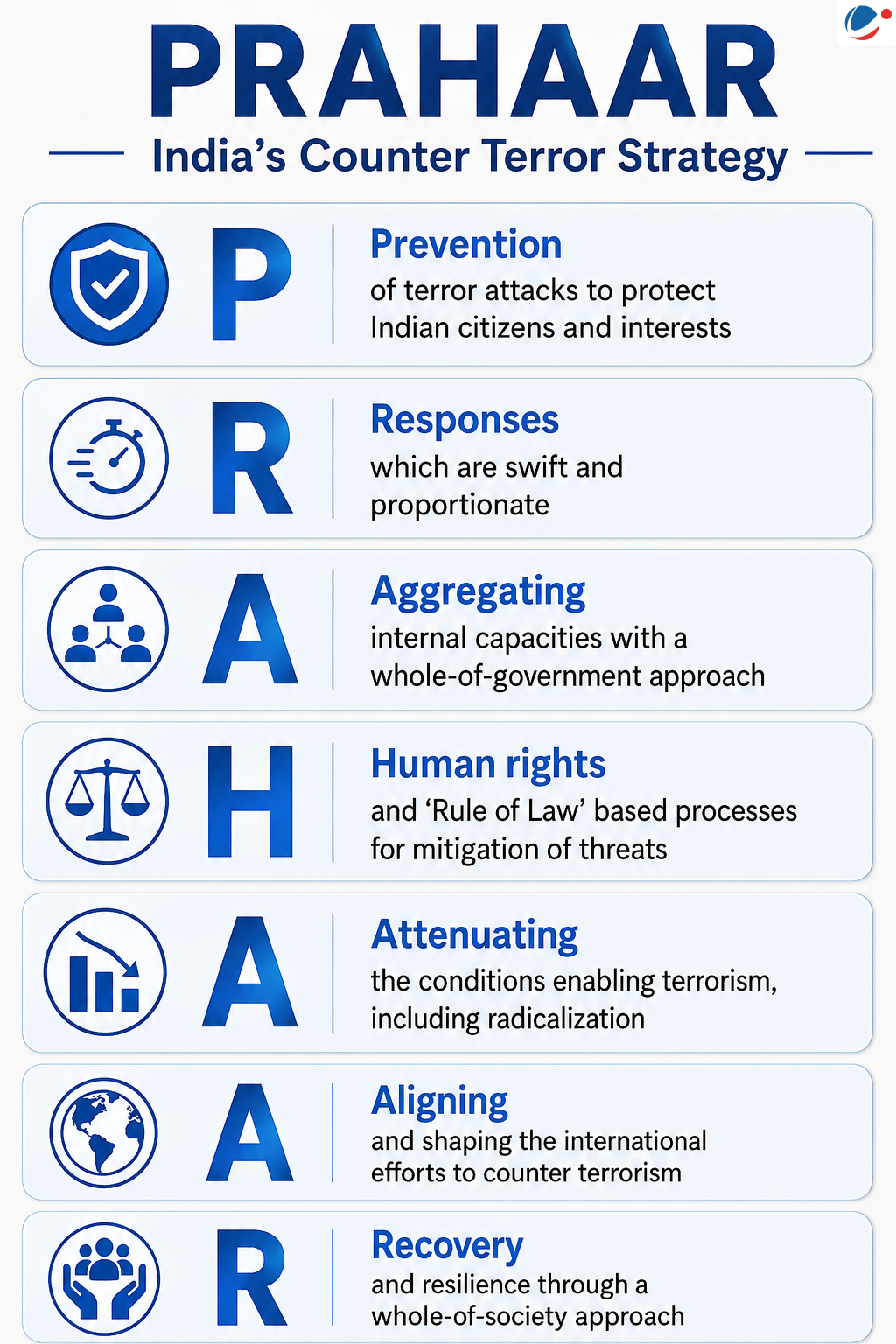
- Strengthened Institution: Expanded intelligence architecture via NIA, NATGRID, Multi-Agency Centre (MAC) for intelligence coordination, and Crime and Criminal Tracking Network and Systems (CCTNS 2.0).
- NIA’s budget allocation increased more than fourfold, from 2014-15 to 2024-25.
- Operations against Cross Border Terrorism: Established doctrine of decisive action, assertive and deterrence-based. E.g. Surgical Strikes (2016), Balakot Airstrike (2019), and Operation Sindoor (2025).
- Multilateral Diplomatic Efforts:
- Enhanced cooperation through Financial Action Task Force (FATF), BHARATPOL portal
- Joint Working Groups on Counter-Terrorism with 27 countries and 5 multilateral forums (SCO, BIMSTEC, BRICS, EU, QUAD-CTWG).
Key Outcomes of Reforms
- Improved Security in Jammu & Kashmir:
- Terrorist incidents declined from 7,217 (2004-2014) to 2,242 (2014-2024).
- Security force fatalities declined by ~82%, from 91 (2018) to 16 (2025).
- Hinterland Security (shift from reactive response to proactive prevention):
- Decline in urban terrorist attacks.
- Intelligence-led preventive strategy helped foil attacks.




