
France bans social media for under-15s | Current Affairs | Vision IAS

Upgrade to Premium Today

Start Now
MENU
Home
Quick Links

High-quality MCQs and Mains Answer Writing to sharpen skills and reinforce learning every day.

Watch explainer and thematic concept-building videos under initiatives like Deep Dive, Master Classes, etc., on important UPSC topics.

A short, intensive, and exam-focused programme, insights from the Economic Survey, Union Budget, and UPSC current affairs.

ESC

In Summary

  • France, the first EU country, banned social media for under-15s, citing child safety, addiction, body image, and attention issues.
  • Concerns include implementation challenges via VPNs, potential rights violations under UNCRC, and exacerbating the digital divide.
  • Bans may also limit social inclusion for vulnerable children seeking online support networks.

In Summary

  • France has become the first European Union (EU) country to ban social media access for children under 15 years 
    • Earlier, Australia became the first country to impose the ban, followed by countries such as Indonesia.

 Need for Banning Social Media for Children
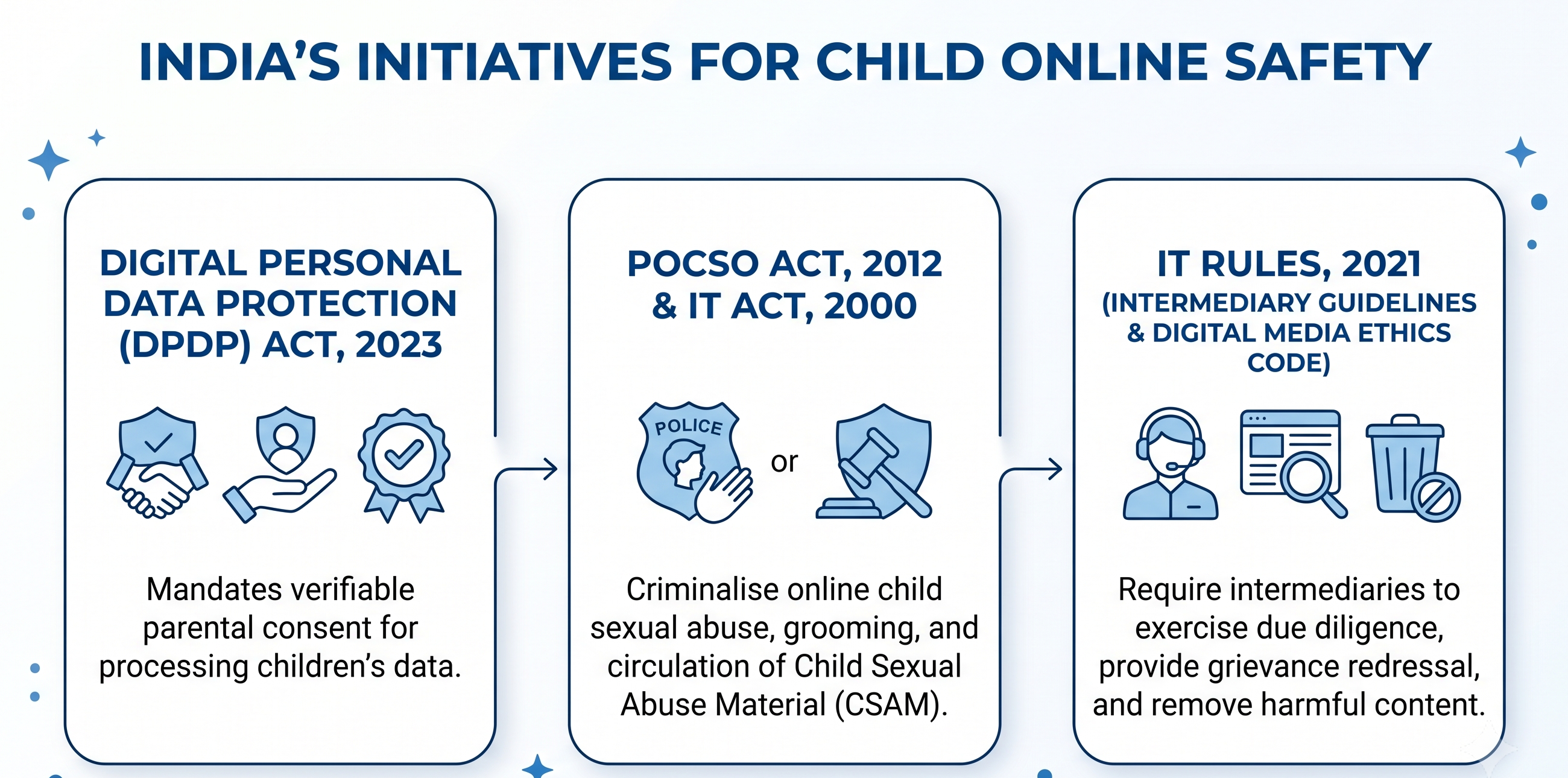
  • Child Safety: Protects children from cyberbullying, online grooming, Child Sexual Abuse Material (CSAM), substance-related content, violent material, and harmful online challenges, e.g., Blackout Challenge
  • Addiction-like Behaviour: Dopamine-driven reward pathways reinforce compulsive social media use, like behavioural addictions, e.g., Instagram Reels and YouTube Shorts
  • Body Image Issues: Exposure to edited and idealized images contributes to poor self-esteem, body dysmorphic disorder, and demand for cosmetic procedures.
  • Attention and Cognitive Problems: Heavy screen use is linked to reduced attention span, impulsivity, and poorer academic performance.

Concerns over Banning Social Media for Children

  • Implementation Challenges: VPNs, fake accounts, and weak age verification can undermine bans and push children to unregulated platforms.
  • Rights & Freedom: Blanket bans may restrict children's rights to information, expression, and participation under UN Convention on the Rights of the Child (UNCRC) (Articles 12, 13 & 17).
  • Digital Divide: May hinder digital literacy, informal learning, and access to educational resources, especially in rural areas.
  • Social Inclusion: Can deprive vulnerable children (e.g., LGBTQ+ youth, children with disabilities) of vital online support networks.


Watch Video News Today

Explore Related Content

Discover more articles, videos, and terms related to this topic

RELATED VIDEOS

1
Role of Indian Diaspora in Making India Self-Reliant

Role of Indian Diaspora in Making India Self-Reliant

YouTube HD

RELATED TERMS

3

Digital divide

The digital divide refers to the gap between those who have access to modern information and communication technology (ICT) and those who do not. In the context of AI in healthcare, it poses a challenge to equitable access to advanced medical services, especially in rural or low-income areas.

UN Convention on the Rights of the Child (UNCRC)

An international human rights treaty that sets out the civil, political, economic, social, health and cultural rights of children. Articles 12, 13, and 17 pertain to a child's right to express their views, freedom of expression, and access to information.

Body dysmorphic disorder

A mental health condition where a person is preoccupied with perceived flaws in their appearance that are minor or not observable to others. Exposure to idealized online images can exacerbate this condition.

Title is required. Maximum 500 characters.

Search Notes

Filter Notes

Loading your notes...
Searching your notes...
Loading more notes...
You've reached the end of your notes

No notes yet

Create your first note to get started.

No notes found

Try adjusting your search criteria or clear the search.

Saving...
Saved

Please select a subject.

Referenced Articles

linked

No references added yet