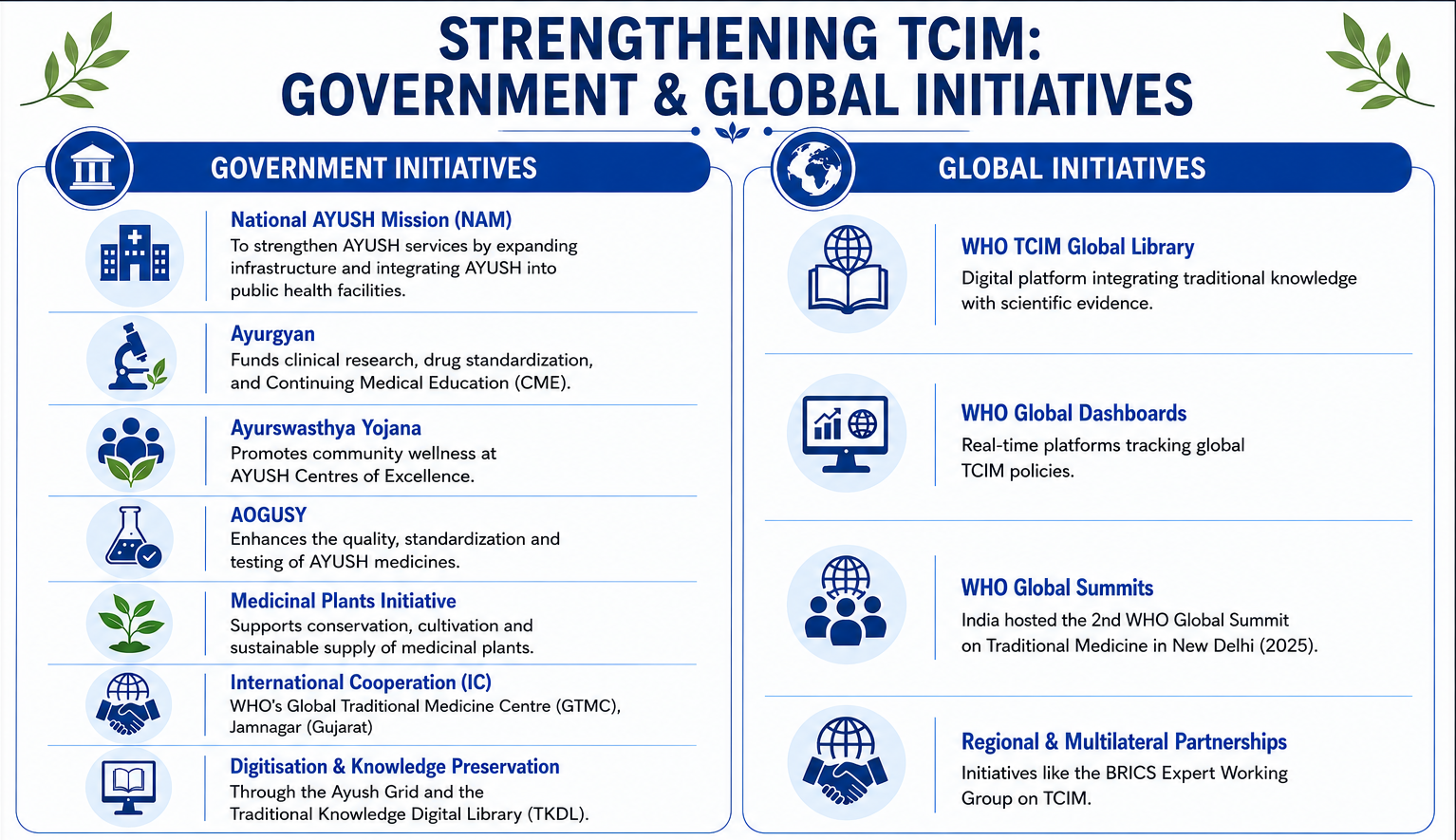
India hosted the BRICS Meeting on Traditional, Complementary and Integrative Medicine (TCIM) in Chandigarh.
What are Traditional, Complementary and Integrative Medicine (TCIM)?
- Traditional Medicine: Nature-based healthcare systems, codified or non-codified, rooted in historical and cultural traditions that predate modern medicine, using holistic and personalized approaches to restore balance of the mind, body, and environment.
- E.g., Ayurveda, Unani, Siddha, Homeopathy etc.
- Complementary Medicine: Evidence-based healthcare practices used alongside mainstream medicine to enhance health and well-being.
- E.g., massage, meditation, music therapy, dietary supplements etc.
- Integrative Medicine: An evidence-based approach that combines biomedical with traditional and/or complementary medicine to improve health and well-being.
Challenges related to TCIM
- Imbalanced Research Funding: TCIM receives far less research funding than conventional medicine due to poor patent prospects, limited clinical research etc.
- Ethical Concerns & Biopiracy: Commercialization may exploit Indigenous knowledge without consent.
- Standardization Difficulties: Personalized therapies are difficult to evaluate through standardized trials.
- Educational Limitations: Inadequate academic training limits research capacity.
- Systemic Bias & Stigma: TCIM is often dismissed as unscientific by mainstream medicine.