


The Quad Foreign Ministers reaffirmed support for implementing the ASEAN Outlook on the Indo-Pacific (AOIP), reinforcing ASEAN centrality and advancing a free, open, and inclusive Indo-Pacific.
- ASEAN Centrality refers to the leading role of ASEAN in shaping the regional architecture, agenda, and decision-making processes in the Indo-Pacific and wider Asia-Pacific region.
Significance of ASEAN Centrality
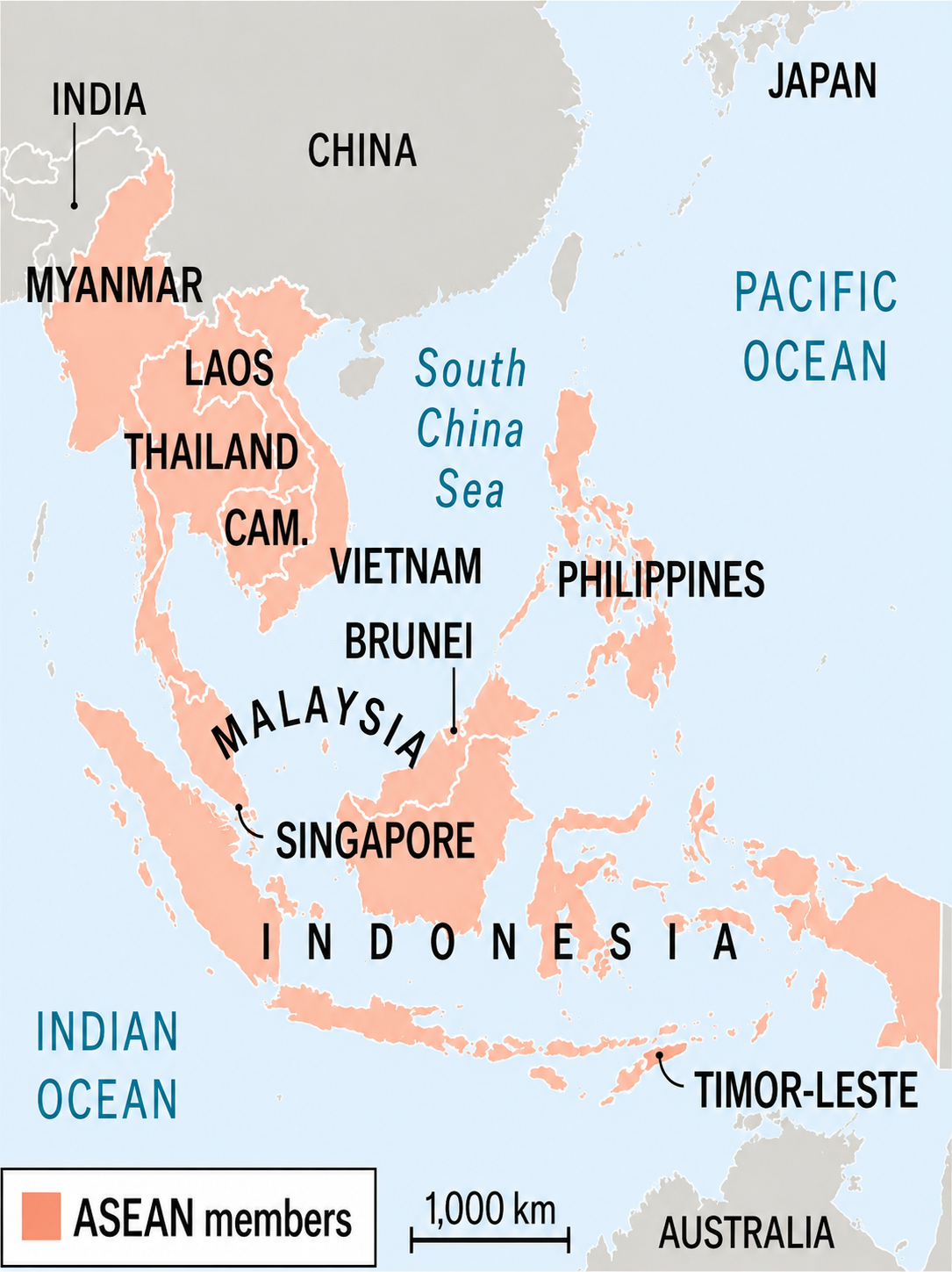
- Neutral Convener: ASEAN-led forums such as the East Asia Summit (EAS) and ASEAN Regional Forum (ARF) provide an inclusive platform for dialogue among major powers.
- Regional Security: Provides a platform for dialogue and confidence-building through ASEAN Regional Forum (ARF) and ASEAN Defence Ministers' Meeting-Plus (ADMM-Plus).
- Economic Integration: Leads regional economic cooperation through the Regional Comprehensive Economic Partnership (RCEP).
- Rules-based Regional Order: Promotes peaceful coexistence and international norms through the Treaty of Amity and Cooperation (TAC).
Challenges to ASEAN Centrality
- U.S.–China Rivalry: Intensifying competition has weakened ASEAN-led forums and unity.
- Internal Friction: ASEAN's consensus-based, non-interference approach often constrains decisive action during major crises. E.g., Myanmar Military coup crisis
- Rise of Minilateralism: Groupings like the Quad and AUKUS bypass ASEAN-led mechanisms.
About Quad
|



