


Why in the News?
Recently, SFTLC was hosted by the Bhutan government and supported by the Tiger Conservation Coalition.
More on News
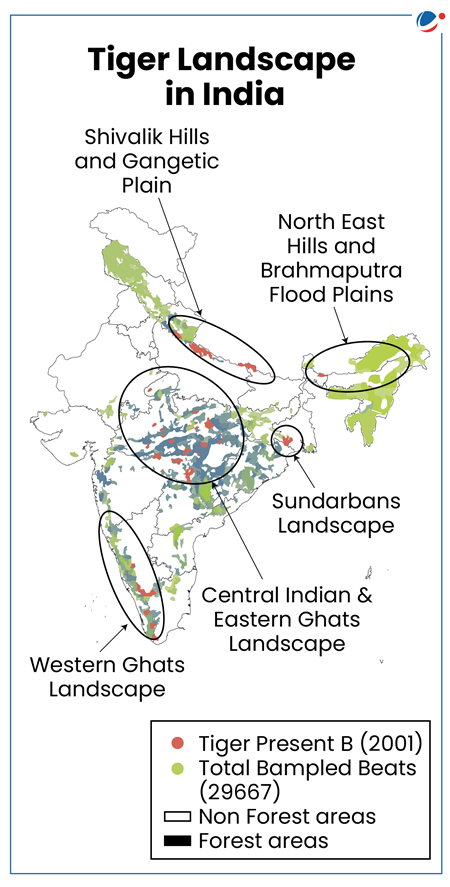
- As per a Global Tiger Forum (GTF) estimate in 2020 an additional US$ 138 million in financing annually was needed to secure the last remaining tiger landscapes in Asia.
- The tiger population increased from 3,200 in 2010 to around 4,500 in 12 years but tigers inhabit fewer areas now than in 2010.
- Today, tigers' landscapes comprise less than 8% of the area they originally occupied in Asia.
- Tiger Landscape includes large blocks of ecologically connected areas of suitable tiger habitat.
- Apart from finance, the tiger landscapes are also impacted by infrastructure development.
- For e.g. development of 8-lane (Greenfield highway) roads passing through Mukundara Hills Tiger Reserve (Rajasthan) has led to landscape fragmentation.
- The SFTLC seeks to increase support for tiger protection and the tiger landscape by using new financial strategies and promoting global partnerships as stated in the Paro statement.
- It seeks to mobilize US$1 billion in additional funding for tiger conservation by 2034.
Sustainable financing initiatives at the conference:
- Tiger Landscapes Investment Fund: Presented by the UNDP. It is a new blended financial mechanism under development that would catalyze nature-positive businesses with positive impacts on tigers, biodiversity, and people.
- Tiger Bonds: The Asian Development Bank intends to explore innovative financing instruments such as a tiger bond to engage private sector investors and promote nature-based solutions.
What is the need to conserve Tiger landscapes?
- Tigers are umbrella species: The status of their population provides a measurable indicator of the health of the biodiversity dependent on them.
- As apex predators, tigers regulate prey populations and influence the behavior of other species in the food chain.
- Cultural identity: Tigers are deeply rooted in the cultural identity and heritage of Asia. In many cultures, they are deeply embedded in social and religious beliefs and are revered and considered symbols of power, strength, and good luck.
- Mitigate climate change: Protecting large intact forests can help mitigate the effects of climate change and control the spillover of zoonotic diseases like Ebola.
|


