
CAQM ordered the implementation of Stage II of Graded Response Action Plan (GRAP) in Delhi NCR | Current Affairs | Vision IAS
MENU
Home

Periodically curated articles and updates on national and international developments relevant for UPSC Civil Services Examination.

Quick Links

High-quality MCQs and Mains Answer Writing to sharpen skills and reinforce learning every day.

Watch explainer and thematic concept-building videos under initiatives like Deep Dive, Master Classes, etc., on important UPSC topics.

ESC

Centre’s Sub-Committee for operationalisation of GRAP has directed all relevant agencies in NCR to enforce measures outlined under Stage II of GRAP to prevent deterioration in air quality.

  • GRAP Stage-2 in NCR enforces ban on use of coal and firewood and diesel generator sets, except for emergency and essential services.

About GRAP

  • It is an emergency response mechanism based on AQI level of Delhi. It is divided into four stages, based on AQI levels. 
    • Stage 1: Poor category (AQI 201 to 300).
    • Stage 2: Very poor category (AQI 301-400).
    • Stage 3: Severe category (AQI 401-450). 
    • Stage 4: Severe + category (AQI 451+).
  • CAQM in NCR and adjoining areas oversees implementation of GRAP.

Reasons for rise in air pollution every winter in Delhi

  • As monsoon withdraws, predominant direction of winds changes to north westerly which brings dust from Rajasthan and sometimes from Pakistan & Afghanistan.
  • High-speed winds are very effective at dispersing pollutants, and winters bring a dip in wind speed.
  • Other sources: Farm fires to get rid of paddy stubble; Dust and vehicular pollution etc.

Initiatives to prevent Air Pollution

  • 11-point action plan by CAQM includes mechanical sweeping, use of dust suppressant, etc.; System of Air Quality and Weather Forecasting and Research (SAFAR); Spraying PUSA bio-decompose in farmlands; etc.
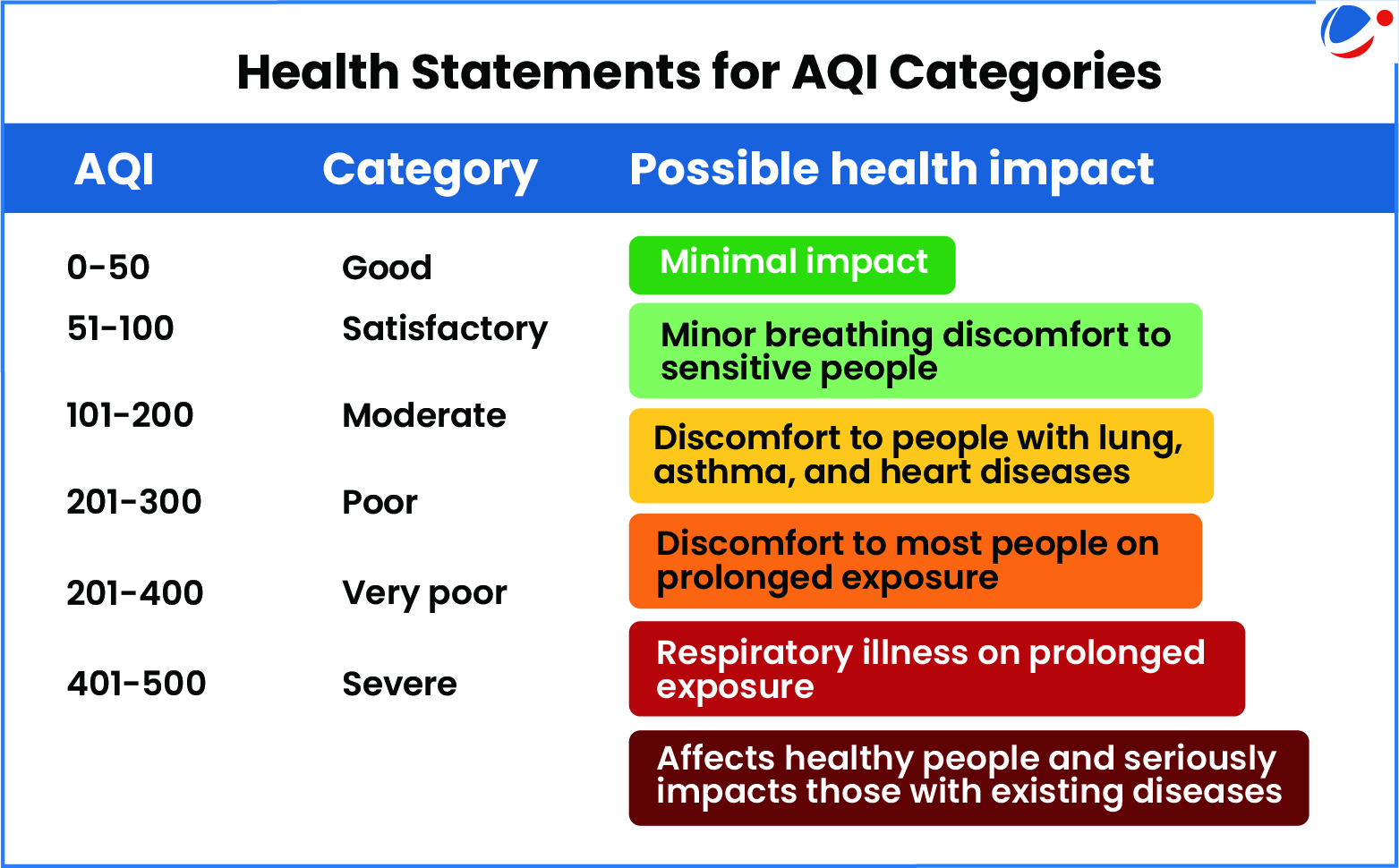
The image outlines the Air Quality Index categories and their possible health impacts.

About Air Quality Index (AQI)

  • Issued by government agencies to gauge air pollution levels and communicate risks to public.
  • Eight pollutants (PM10, PM2.5, NO2, SO2, CO, O3, NH3, and Pb) are considered for calculating AQI.

About Commission for Air Quality Management (CAQM)

  • Established under Commission for Air Quality Management in NCR and Adjoining Areas Act, 2021.
  • Replaced Environment Pollution (Prevention and Control Authority).
  • Purpose: Air Quality Management in NCR and Adjoining Areas for better coordination, research, identification, and resolution of air quality problems.
Watch Video News Today

Explore Related Content

Discover more articles, videos, and terms related to this topic

RELATED VIDEOS

3
What is Artificial Rain? | Deep Dive With VisionIAS

What is Artificial Rain? | Deep Dive With VisionIAS

YouTube HD
News Today (Oct 23, 2024)

News Today (Oct 23, 2024)

YouTube HD
Delhi Air Pollution - Causes, Impacts and Measures

Delhi Air Pollution - Causes, Impacts and Measures

YouTube HD
Title is required. Maximum 500 characters.

Search Notes

Filter Notes

Loading your notes...
Searching your notes...
Loading more notes...
You've reached the end of your notes

No notes yet

Create your first note to get started.

No notes found

Try adjusting your search criteria or clear the search.

Saving...
Saved

Please select a subject.

Referenced Articles

linked

No references added yet

Subscribe for Premium Features
