


It builds on Vienna Programme of Action (2014-2024) & Almaty Programme of Action (2003), which laid groundwork for addressing challenges faced by Landlocked Developing Countries (LLDCs).
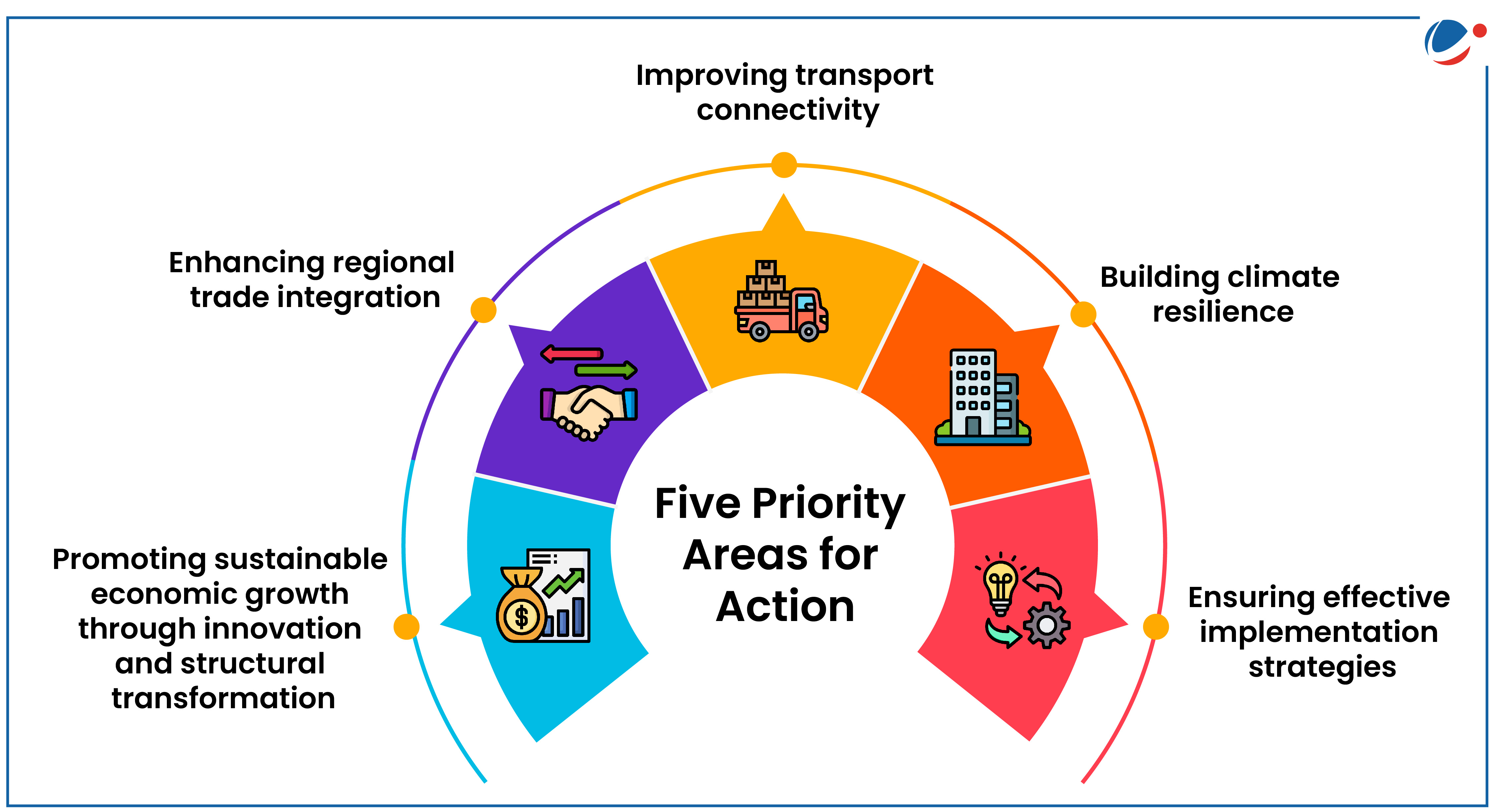
- It identifies 5 priorities (refer to Infographic) & sets various targets under it.
Key Targets
- Boost labour productivity & job opportunities across all sectors by 50% by 2034.
- Provide support to develop special economic zones, industrial parks, etc.
- Reduce/eliminate arbitrary & unjustified non-tariff barriers & double their global merchandise exports by 2034.
- Effective implementation of WTO Agreement on Trade Facilitation in all LLDCs.
- Reduce disaster risk in LLDCs through full implementation of Sendai Framework for Disaster Risk Reduction 2015– 2030.
About LLDCs
- Landlocked countries are countries that do not have direct access to the sea. There are 32 LLDCs with a population of about 570 million.
- Liechtenstein & Uzbekistan are doubly landlocked countries (surrounded by other landlocked countries).
Challenges faced by LLDCs
- Hurdles in Trade: Relying on transit nations, leads to higher trade costs, delays & reduced competitiveness in global markets.
- Slower Economic Growth: Due to limited trade & export opportunities, reduced FDI etc.
- Global merchandise exports from LLDCs accounts for just 1.1% of total global exports (2022).

