
New SDG indicator on Minimum Dietary Diversity (MDD) adopted by UN Statistical Commission | Current Affairs | Vision IAS
MENU
Home

Periodically curated articles and updates on national and international developments relevant for UPSC Civil Services Examination.

Quick Links

High-quality MCQs and Mains Answer Writing to sharpen skills and reinforce learning every day.

Watch explainer and thematic concept-building videos under initiatives like Deep Dive, Master Classes, etc., on important UPSC topics.

ESC

This indicator adds to nearly 250 indicators tracked under Sustainable Development Goals (SDGs) framework adopted in 2017. 

  • FAO and UNICEF jointly manage this new indicator, addressing absence of an SDG measure for healthy diets.
  • This indicator captures a crucial aspect previously lacking in tracking progress toward ending malnutrition and achieving SDG 2 (Zero Hunger) and broader 2030 Agenda.

About MDD

  • According to WHO, MDD is achieved when a diet includes five or more of following eight food groups: breast milk, grains, legumes, dairy products, flesh foods, eggs, fruits, and vegetables.

Significance of MDD Indicator

  • Improved Nutritional Assessment: It specifically tracks nutritional needs of women (MDD-W) and children (MDD-C), who are most vulnerable to malnutrition.
  • Tracking Global Health Targets: Supports SDG 2, aimed at eliminating hunger and improving nutrition..
  • Policy Tool: Aids policymakers in developing strategies to combat malnutrition by addressing health risks linked to poor dietary habits.
  • Evaluating Program Impact: Helps evaluate nutrition programs.

Status of MDDF (minimum dietary diversity failure) in India (For Year 2019-21): 

  • Regional Disparities: Central region of India, particularly Uttar Pradesh, Rajasthan, Gujarat, Maharashtra, and Madhya Pradesh, has over 80% of children with MDDF.
  • Age Impact on MDDF: 77% children in India aged 6-23 months lacking minimum dietary diversity.
  • Vulnerable Sections: Children from Other Backward Classes have the highest MDDF (79%), followed by Scheduled Castes (77.2%) and Scheduled Tribes (76%).
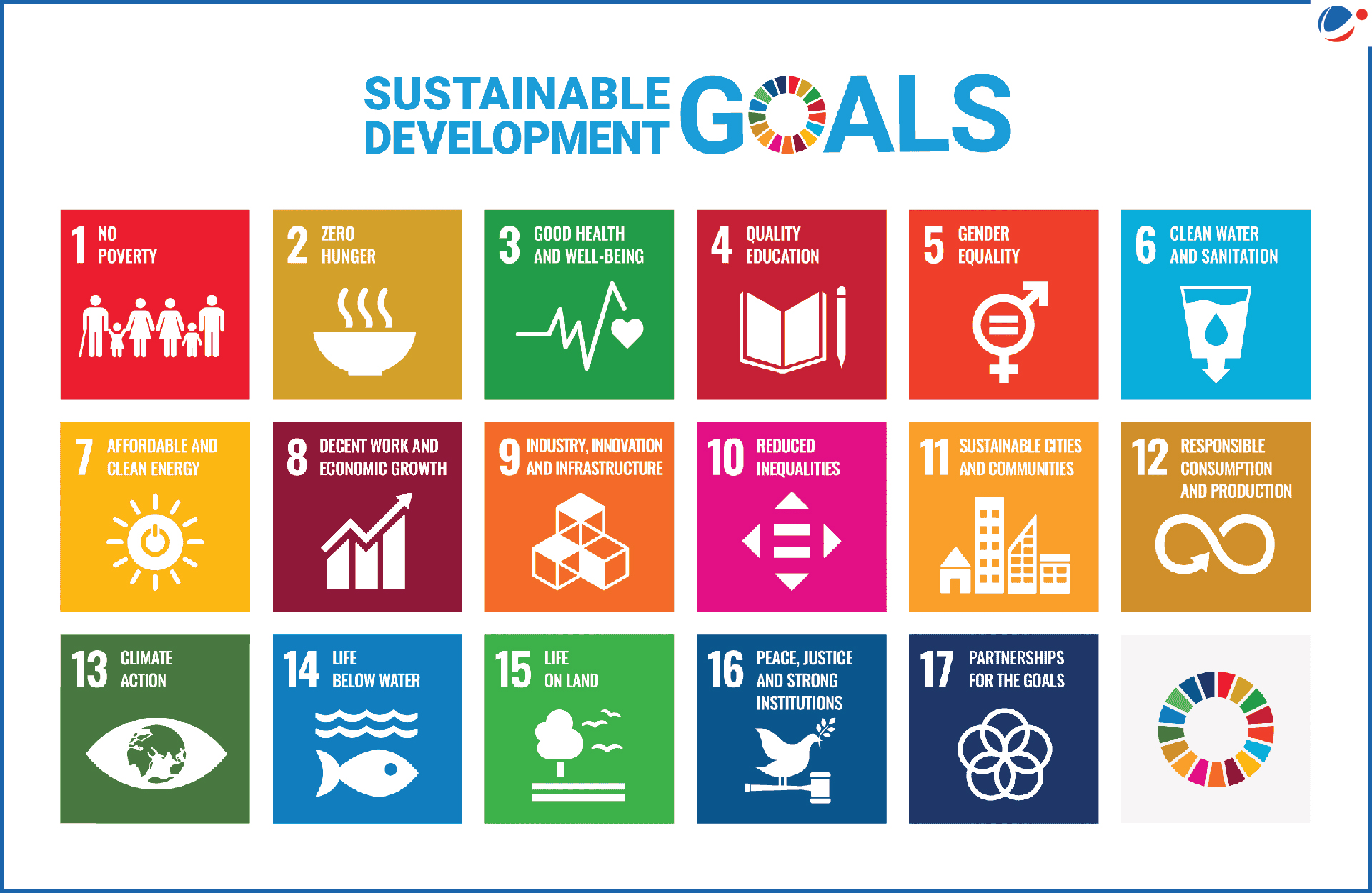
The image shows the 17 Sustainable Development Goals (SDGs) established by the United Nations. Each goal is represented by a unique color and icon, along with its corresponding number and title:  No Poverty (Red) - End poverty in all its forms everywhere. Zero Hunger (Orange) - End hunger, achieve food security, improve nutrition, and promote sustainable agriculture. Good Health and Well-being (Green) - Ensure healthy lives and promote well-being for all at all ages. Quality Education (Red) - Ensure inclusive and equitable quality education and promote lifelong learning opportunities. Gender Equality (Pink) - Achieve gender equality and empower all women and girls. Clean Water and Sanitation (Light Blue) - Ensure availability and sustainable management of water and sanitation for all. Affordable and Clean Energy (Yellow) - Ensure access to affordable, reliable, sustainable, and modern energy for all. Decent Work and Economic Growth (Maroon) - Promote sustained, inclusive, and sustainable economic growth, full and productive employment, and decent work for all. Industry, Innovation, and Infrastructure (Orange) - Build resilient infrastructure, promote inclusive and sustainable industrialization, and foster innovation. Reduced Inequalities (Pink) - Reduce inequality within and among countries. Sustainable Cities and Communities (Orange) - Make cities and human settlements inclusive, safe, resilient, and sustainable. Responsible Consumption and Production (Yellow) - Ensure sustainable consumption and production patterns. Climate Action (Green) - Take urgent action to combat climate change and its impacts. Life Below Water (Blue) - Conserve and sustainably use the oceans, seas, and marine resources. Life on Land (Green) - Protect, restore, and promote sustainable use of terrestrial ecosystems, forests, combat desertification, and halt biodiversity loss. Peace, Justice, and Strong Institutions (Dark Blue) - Promote peaceful and inclusive societies, provide access to justice for all, and build accountable institutions. Partnerships for the Goals (Dark Blue) - Strengthen the means of implementation and revitalize the global partnership for sustainable development
Watch Video News Today

Explore Related Content

Discover more articles, videos, and terms related to this topic

RELATED VIDEOS

3
News Today (Oct 25, 2024)

News Today (Oct 25, 2024)

YouTube HD
News Today (Mar 11, 2025)

News Today (Mar 11, 2025)

YouTube HD
Transformation of Family Structures in India

Transformation of Family Structures in India

YouTube HD
Title is required. Maximum 500 characters.

Search Notes

Filter Notes

Loading your notes...
Searching your notes...
Loading more notes...
You've reached the end of your notes

No notes yet

Create your first note to get started.

No notes found

Try adjusting your search criteria or clear the search.

Saving...
Saved

Please select a subject.

Referenced Articles

linked

No references added yet

Subscribe for Premium Features