


Rural Local Bodies (RLBs) receive financial devolution based on the recommendations of the Central Finance Commissions which are empowered by the Article 280 of the Constitution of India.
Key Concerns Raised by the Parliamentary Report
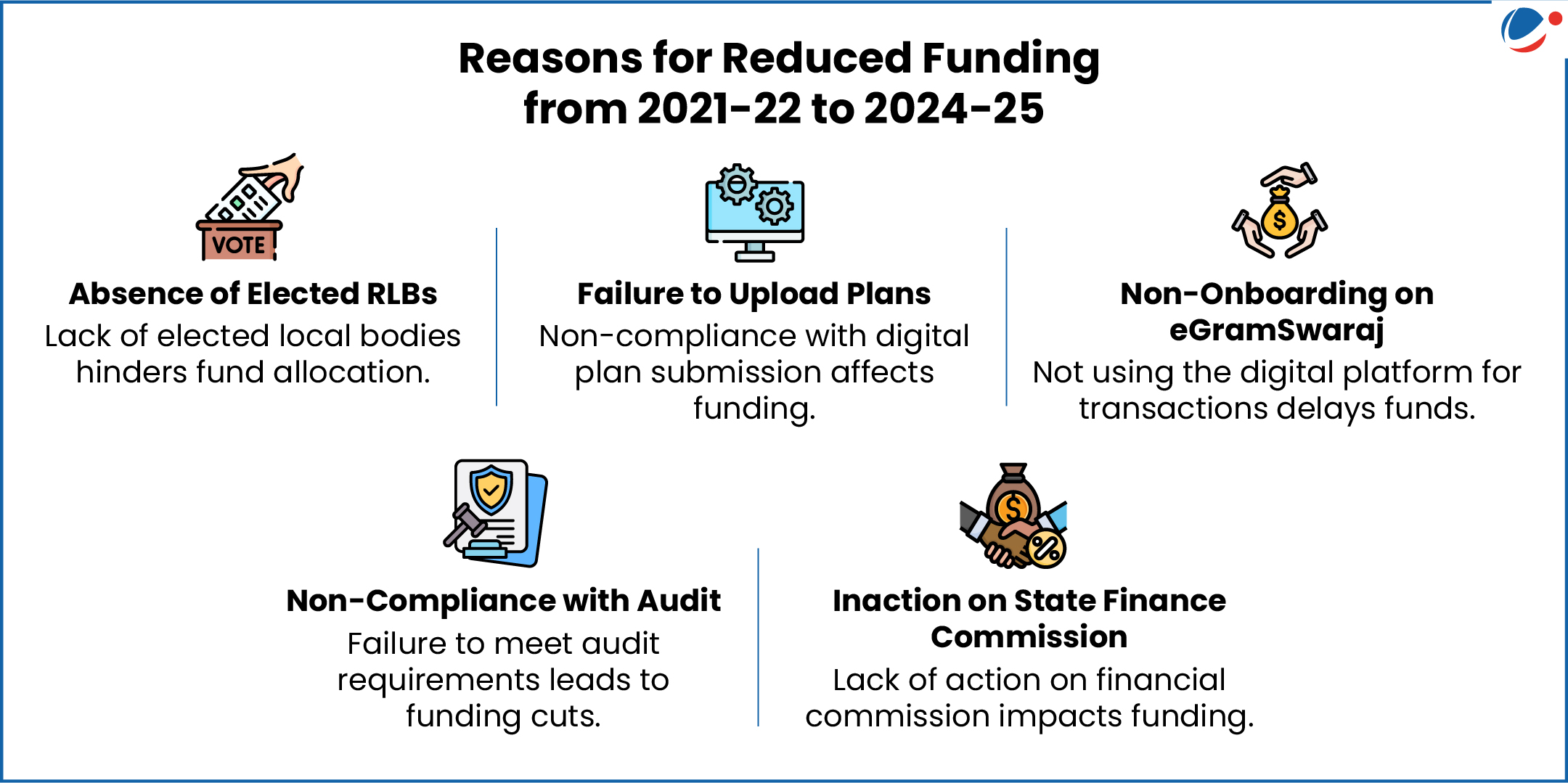
- A steady decline in the allocation of funds to RLBs: This undermines the foundation of fiscal decentralisation under the 73rd Constitutional Amendment.
- Reduction in Untied (See box) and scheme-based transfers limits PRIs’ development role and undermines their credibility as self-governing bodies.
- The devolution of the 3Fs: Functions, Funds, and Functionaries, to PRIs continues to be partial, fragmented, & uneven across states.
- Delays in Constitution State Finance Commissions (SFCs): E.g., some States have not even constituted 3rd, 4th and 5th SFC.”
- Pace of auditing & submission of Action Taken Reports (ATRs) continues to be sub-optimal in several States. E.g., Arunachal Pradesh and Chhattisgarh.
Recommendations
- Ensure adequate, untied, and performance-linked resources to PRIs, while developing mechanisms to ring-fence funds, prevent diversion, and enhance transparency.
- Central Govt should impress upon the State Governments to constitute SFCs regularly without any delay so that the flow of central grants is not stopped or minimised.
- Each state must prepare and publish a clear, time-bound roadmap for devolution of powers to PRIs.
Grants to RLBs under XV Finance Commission are divided into two categories:
|


