
Personality in News: Swami Dayanand Saraswati | Current Affairs | Vision IAS

Upgrade to Premium Today

Start Now
MENU
Home
Quick Links

High-quality MCQs and Mains Answer Writing to sharpen skills and reinforce learning every day.

Watch explainer and thematic concept-building videos under initiatives like Deep Dive, Master Classes, etc., on important UPSC topics.

A short, intensive, and exam-focused programme, insights from the Economic Survey, Union Budget, and UPSC current affairs.

ESC

In Summary

  • Swami Dayanand Saraswati (1824-1883), born in Gujarat, founded the Arya Samaj in 1875.
  • He advocated against child marriage and enforced widowhood, promoting education emphasizing Vedas, sciences, and arts.
  • His key works include 'Satyartha Prakasha' and the Vedic concept of Traitavada, positing three eternal entities: Ishwara, Jiva, and Prakriti.

In Summary

Eminent social reformer Swami Dayanand Saraswati was remembered on his birth anniversary (February 12).
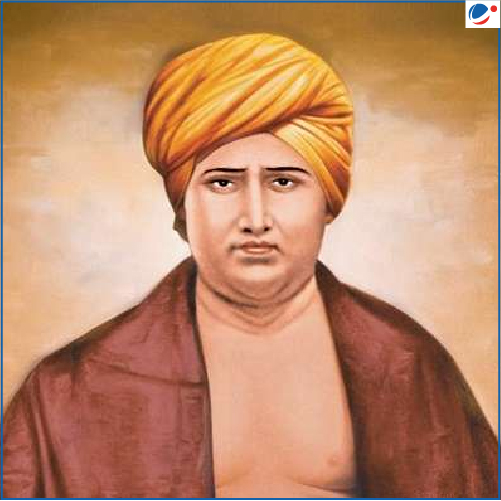
Swami Dayanand Saraswati (1824-1883)

  • He was born in Gujarat.
  • He established Arya Samaj in the year 1875.
  • He opposed the evil practicesof child marriage and enforced widowhood.
  • He was in favour of an educational system which would emphasize on grammar, philosophy, Vedas, sciences, medicine, music and art.
  • He visualized a polity which would be the embodiment of decentralization (a vast commonwealth with the village as the unit).
  • Important Literary work: Satyartha Prakasha.
  • Spiritual works: He put forward the Vedic concept of Traitavada.
    • The concept of three eternal things (Ishwara, Jiva, Prakriti).
Watch Video News Today

Explore Related Content

Discover more articles, videos, and terms related to this topic

RELATED TERMS

3

Satyartha Prakasha

A seminal literary work by Swami Dayanand Saraswati, which outlines his philosophical and theological views, critiques various religious beliefs, and advocates for his reformist agenda based on Vedic principles.

Decentralization

A political concept advocating for the distribution of power and authority away from a central government or entity, often towards local or regional administrative levels. Swami Dayanand Saraswati envisioned a polity based on decentralization with villages as the fundamental unit.

Enforced Widowhood

The social practice where widows were compelled to remain unmarried and often faced severe restrictions and social ostracization, a practice opposed by Swami Dayanand Saraswati.

Title is required. Maximum 500 characters.

Search Notes

Filter Notes

Loading your notes...
Searching your notes...
Loading more notes...
You've reached the end of your notes

No notes yet

Create your first note to get started.

No notes found

Try adjusting your search criteria or clear the search.

Saving...
Saved

Please select a subject.

Referenced Articles

linked

No references added yet