
Greater participation of women in judiciary key to credibility: CJI | Current Affairs | Vision IAS

Upgrade to Premium Today

Start Now
MENU
Home
Quick Links

High-quality MCQs and Mains Answer Writing to sharpen skills and reinforce learning every day.

Watch explainer and thematic concept-building videos under initiatives like Deep Dive, Master Classes, etc., on important UPSC topics.

A short, intensive, and exam-focused programme, insights from the Economic Survey, Union Budget, and UPSC current affairs.

ESC

In Summary

  • CJI highlighted need for more women in judiciary; SC has 1/33 judges, HCs 14.85%, Dist. Courts ~37% women.
  • Reasons for low representation include seniority criteria, structural barriers in male-dominated collegiums, and workplace issues.
  • Women's presence in judiciary ensures gender equality, gender-sensitive justice, public trust, and provides role models.

In Summary

Addressing the First National Conference of Indian Women in Law, Chief Justice of India (CJI) emphasized the need for greater women  representation in the judiciary.

Current status of Women in Judiciary 

  • Supreme Court: Only 1 woman judge (out of 33) 
  • High Courts: 14.85% of judges are women
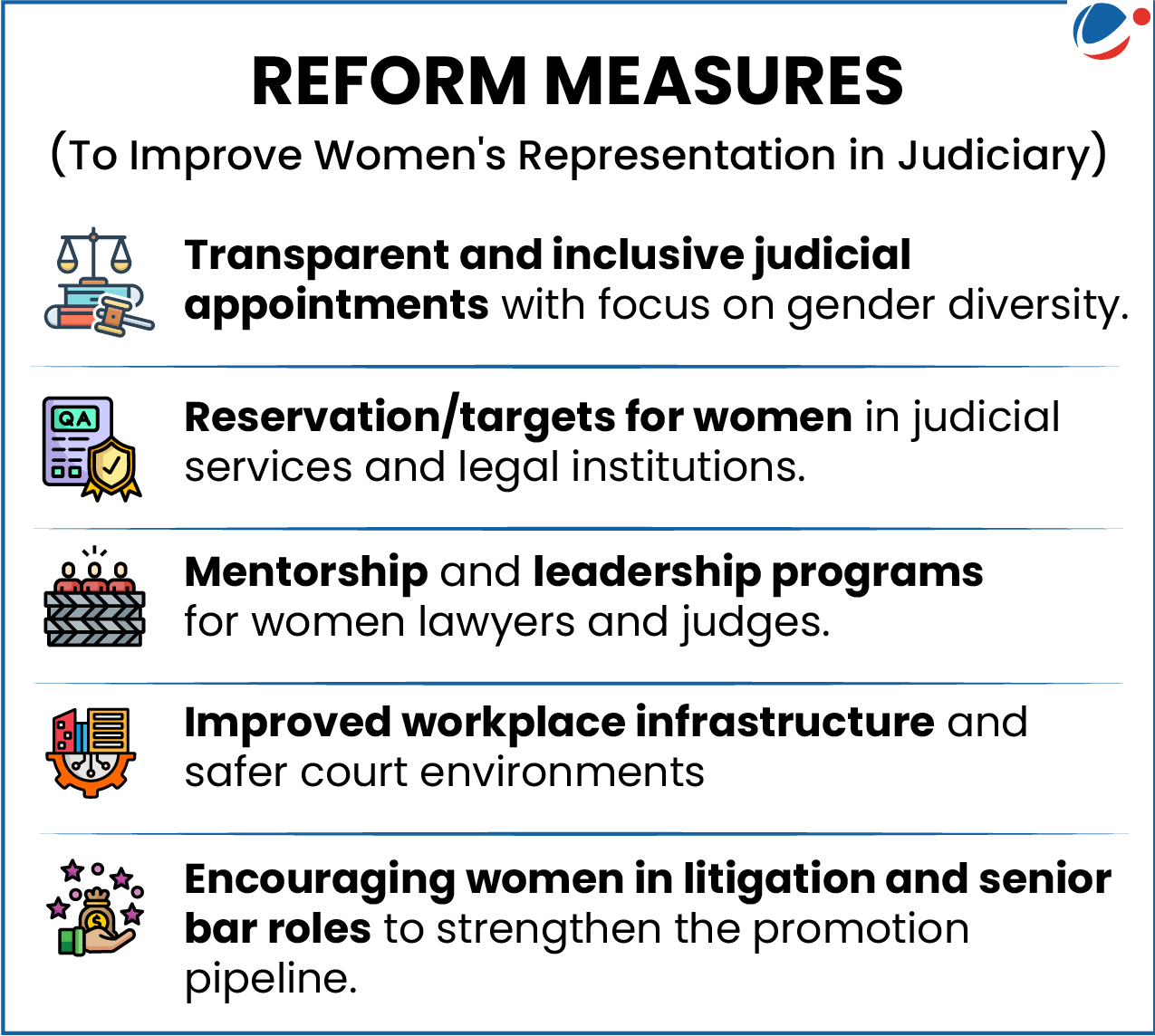
  • District Courts:  ~37% women judges

Reasons for Low Representation

  • Seniority-cum-merit criteria: Favouring long tenures traditionally dominated by men.
  • Structural Barriers: Due to Male-dominated collegium appointment system there is limited representation in senior positions in the Bar.
  • Workplace Issues: Women face gender bias, poor infrastructure, etc. hindering professional growth.
  • Leaky pipeline: Women enter judiciary but fewer reach higher courts despite qualifications.

Importance of women in Judiciary

  • Ensuring Gender Equality: Promotes equal participation in decision-making.
  • Gender-Sensitive Justice: Women judges bring diverse life experiences that influence judicial reasoning.
  • Public Trust and Legitimacy: A representative judiciary enhances credibility of the justice system.
  • Role Models: Encourages more women to enter the legal profession and judiciary.
Watch Video News Today

Explore Related Content

Discover more articles, videos, and terms related to this topic

RELATED VIDEOS

1
Lateral Entry

Lateral Entry

YouTube HD

RELATED TERMS

3

Gender-Sensitive Justice

A concept in the justice system that recognizes and accounts for the different life experiences and perspectives of women, leading to more equitable and nuanced judicial decision-making. It emphasizes that gender can influence interpretation and application of law.

Leaky Pipeline (in Judiciary)

A phenomenon where women enter the legal profession and judiciary but a disproportionately smaller number progress to higher judicial positions, despite having the necessary qualifications. This highlights systemic barriers to career advancement.

Collegium Appointment System

A system used in India for the appointment of judges to the Supreme Court and High Courts, where a committee of senior judges recommends candidates. This system has been subject to debate regarding transparency and inclusivity.

Title is required. Maximum 500 characters.

Search Notes

Filter Notes

Loading your notes...
Searching your notes...
Loading more notes...
You've reached the end of your notes

No notes yet

Create your first note to get started.

No notes found

Try adjusting your search criteria or clear the search.

Saving...
Saved

Please select a subject.

Referenced Articles

linked

No references added yet