
New bodies proposed to curb delays in Environmental Clearance (EC) | Current Affairs | Vision IAS

Upgrade to Premium Today

Start Now
MENU
Home
Quick Links

High-quality MCQs and Mains Answer Writing to sharpen skills and reinforce learning every day.

Watch explainer and thematic concept-building videos under initiatives like Deep Dive, Master Classes, etc., on important UPSC topics.

A short, intensive, and exam-focused programme, insights from the Economic Survey, Union Budget, and UPSC current affairs.

ESC

In Summary

  • MoEFCC proposes Standing Authority (SAEIA) and Committee (SCEIA) to expedite environmental clearances when State bodies are non-functional.
  • SAEIA handles proposals if SEIAA fails to decide within the timeframe, as per EIA Notification 2006.
  • EIA assesses project environmental impacts; Category A projects go to MoEFCC, Category B to State governments.

In Summary

The Ministry of Environment, Forest, and Climate Change (MoEFCC) has released a draft notification to create the Standing Authority on Environmental Impact Assessment (SAEIA) and Standing Committee on Environment Impact Appraisal (SCEIA) to fast-track environmental clearances. 

  • The EC process is governed by the EIA Notification 2006, issued under the Environment (Protection) Act, 1986
  • The need to establish these bodies arises from the delayed reconstitution of the State Environment Impact Assessment Authority (SEIAA), which halts the Environmental Clearance (EC) process at the State level and leads to the bulk transfer of pending proposals to the Centre.

About the Proposed Bodies

  • Standing Authority on Environmental Impact Assessment (SAEIA)
    • Functions and Powers: To discharge the functions of the SEIAA if the SEIAA becomes non-functional. 
      • If the SEIAA fails to communicate its decision on a clearance within the specified timeframe, the proposal is automatically forwarded to the SAEIA through the PARIVESH Portal.
  • Standing Committee on Environment Impact Appraisal (SCEIA)
    • Constitution: By the Central Government for each State/UT 
    • Functions: To discharge the functions of the State Expert Appraisal Committee (SEAC) whenever the SEAC is non-functional. 
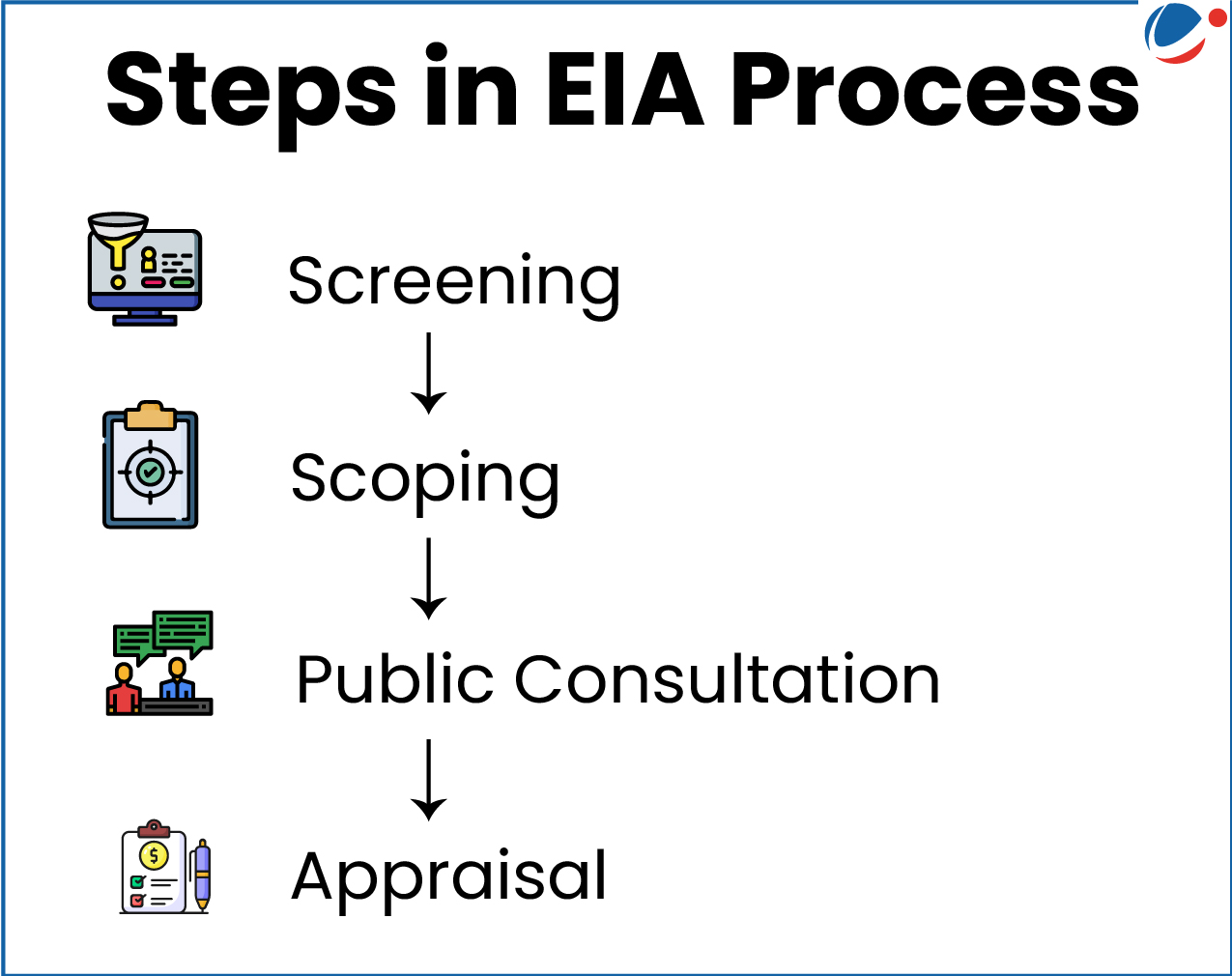
 Environmental Impact Assessments (EIAs)

  • EIA is a decision-making tool that predicts the environmental effects of a proposed project and evaluates alternatives to identify the option with the best balance of economic and environmental costs and benefits.
  • Under EIA there are two categories of projects: A category and B category-
    • Projects falling under the A category go to MoEFCC for clearance. 
    • Projects falling under B category go to State government for clearance which further gets categorized into B1 and B2 projects.
Watch Video News Today

Explore Related Content

Discover more articles, videos, and terms related to this topic

RELATED VIDEOS

2
Carbon Markets

Carbon Markets

YouTube HD
What is Artificial Rain? | Deep Dive With VisionIAS

What is Artificial Rain? | Deep Dive With VisionIAS

YouTube HD

RELATED TERMS

3

EIA Notification 2006

The primary regulation governing the Environmental Impact Assessment (EIA) process in India, issued under the Environment (Protection) Act, 1986. It outlines the procedures, categories of projects, and authorities responsible for granting environmental clearances.

State Expert Appraisal Committee (SEAC)

A committee at the state level that conducts the appraisal of environmental impact assessment reports for projects requiring state-level clearance. The SCEIA is proposed to function in its place if it becomes non-functional.

State Environment Impact Assessment Authority (SEIAA)

The authority at the state level responsible for granting Environmental Clearances (ECs) for certain categories of projects, as mandated by the EIA Notification 2006. Its delayed reconstitution can halt the EC process at the state level.

Title is required. Maximum 500 characters.

Search Notes

Filter Notes

Loading your notes...
Searching your notes...
Loading more notes...
You've reached the end of your notes

No notes yet

Create your first note to get started.

No notes found

Try adjusting your search criteria or clear the search.

Saving...
Saved

Please select a subject.

Referenced Articles

linked

No references added yet
