


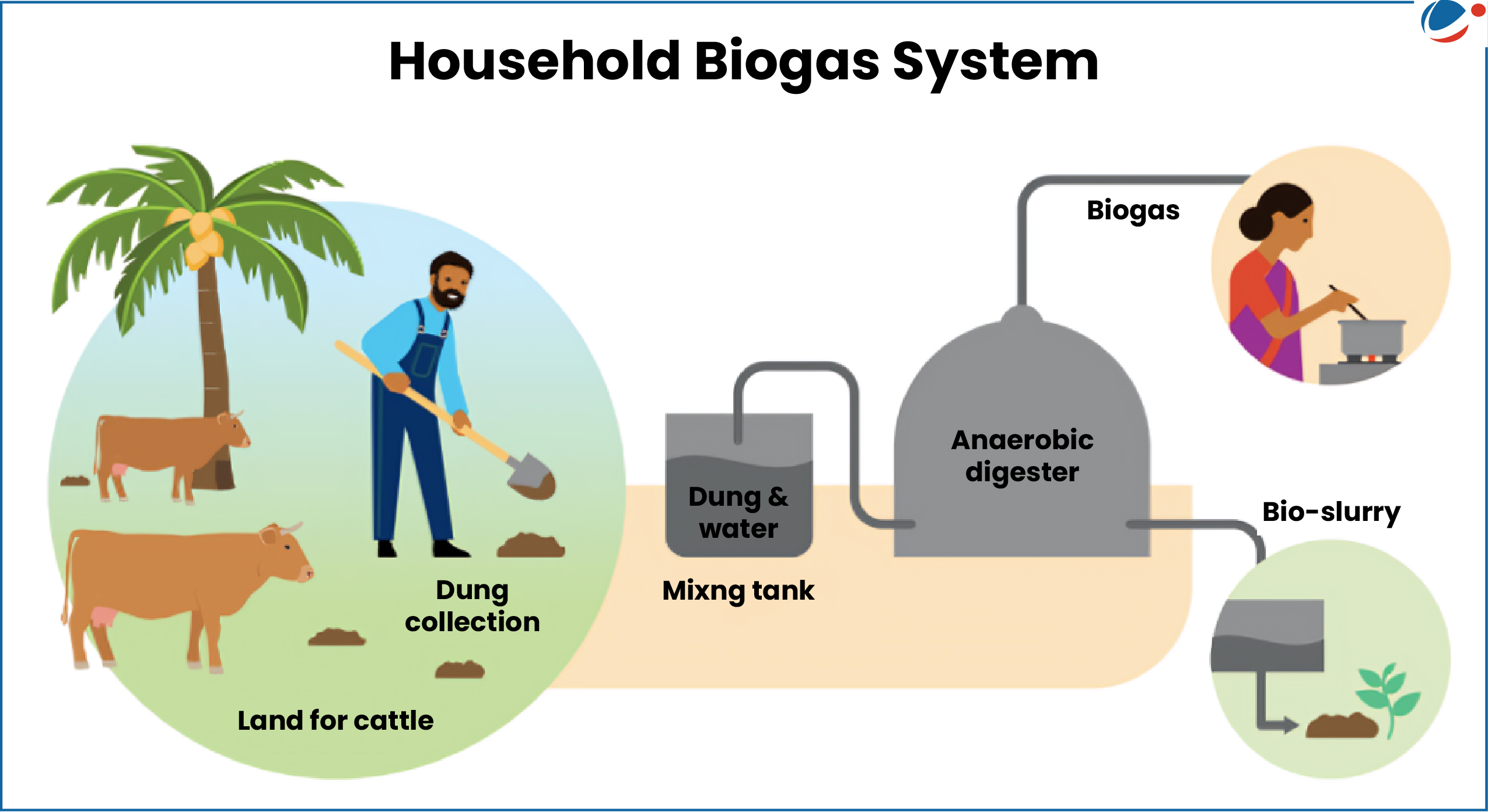
Biogas is produced after organic materials (plant and animal products) are broken down by bacteria in an oxygen-free environment, a process called anaerobic digestion.
About Biogas
- Composition: Methane (CH4) 55-60%, Carbon dioxide (CO2) 35-40%, Trace elements of Ammonia Hydrogen Sulphide (H2S) and moisture.
- Main Technologies Involved in Production:
o Biodigesters: Airtight systems (e.g. containers or tanks) where organic material, diluted in water, is broken down by naturally occurring microorganisms.
o Landfill gas recovery systems: Involves decomposition of municipal solid waste (MSW) under anaerobic conditions at landfill sites.
o Wastewater treatment plants: These could recover organic matter, solids, and nutrients from sewage sludge,which could be used as input to produce biogas.
Relevance of Biogas as Alternative Cooking Fuel
- Diversifying energy mix: Heavy reliance on imported fuels increases vulnerability to global shocks.
- Reduce Chemical Fertilizer Dependence: Biogas production also yields bio-slurry, a nutrient-rich byproduct, could be used as organic fertilizer.
- Benefits for Rural Areas: Enhances rural energy access, improves waste management, and offers cleaner alternative to using fossil fuel based resources.
Key Initiatives taken for Biogas promotion in India
- Galvanizing Organic Bio-Agro Resources Dhan (GOBARdhan) Scheme: Launched under Swachh Bharat Mission (Grameen) in 2018, aims at converting bio-waste into biogas.
- National Bio Energy Programme (NBP): comprises sub-schemes related to BiogasWaste to Energy Programme: Energy from Urban, Industrial, Agricultural Wastes and Municipal Solid Waste in the form of Biogas/BioCNG, etc.
- Processes like incineration, gasification, or pyrolysis are involved in waste to energy technologies.
- Biogas Programme (2021-22 to 2025-26): Setting up of biogas plants for clean cooking fuel, lighting, etc.

