The experimental therapy called VERVE-102 reduced harmful LDL (low-density lipoprotein) cholesterol by up to 62% in patients with inherited high cholesterol and early heart disease.
About VERVE-102
- It is an investigational in vivo base editing medicine.
- Base editing is a form of genome editing that can directly convert a single DNA base (C or A) to another base (T or G).
- VERVE-102 consists of a messenger RNA which encodes an adenine base editor and a guide RNA (gRNA) targeting the PCSK9 (Proprotein Convertase Subtilisin/Kexin type 9) gene.
- PCSK9 is a liver secretory enzyme that regulates blood cholesterol.
- mRNA is a genetic molecule that contains instructions or recipe that directs cells to make a protein using its natural machinery.
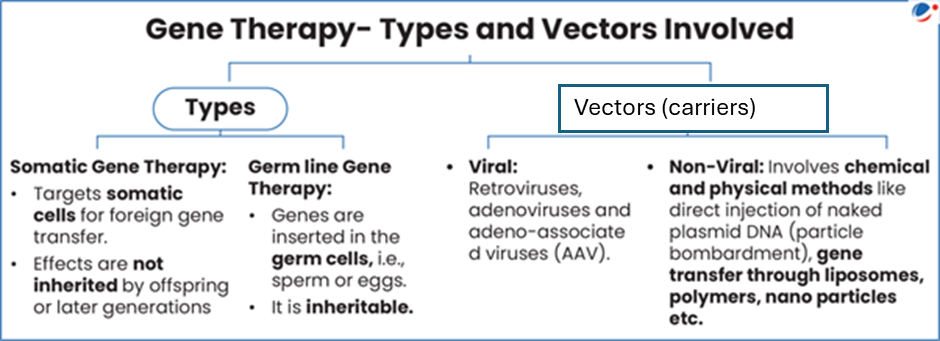
What is Gene Therapy?
- It is a technique that uses a gene(s) to treat, prevent or cure a disease or medical disorder.
- It works by adding new copies of a gene that is broken, or by replacing a defective or missing gene in a patient’s cells with a healthy version of that gene.
- Applications: Both inherited genetic diseases (e.g., hemophilia and sickle cell disease) and acquired disorders (e.g., leukemia) have been treated with gene therapy.