
Zoological Survey of India (ZSI) Identifies Four News Sites for Coral Translocation in Great Nicobar Island | Current Affairs | Vision IAS

Upgrade to Premium Today

Start Now
MENU
Home
Quick Links

High-quality MCQs and Mains Answer Writing to sharpen skills and reinforce learning every day.

Watch explainer and thematic concept-building videos under initiatives like Deep Dive, Master Classes, etc., on important UPSC topics.

A short, intensive, and exam-focused programme, insights from the Economic Survey, Union Budget, and UPSC current affairs.

ESC

In Summary

  • Coral colonies and giant clams at Great Nicobar Island face impact from a proposed transhipment port.
  • Coral translocation involves moving corals to more hospitable areas to enhance reef quality and biodiversity.
  • Corals, invertebrates with symbiotic algae, thrive in warm, clear, shallow waters but are threatened by ocean changes and pollution.

In Summary

These sites would include Coral colonies and giant clams that will be impacted due to transhipment port proposed at Galathea under Great Nicobar Island (GNI) mega project. 

  • Along with this, ZSI will maintain systematic data on translocated colonies with GPS tags to monitor their survival. 
  • Obtain necessary approval under Wildlife Protection Act, 1972 before handling any Schedule-I species (coral colonies and Giant Clams). 
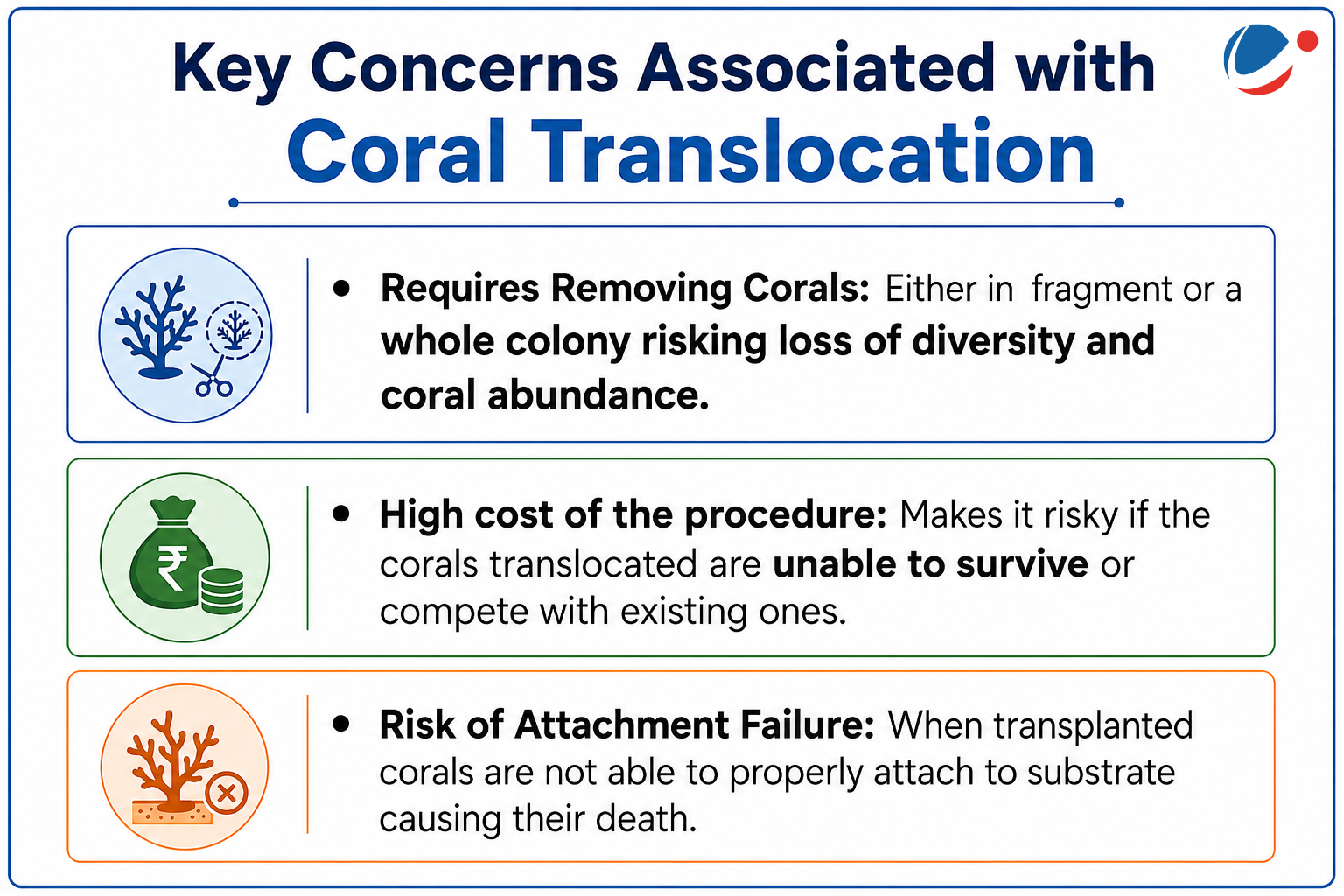
About Coral Translocation

  • Meaning: Physical relocation of coral from site of inhospitable conditions to an area where it is more likely to thrive to improve reef quality, biodiversity and topographic complexity.
    • Previously, India’s Coral Translocation project in Marine National Park, Gulf of Kachchh, Gujarat was the first of its kind attempt to transplant and restore coral in turbid environment. 

About Corals
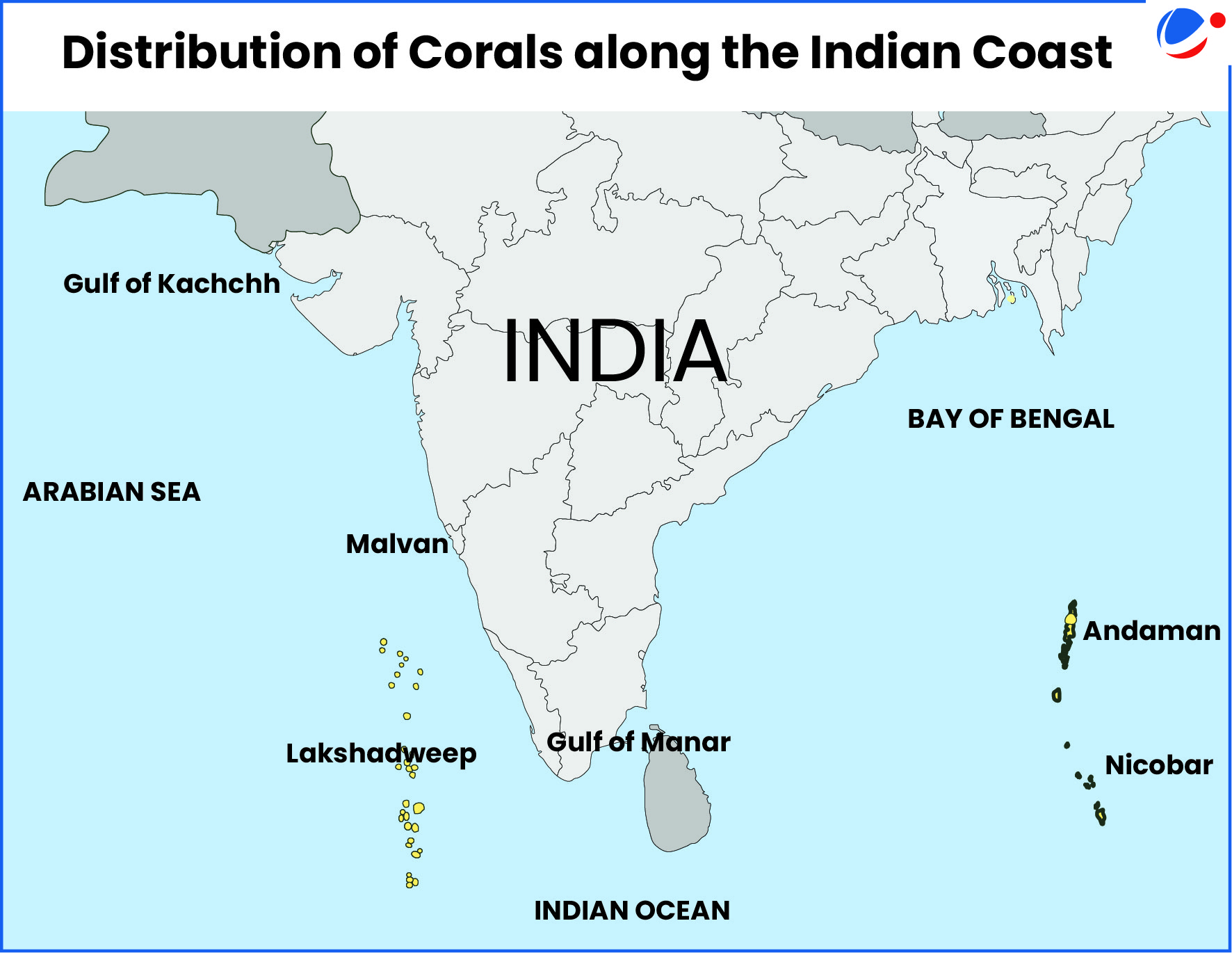
  • Invertebrates that belong to a large group of animals called Cnidaria. 
  • Each individual coral is made of  polyp and obtain their colour from microscopic algae, called zooxanthellae. (Both having symbiotic relationship between them).
  • Significance: Ecosystem for life underwater, protect coastal areas from storms, provide a source of income, etc.
  • Key Conditions for Corals thrive:
    • Warm water temperatures between 23°C and 29°C. 
    • Sunlight penetration, essential for symbiotic algae (zooxanthellae) living in coral tissues.
    • Clear, shallow waters, generally less than 50 meters deep.
  • Threats to Corals: Changes in ocean temperature and acidification, with local pressures like pollution, overfishing and declining water quality, etc. 
Watch Video News Today

Explore Related Content

Discover more articles, videos, and terms related to this topic

RELATED VIDEOS

2
Carbon Markets

Carbon Markets

YouTube HD
What is Artificial Rain? | Deep Dive With VisionIAS

What is Artificial Rain? | Deep Dive With VisionIAS

YouTube HD

RELATED TERMS

3

Ocean Acidification

A decrease in the pH of the Earth's oceans, caused by the uptake of carbon dioxide from the atmosphere. It poses a significant threat to marine life, particularly corals, by hindering their ability to build skeletons.

Zooxanthellae

Microscopic algae that live symbiotically within the tissues of corals, providing them with color and essential nutrients through photosynthesis. This symbiotic relationship is crucial for coral survival and health.

Polyp

An individual organism that forms the basic structure of a coral. Each coral colony is composed of numerous polyps, which are essential for understanding coral anatomy and growth.

Title is required. Maximum 500 characters.

Search Notes

Filter Notes

Loading your notes...
Searching your notes...
Loading more notes...
You've reached the end of your notes

No notes yet

Create your first note to get started.

No notes found

Try adjusting your search criteria or clear the search.

Saving...
Saved

Please select a subject.

Referenced Articles

linked

No references added yet
