


India AI Mission launched the Indigenous Varya.
About Varya
- Distilled video model built to make frontier video AI affordable, accessible and relevant.
- Developed with support from IndiaAI Mission by the company Avataar.
- Features:
- Varya uses distillation technique that reduces video generation from 50 steps to 4 steps, while maintaining comparable output quality.
- Distilled video generation is a model compression technique from machine learning where a compact "student" model replicates outputs of larger, slower "teacher" model transferring capabilities while eliminating redundant computation.
- Can generate video at ₹0.48 per second, upto 10x more cost-efficient.
- Product experience is designed around: Idea → Video → Story.
- Varya uses distillation technique that reduces video generation from 50 steps to 4 steps, while maintaining comparable output quality.
Article Sources
1 sourceDRDO conducted three consecutive missile tests, validating advanced ballistic missile defence and anti-ship strike capabilities of India.
- Also, the maiden flight test of the Naval Anti-Ship Missile–Medium Range (NASM-MR) successfully demonstrated maritime strike capability.
About Ballistic Missile Defence (BMD) System
- Purpose: Defends against aerial threats such as ballistic missiles, cruise missiles, aircraft, and drones using interceptor missiles.
- India’s BMD Programme: Launched in 1999-2000 (after Pakistan’s maiden nuclear test in 1998), it is a two-layered system (endo-atmospheric and exo-atmospheric) ranging from 30 km till around 5,000 km.
- Development: Rocket-powered at launch and then follow a ballistic trajectory; characterized by long range, high speed, large payload capacity, and difficult interception (e.g., Prithvi and Agni series).
Union Defence Minister called the indigenous Project Kusha, a “game changer” for India’s security architecture.
About Project Kusha
- Being Developed By: DRDO
- Aim: Provide a comprehensive shield against a wide range of aerial threats.
- Key Features:
- Long-range indigenous surface-to-air missile (SAM) system.
- Designed to rival advanced platforms like Russia's S-400 Triumf.
- Features 3 interceptor Variants: M1 (150 km), M2 (250 km), and M3 (350–400 km).
- Includes counter fighter aircraft, including stealth platforms, drone, cruise missiles, precision-guided munitions and certain ballistic Missile threats.
- Linked to broader "Mission Sudarshan Chakra", for building a multi-layered air and missile defence shield for India by 2035.
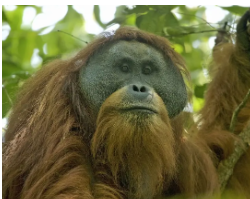
A climate change-driven cyclone in 2025 killed nearly 7% of global Tapanuli orangutan population within just four days, highlighting the species’ extreme vulnerability to extreme weather events.
Tapanuli Orangutan (Pongo tapanuliensis)
- Population: World's rarest great ape, with fewer than 800 individuals (2019) remaining in the wild.
- Classification: One of the three orangutan species, alongside the Bornean and Sumatran orangutans.
- Habitat & Distribution: Endemic to the Batang Toru Ecosystem, North Sumatra (Indonesia).
- Characteristics: Tiny population, slow reproduction (6–9 years between births), and dependence on dense forest canopies.
- Conservation Status: Critically Endangered (IUCN).
The Supreme Court dismissed the writ petition filed by Congress members against Rajya Sabha Nomination Rejection, citing the Constitutional bar on judiciary as per Article 329.
About Article 329
- It prohibits the interference by courts in following electoral matters:
- Laws related to delimitation of constituencies or allocation of seats in Parliament and State Legislatures.
- An election can be challenged only through an election petition after the election is completed.
Indian Institute of Technology Madras creates ANCHOR: Atlas of Neurochemical Characterization of the Human brainstem with 3D Reconstruction.
About ANCHOR
- World’s most detailed 3D Atlas of human brainstem, comprising most comprehensive, multi-modal, 3D maps and atlases to date spanning from prenatal period to childhood and adult brains.
- Encompass more than 200 brainstem nuclei and fiber tracts, reconstructed from hundreds of serial sections.
- Brainstem is the structure that connects cerebrum to spinal cord and cerebellum.
- Composed of (descending order): midbrain, pons, and medulla oblongata.
- Functions: breathing, consciousness, blood pressure, heart rate, sleep, contains many critical collections of white and grey matter, etc.
Article Sources
1 source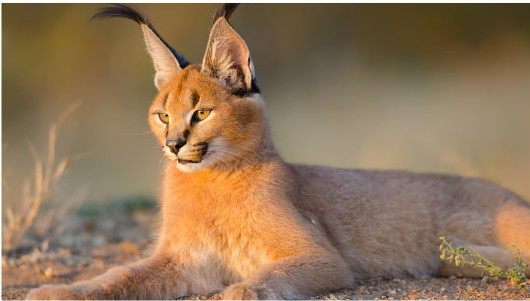
India’s rarest wild cat Caracal spotted in Kuno National Park, Madhya Pradesh after several decades.
About Caracal
- Coverage: It is widely distributed across Africa, Central Asia, and south-west Asia into India.
- Habitat: Forest, Savanna, Shrubland, Grassland, Desert.
- Characteristics:
- It is naturally shy and elusive, living in harsh landscapes that are difficult to monitor.
- Adults spend much of their days alone, hunting for birds, rodents, rabbits, and gazelles.
- Mom caracals (which usually have three babies in each litter) cuddle with their young.
- Also known as the "flying cat" as they can leap up to 3 meters into the air to snatch birds.
- Protection Status:
- IUCN status: Least Concern
- Wildlife Protection Act, 1972: Schedule I
A study of the evolution of supernova SN 2023zcu can help estimate the distance of the local universe.
- SN 2023zcu is a Type IIP core-collapse supernova.
About Supernovae (SNe)
- A supernova is colossal explosion of a star.
- Types:
- Core-collapse supernovae: Occurs when massive star exhausts its nuclear fuel and can no longer support itself against gravitational pull.
- Thermal Runaway Supernova: Occurs when two stars orbit each other, and one or both of those stars is a white dwarf.
- Significance of SNe: Vital to evolution of cosmos because they act as giant recycling centers, creating and scattering heavy elements that eventually become building blocks for new stars, planets, etc.
Article Sources
1 sourceCalled the “Ellora of the Himalayas”, Masroor Rock-Cut complex of temples are lesser known architectural gems of India.
About Masroor Rock Cut Temples
- Location: Kangra Valley of Beas River in Himachal Pradesh.
- Period: Early 8th-century.
- Architectural Features
- Style: Version of North Indian Nagara style.
- Example of temple mountain-style embodying earth and mountains around it (faces northeast, towards Dhauladhar range).
- Carved out of monolithic rock with shikhara, sacred pool of water; has three entrances (two incomplete);
- Entire complex is symmetrically laid out on square grid, where main temple is surrounded by smaller temples in mandala pattern.
- Features reliefs of major Vedic and Puranic gods and goddesses.
- Dedicated to Shiva, Vishnu, Devi and Saura traditions of Hinduism.
- First reported by Henry Shuttleworth in 1913.
- Style: Version of North Indian Nagara style.
