Increasing extreme weather events in the fragile Himalayan region are triggering flash floods.
About Flash Flood
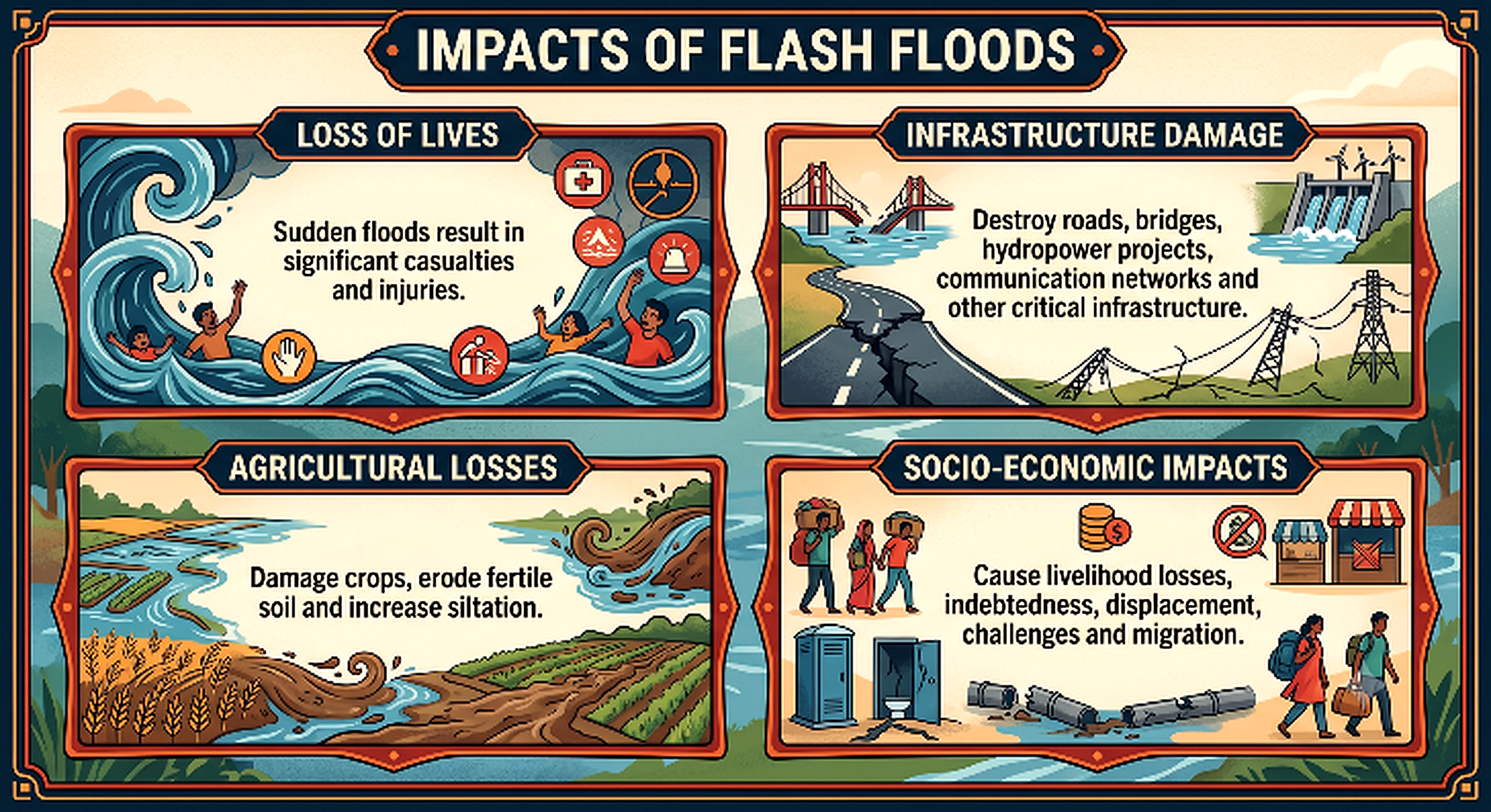
- Definition: Sudden, short-duration and highly localised floods triggered within hours by intense rainfall, rapid snowmelt, dam/levee failure or ice jams, leaving very little time for warning and response.
- Other recent occurrences: Chennai (2015), Kerala (2018), Assam (2024), etc.
Key Causes of Flash Floods in the Himalayas
- Climatic & Meteorological Factors: Cloudbursts, intense rainfall, western disturbance–monsoon interaction, climate change, and atmospheric aerosols trigger extreme precipitation and flash floods.
- Glacial Lake Outburst Floods (GLOFs): Sudden release of large quantities of bounded water due to the melting of ice blocks in glacier-fed rivers.
- Geographical Factors: High elevations and steep slopes promote intense rainfall and rapid surface runoff.
- Anthropogenic (Human-Induced) Factors: Unplanned infrastructure (dams, roads etc.), unscientific hill cutting, poor slope stabilisation, and improper muck (construction debris) disposal destabilise slopes, obstruct drainage, and intensify flash floods
Way Forward
- Strengthen Early Warning Systems: Expand India Meteorological Department's Flash Flood Guidance Services (FFGS), satellite monitoring and ensure that real-time alerts reach vulnerable communities.
- Disaster-Resilient Infrastructure: Adopt scientific drainage planning, slope stabilisation and regulate construction in fragile Himalayan regions.
- Risk-Based Planning: Recognise flash floods as a distinct disaster, undertake localised vulnerability mapping and develop state-specific SOPs.
- Community-Based Resilience: Integrate indigenous knowledge into local early warning and disaster preparedness systems.