
Wildlife Institute of India (WII) released Status and Trend of Great Indian Bustard in Thar | Current Affairs | Vision IAS

Upgrade to Premium Today

Start Now
MENU
Home
Quick Links

High-quality MCQs and Mains Answer Writing to sharpen skills and reinforce learning every day.

Watch explainer and thematic concept-building videos under initiatives like Deep Dive, Master Classes, etc., on important UPSC topics.

A short, intensive, and exam-focused programme, insights from the Economic Survey, Union Budget, and UPSC current affairs.

ESC

In Summary

  • The Thar landscape in Jaisalmer, Rajasthan, is the last stronghold for the Critically Endangered Great Indian Bustard (GIB), supporting diverse wildlife and facing extreme climate variations.
  • GIB population is stable at 130 ± 21, but faces threats from expanding infrastructure like power lines and solar plants, causing habitat fragmentation and mortality.
  • The GIB, listed as Critically Endangered (IUCN) and Schedule I (WPA 1972), is an omnivorous, agro-grassland bird endemic to the Indian subcontinent, with conservation efforts underway.

In Summary

The Thar landscape in Jaisalmer, Rajasthan is the last stronghold for the Critically Endangered Great Indian Bustard (GIB).

  • Thar is part of the Desert Biogeographic Zone and is among India’s most ecologically distinct and biologically rich arid ecosystems.
  • Biodiversity: Supports the GIB, Chinkara, Desert Fox, Indian Fox, Desert Cat, and Spiny-tailed Lizard
  • Climate: Temperatures range from 50°C in summer to 0°C in winter, with high diurnal variation.
  • Landscape: Features a mosaic of grasslands and croplands over gravel plains, rocky hillocks, sand-soil cover and sand dunes.

Key Highlights of Report

  • Stable Population: GIB population estimated at 130 ± 21, remaining stable since 2017–18. 
  • Threats: Power lines, agricultural fencing, roads, water sources, and solar plants have expanded substantially, intensifying habitat fragmentation and mortality risks.
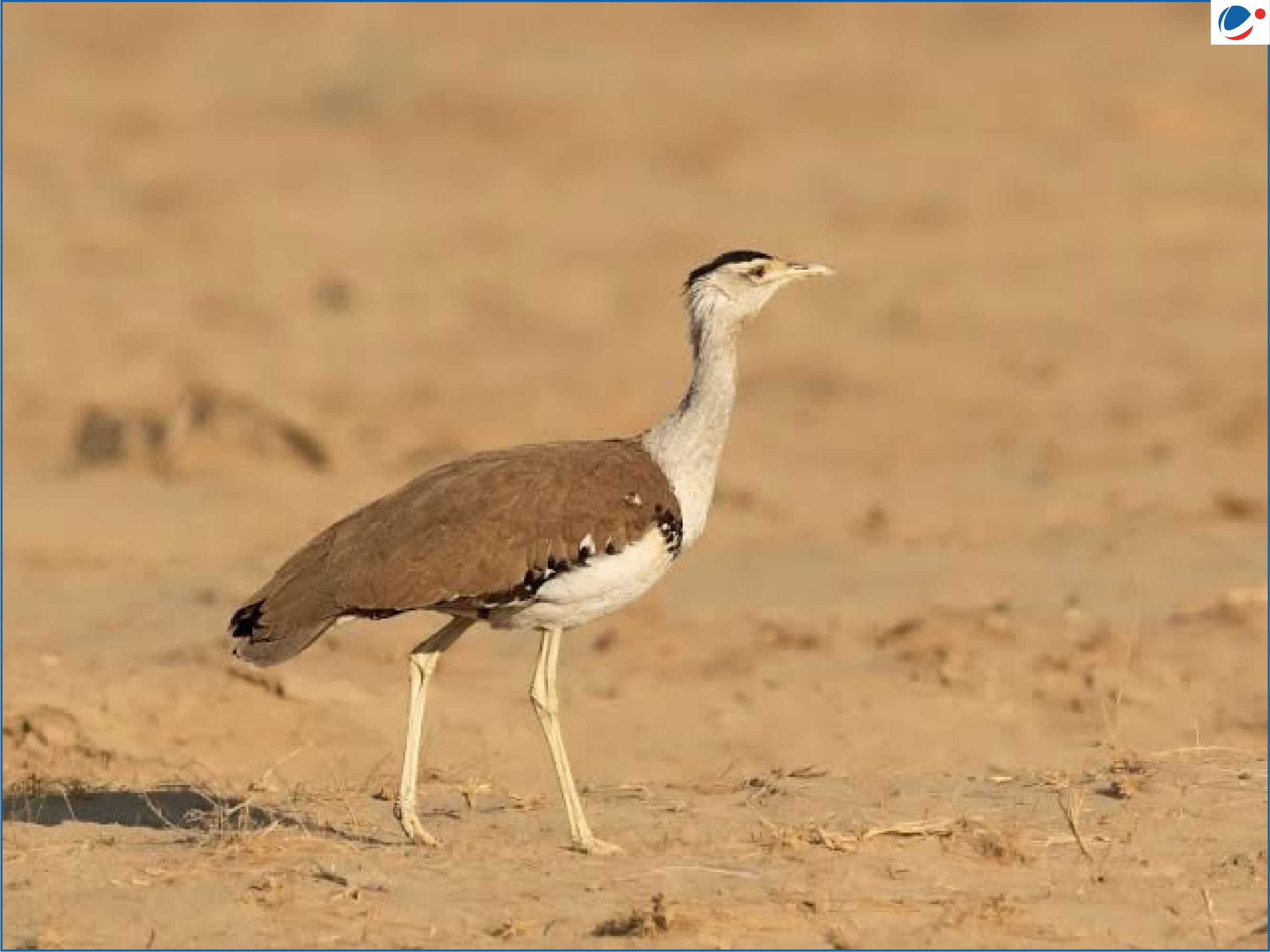
About Great Indian Bustard (GIB)

  • Conservation Status:
    • IUCN: Critically Endangered.
    • Wildlife (Protection) Act 1972): Schedule I.
    • CITES: Appendix I.
  • Habitat: It is an agro-grassland bird that thrives in open habitats including short grasslands, open scrub, and rain-fed agricultural land.
  • Range: The bird is endemic to the Indian Subcontinent found in Rajasthan, Gujarat, Maharashtra, Andhra Pradesh.
    • It is State Bird of Rajasthan.
  • Diet: Omnivorous.
  • Threats: Infrastructure expansion, invasive predators (free-ranging dogs, feral dogs, nilgai), vegetation changes etc. 
  • Conservation Efforts: Conservation breeding, habitat restoration, predator translocation, removal of invasive Prosopis juliflora, scientific monitoring etc. 
Watch Video News Today

Explore Related Content

Discover more articles, videos, and terms related to this topic

RELATED VIDEOS

2
Carbon Markets

Carbon Markets

YouTube HD
What is Artificial Rain? | Deep Dive With VisionIAS

What is Artificial Rain? | Deep Dive With VisionIAS

YouTube HD

RELATED TERMS

3

Agro-grassland bird

A bird species that inhabits or relies on landscapes that are a combination of agricultural lands and grasslands. The Great Indian Bustard is an example, requiring open areas that often include cultivated fields and natural grasslands.

Habitat Fragmentation

Habitat fragmentation is the process by which large, continuous habitats are broken into smaller, isolated patches. This isolation can disrupt migration routes, reduce genetic diversity, and increase the vulnerability of species to extinction, posing a significant threat to migratory wildlife.

CITES

Convention on International Trade in Endangered Species of Wild Fauna and Flora. It is an international agreement between governments aiming to ensure that international trade in wild animals and plants does not threaten their survival. Countries that are Parties to CITES are legally bound to implement its rules through domestic legislation.

Title is required. Maximum 500 characters.

Search Notes

Filter Notes

Loading your notes...
Searching your notes...
Loading more notes...
You've reached the end of your notes

No notes yet

Create your first note to get started.

No notes found

Try adjusting your search criteria or clear the search.

Saving...
Saved

Please select a subject.

Referenced Articles

linked

No references added yet