


Nifty 50 companies recorded a 4.6% rise in PoSH Act,2013 complaints in FY2026
The rise in complaints suggests possibly higher awareness and a rise in trust in the redressal process.
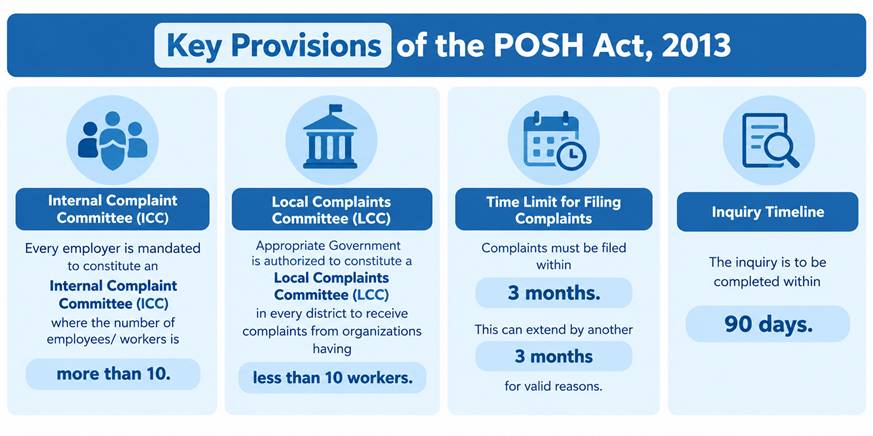
About PoSH Act,2013
- It expands as “The Sexual Harassment of Women at Workplace (Prevention, Prohibition and Redressal) Act, 2013”.
- Objective: To provide protection to women against sexual harassment at workplace and for the prevention and redressal of complaints related to it.
- Coverage: All women, irrespective of age or employment status and extends its protection to both public and private sector workplaces, organized or unorganized, including domestic workers.
- Nodal ministry: Ministry of Women and Child Development (MoWCD).
Need for the POSH Act,2013
- Protection of Constitutional Rights: As sexual harassment violates Articles 14, 15, the right to practice any profession under Article 19(1)(g), and the right to life and dignity under Article 21.
- Compliance of Vishaka guidelines: To give statutory backing to judgment of the Supreme Court in Vishaka v. State of Rajasthan (1997).
Challenges associated with implementation of PoSH Act 2013
- Non-constitution of Internal Committees (ICCs): Many institutions either do not form ICCs or constitute them improperly (e.g., absence of external member).
- Under-reporting: Fear of retaliation, stigma, job loss and reputational harm discourages complaints.


