
‘Progress on drinking water, sanitation and hygiene in schools 2015-2025’ Report released by UNICEF and WHO | Current Affairs | Vision IAS

Upgrade to Premium Today

Start Now
MENU
Home
Quick Links

High-quality MCQs and Mains Answer Writing to sharpen skills and reinforce learning every day.

Watch explainer and thematic concept-building videos under initiatives like Deep Dive, Master Classes, etc., on important UPSC topics.

A short, intensive, and exam-focused programme, insights from the Economic Survey, Union Budget, and UPSC current affairs.

ESC

In Summary

  • A WHO/UNICEF report on WASH (Water, Sanitation, Hygiene) found only 63 countries will achieve 90% coverage for all three elements by 2025.
  • By 2030, 79-84% of schools globally will have basic WASH services, but 429 million children lack basic water, 460 million lack basic sanitation, and 362 million lack hygiene services.
  • India is on track for universal basic drinking water in schools by 2030, but 50 million children still lack sanitation services at school.

In Summary

This WHO/UNICEF report is part of the Joint Monitoring Programme (JMP) for WASH.

About WASH 

  • WASH is a collective term for Water, Sanitation and Hygiene relating to access to safe drinking water, improved sanitation facilities, and maintaining basic level of hygiene. 
    • Only 63 countries had achieved >90% coverage for all three elements of basic WASH by 2025. 

Key findings

  • Around 84% of schools will have basic water services, 81% will have basic sanitation services and only 79% will have basic hygiene services in 2030. 
  • 429 million school-age children lacked basic drinking water service at their school.
  • 460 million school-age children lacked basic sanitation serviceat their school.
  • 362 million children still had no hygiene service at their school in 2025.
  • India related findings: 
    • India is among 28 out of 62 countries that are on track to achieve universal coverage of basic drinking water in schools by 2030.
  • 50 million school-age children in India lacked any sanitation service at school in 2025.

Importance of WASH 

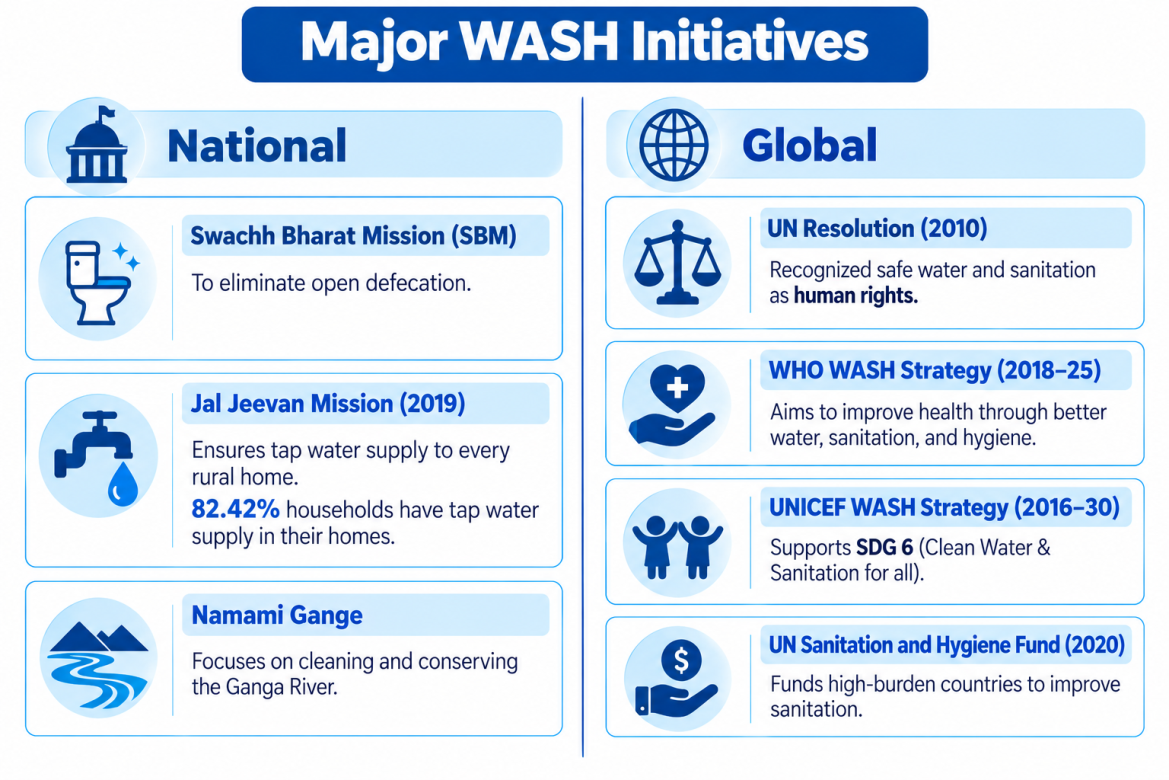
  • SDGs 2030: Linked to SDG3 (Good health and well-being) SDG 6 (Ensuring management of water and sanitation for all).
    • WASH is critical for reducing infections like cholera, diarrhea (3rd leading cause of deaths in children 1–59 months of age), sepsis etc.
  • Protects Human Rights: Clean water and sanitation are basic human rights as recognized by UN.
Watch Video News Today

Explore Related Content

Discover more articles, videos, and terms related to this topic

RELATED VIDEOS

1
Transformation of Family Structures in India

Transformation of Family Structures in India

YouTube HD

RELATED TERMS

3

Universal Coverage

In the context of WASH, this refers to ensuring that all segments of the population have equitable access to safe drinking water, sanitation, and hygiene services without facing financial hardship or discrimination.

SDG 3

संयुक्त राष्ट्र सतत विकास लक्ष्यों में से एक, जिसका शीर्षक 'अच्छा स्वास्थ्य और खुशहाली' है, जो सभी उम्र के लोगों के लिए स्वस्थ जीवन सुनिश्चित करने और कल्याण को बढ़ावा देने पर केंद्रित है।

SDG 6

Ensures availability and sustainable management of water and sanitation for all.

Title is required. Maximum 500 characters.

Search Notes

Filter Notes

Loading your notes...
Searching your notes...
Loading more notes...
You've reached the end of your notes

No notes yet

Create your first note to get started.

No notes found

Try adjusting your search criteria or clear the search.

Saving...
Saved

Please select a subject.

Referenced Articles

linked

No references added yet