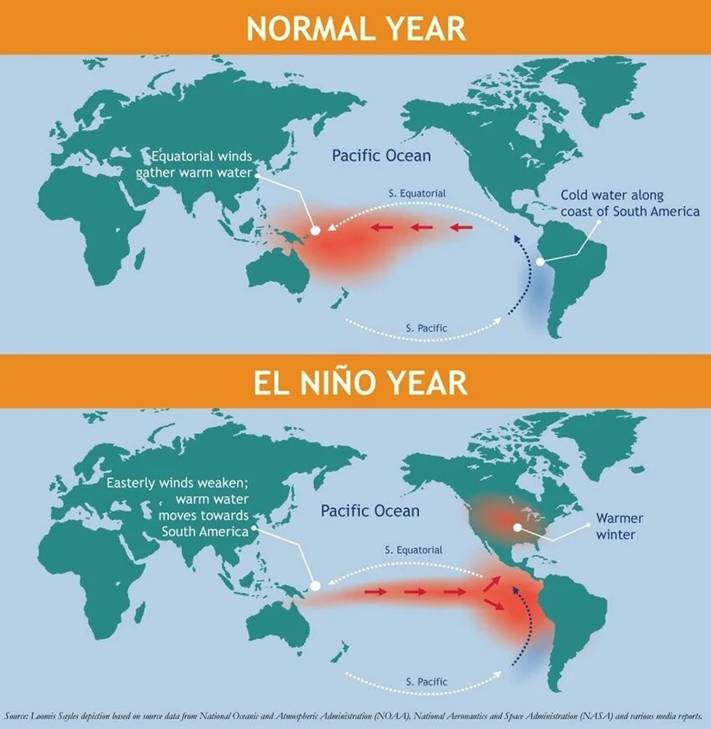
The report projects that these El Nino deaths will be concentrated overwhelmingly in the Global South with 15,800 more deaths projected in India.
- Scientists project that global land temperatures will be 1.2°C above normal in the coming months due in large part to the current “Super El Niño” that began in June 2026.
Super El Nino
- Super El Nino is an informal term generally used for exceptionally strong El Niño conditions.
- El Niño is the warm phase of the naturally occurring El Niño-Southern Oscillation cycle (ENSO) and is characterized by unusually warm ocean surface temperatures in the central and eastern Pacific.
- El Nino happens when easterly trade winds become weaker.
- Frequency: It typically occurs every two to seven years and lasts around nine to twelve months.
- Duration: El Niño generally begins developing between March and June and reaches its peak intensity between November and February.
Impact of Super El Nino
- Global Temperature: El Nino has warming effect on global climate.
- Rainfall: Associated with increased rainfall and flooding in parts of South America, East Africa, and the southern United States; drought conditions in eastern and northern Australia, Indonesia, southern Africa, and parts of South Asia.
- Ocean: El Nino can intensify marine heat waves, damaging seagrass meadows and kelp forests, altering distribution of plankton and fish populations.
- Extreme Weather Events: Super El Nino can lead to more severe storms, forest fires, flooding and droughts.