


Why in the News?
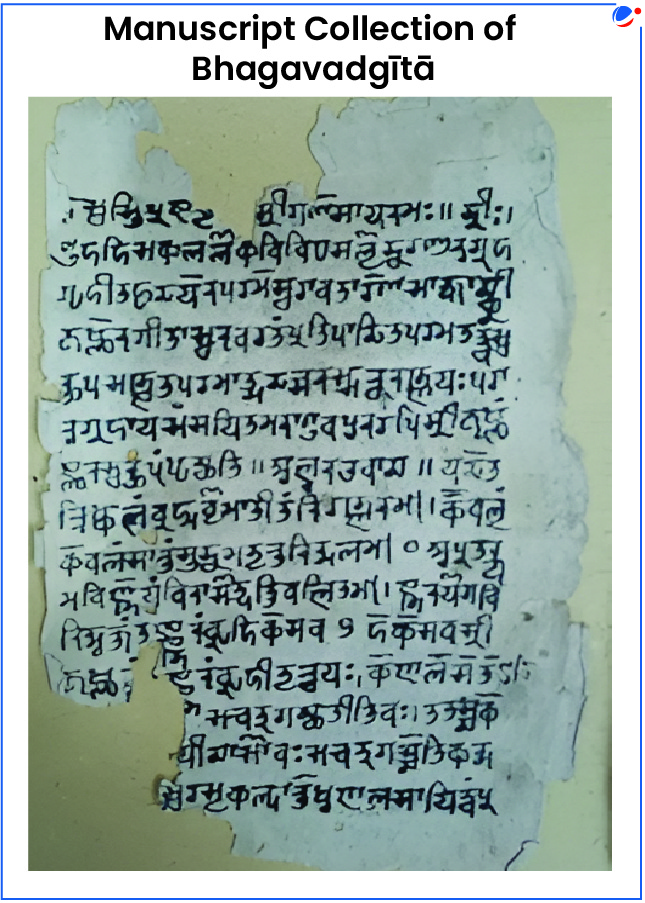
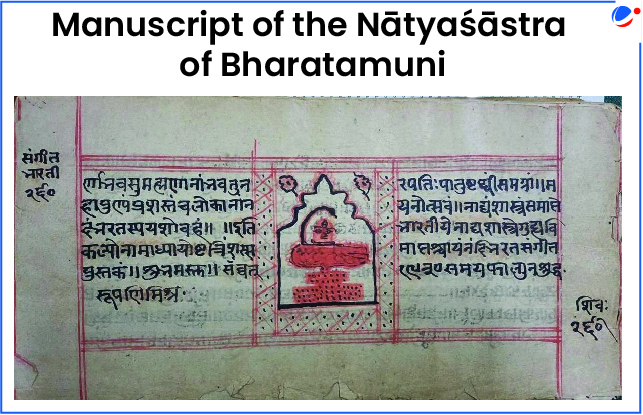
United Nations Educational, Scientific and Cultural Organization (UNESCO) added the Manuscript Collection of Bhagavad-Gita and Natyashastra in its Memory of the World Register.
About UNESCO Memory of the World (MoW) Programme
- Genesis: Launched in 1992.
- Objectives: Facilitate preservation (particularly in areas affected by conflict and/or natural disaster), catalyse universal access, enhance public awareness worldwide of the significance of documentary heritage.
- Documentary heritage is a legacy of humankind, through which we can look back into past, enrich our present lives, and look into future with boldness forged by enduring memories.
- International Advisory Committee (IAC) is the main body responsible for advising UNESCO on the planning and implementation of Programme as a whole.
- IAC comprises 14 members serving in a personal capacity, appointed by the Director-General of UNESCO.
- Current Status: 570 Memory of the World inscriptions on the International Register since 1995.
- Recently, MoW listed 74 new items of documentary heritage inscribed on the Memory of the World International Register in 2025.
- In addition to International Register, UNESCO has supported creation of 4 regional registers and National "Memory of the World" Committees in more than 100 countries.
About Bhagavad-Gita
- About: Attributed to Sage Vyas, it contains 700 verses in 18 chapters, is embedded within the Bhīṣmaparva (adhyāya 23-40) of the epic Mahabharata.
- It is a central text in continuous, cumulative ancient intellectual Indian tradition, synthesizing various thought movements such as Vedic, Buddhist, Jain and Cārvāka.
- It takes the form of a dialogue between Krisna and Arjuna with armies lined up for the great war intended to free Arjuna of dejection (viṣāda).
- In the battle of kurusetra Lord Krishna urges Arjuna to do his duty, good or evil without any attachment for the fruit of actions (niskama karma).
- Three margas (paths) in Gita: Karma (Action), jnana (Knowledge), bhakti (Devotion) are three paths proposed as spiritual disciplines by Gita for the betterment of one's wealth.
- Other key facts about Bhagavad-Gita:
- Contains the idea of Bhakti.
- Teachings of Shankaradeva, founder of the Vaishnavite sect in Assam, was inspired by Bhagavad Gita.
About Natyashastra (Science of Dramaturgy)
- It was written by Bharatamuni and was codified around the 2nd century B.C.
- It is an epitome of Nāṭyaveda (an oral body of knowledge of performing art containing 36,000 verses known as the Gāndharvaveda).
- Natyotpatti, meaning "birth of performing art," refers to the origin story of the Natyashastra.
- It gives the mythical account of the origin of the art and its descent on the earth.
- In the story Natyashastra was formed by extracting knowledge from all 4 Vedas- Paathya or recitative
- text (from Rig veda), Sangeeta or music (from Saama veda), Abhinaya or performance (from Yajur veda) and Rasa or emotions (from Atharva veda).
- Hence, Natyashastra is often referred to as the 'Fifth Veda'.
- It comprises comprehensive set of rules that define nāṭya (drama), abhinaya (performance), rasa (aesthetic experience), bhāva (emotion), saṅgīta (music), etc.
- Aim: To create Rasa and this is achieved by giving detailed instructions to various categories of personnel concerned and connected with the stage and the stage production.
- It is the first text available on the classification of India instruments.
Other Important entries from India in UNESCO Memory of the World Register | |
| 2023 |
| 2017 |
| 2013 |
| 2011 |
| 2007 |
| 2005 |
| 2003 |
| 1997 |


