


USPACOM was renamed to USINDOPACOM in 2018 stressing the importance of Indian Ocean region in regional security architecture.
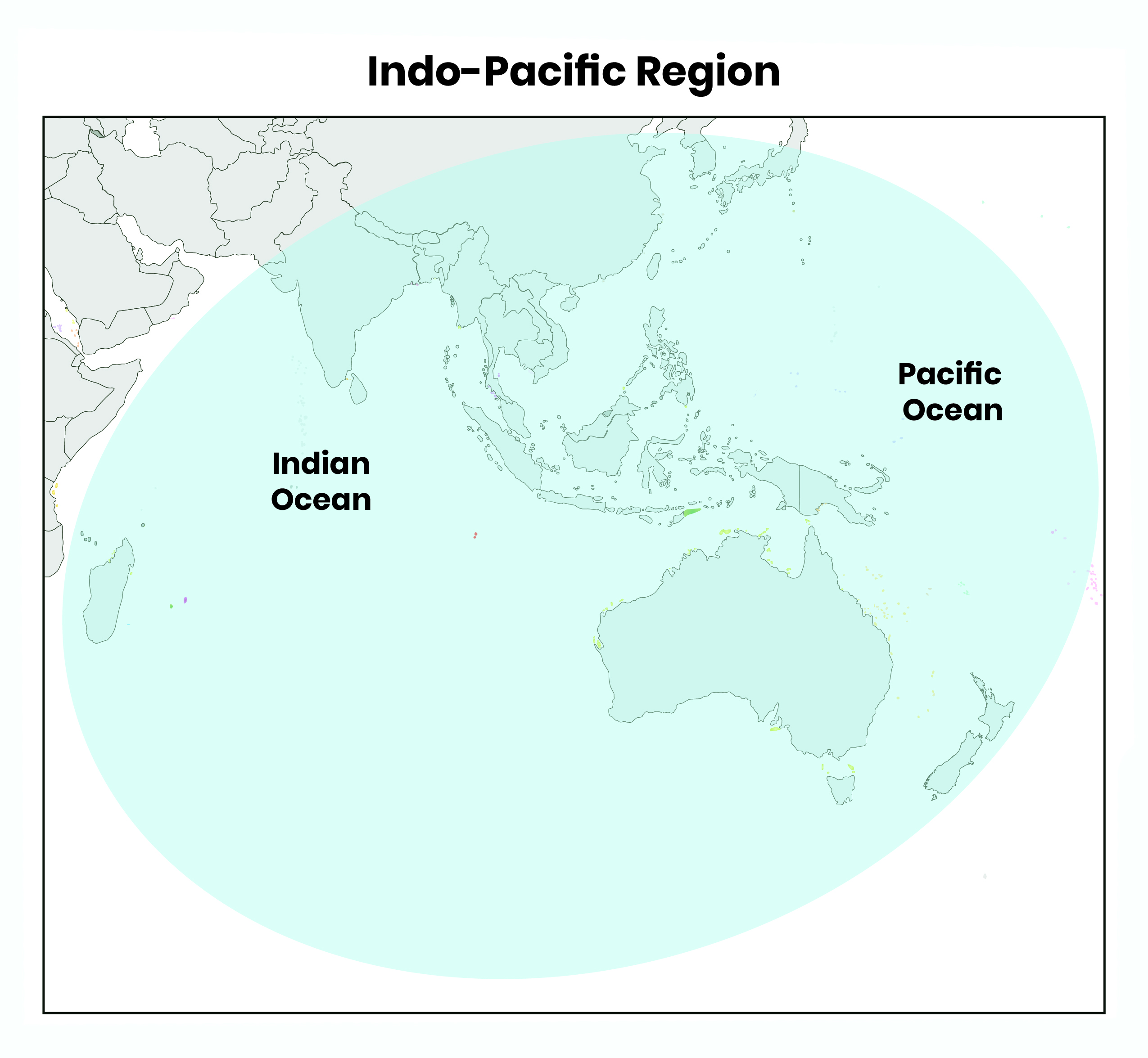
- Name change suggests possible realignment in US security interests and engagement in the Indo-Pacific region.
- Different naming constructs of the region arise due to lack of consensus over the geographical contours and ever-shifting geopolitical alignments.
Significance of Indo-Pacific Region for India
- Trade: Anchor of India’s external trade as it handles 95% of India's trade and energy imports.
- Counterbalancing China: Checks Beijing's military expansion and strategic encirclement (E.g. Belt and Road Initiative) in India’s neighbourhood.
- Maritime Security: India projects itself as the primary first responder and net security provider in the Indian Ocean Region (IOR).
- Economic Integration: Advances the "Act East Policy" by linking Northeast India with Southeast Asian economies.
Challenges in Indo-Pacific Region:
- Geopolitical Flashpoint: Strategic competition has resulted in overlapping claims (E.g.South China Sea) and a high risk of conflict escalation (E.g. Taiwan).
- Maritime Choke Points: Threats to Indo-Pacific chokepoints such as Strait of Hormuz, the Bab el-Mandeb, and the Strait of Malacca as seen during US-Iran conflict.
- Supply Chain Vulnerability: The global manufacturing concentration in China can create global supply chain shocks (Eg; Semiconductor chips).
- Non-Traditional Security Threats: Such as rising sea levels and climate change, piracy, illegal, unreported, and unregulated (IUU) fishing, and cyber warfare.


