


During BRICS Women Ministerial Meeting in Kochi, Kerala, Ministry of Panchayati Raj showcased India’s transformative initiatives in empowering women through democratic decentralisation.
Indian Women in Panchayats
- Status: Approximately 14.5 lakh Elected Women Representatives (EWRs) in Panchayati Raj Institutions (PRIs), about 46% of total elected representatives. (July 2025).
- Outcome: 25 of 42 Gram Panchayats recognised for exemplary performance under National Panchayat Awards last year were being led by women.
Key Benefits of Having Women Representatives in Panchayats
- Responsive Development Planning: Ensuring targeted investments in areas like health, education, skill development, safety, and protection against violence.
- E.g., Zero Tolerance resolution against domestic violence by Namanguda Gram Panchayat, Odisha.
- Mainstreaming Gender in Governance: Integrating a gender perspective to tackle harmful practices like child marriage and gender-biased sex selection.
- E.g., Child Marriage Prevention Drive by Nongarh Gram Panchayat, Bihar.
- Collective transformation: E.g., Promoting women-led Self Help Groups for financial inclusion and community vigilance by Kishorinagar Gram Panchayat, Andaman and Nicobar Islands.
- Women Empowerment: Breaking socio-psychological traps, stereotypical bonds and achieving equality.
- E.g. Own Farm–Own Market” initiative to connect women with market by Jorhat Gram Panchayat, Assam.
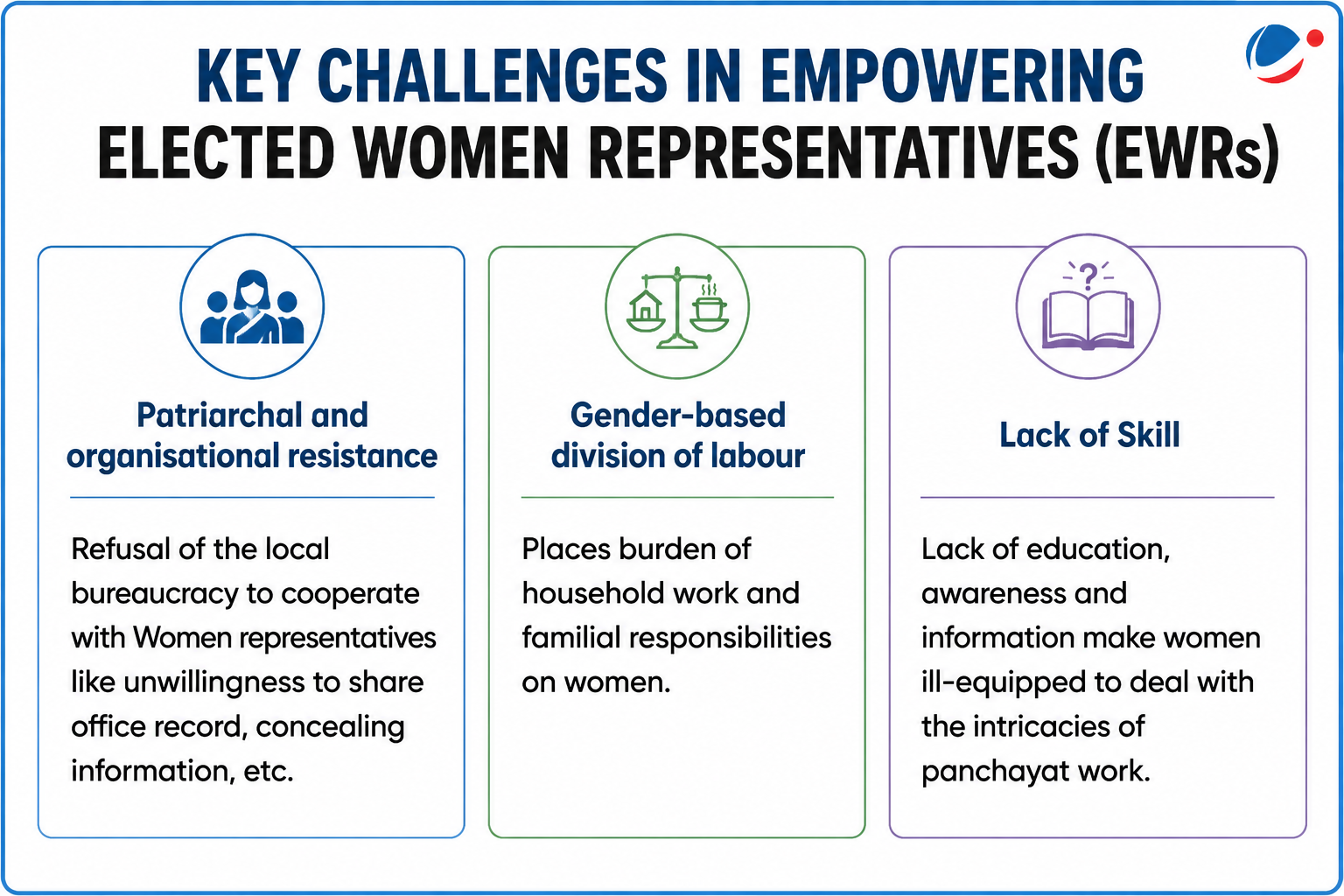
Key Measures to Empower EWRs
- Constitutional: Article 243D provides not less than one-third reservation for women to be filled by direct election in every Panchayat and total number of offices of Chairpersons in Panchayats.
- Sashakt Panchayat Netri Abhiyan: Launched in March 2025, it has already trained around 1.5 lakh EWRs.
- Regular conduct of Mahila Sabhas: As a preparatory forums where women articulate concerns, build consensus and bring unified proposals to Gram Sabha.


