


Why in the News?
Richard Cash, physician and global health scholar, died who was instrumental in the development of Oral Rehydration Therapy (ORT).
About ORT
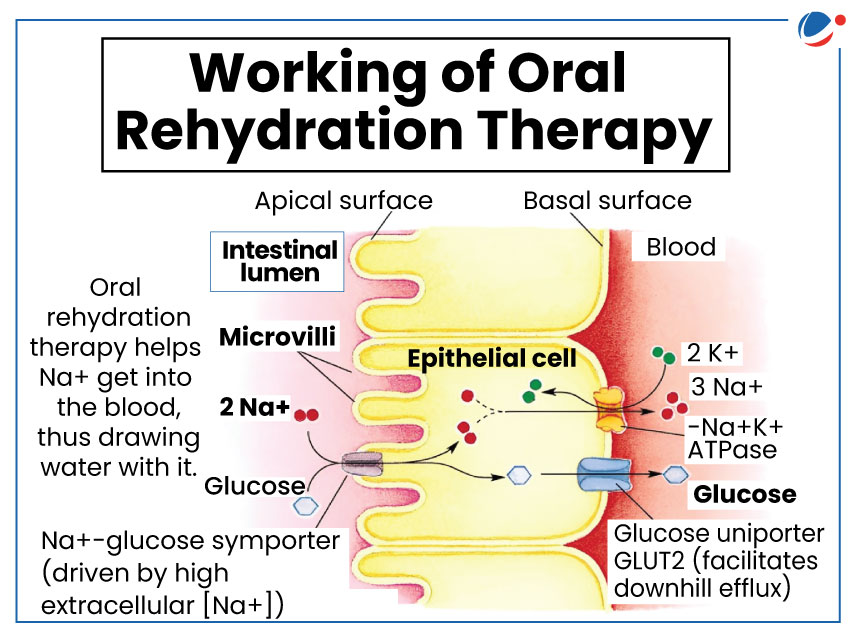
- Oral rehydration therapy (ORT) is the administration of appropriate solutions (glucose, sodium chloride, sodium bicarbonate, and potassium chloride or citrate) by mouth to prevent or correct dehydration.
- ORT consists of:
- Rehydration—water and electrolytes are administered to replace losses.
- Maintenance fluid therapy to take care of ongoing losses once rehydration is achieved (along with appropriate nutrition)
- Richard conducted the first clinical trials of Oral Rehydration Therapy (ORT) in cholera patients in Bangladesh in the late 1960s.
- It demonstrated that this low-cost intervention could effectively and safely reduce intravenous fluid needs.
- Dilip Mahalanabis was an Indian pediatrician, scientist, and public health specialist who pioneered the use of oral rehydration solution (ORS) to treat diarrheal diseases.
- Potent in Treatment of Diarrhea and Cholera:
- Diarrhea:
- Reduction in Child Mortality: ORT has significantly reduced deaths from diarrheal diseases, with child mortality declining by two-thirds since 1990.
- Nutritional Impact: ORT mitigates the nutritional effects of diarrhea in children, helping preserve their growth and development.
- Cholera: ORT is highly effective in managing cholera patients, reducing mortality from over 50% to less than 0.2%.
- Diarrhea:
- Efficacy in Adults: The patients receiving the oral solution required 80% less intravenous fluids for cure in comparison to other techniques.
How ORT works?
- ORT works because of the molecular mechanisms that govern sugar and sodium absorption inside the gut.
- The cells that make up the lining of the gut have special receptors on their surfaces that allow them to actively absorb sugar molecules.
- The increase in sugar and sodium inside the cells leads to increased absorption of water and chloride ions.
Indian Initiatives
Global Initiatives
|
