


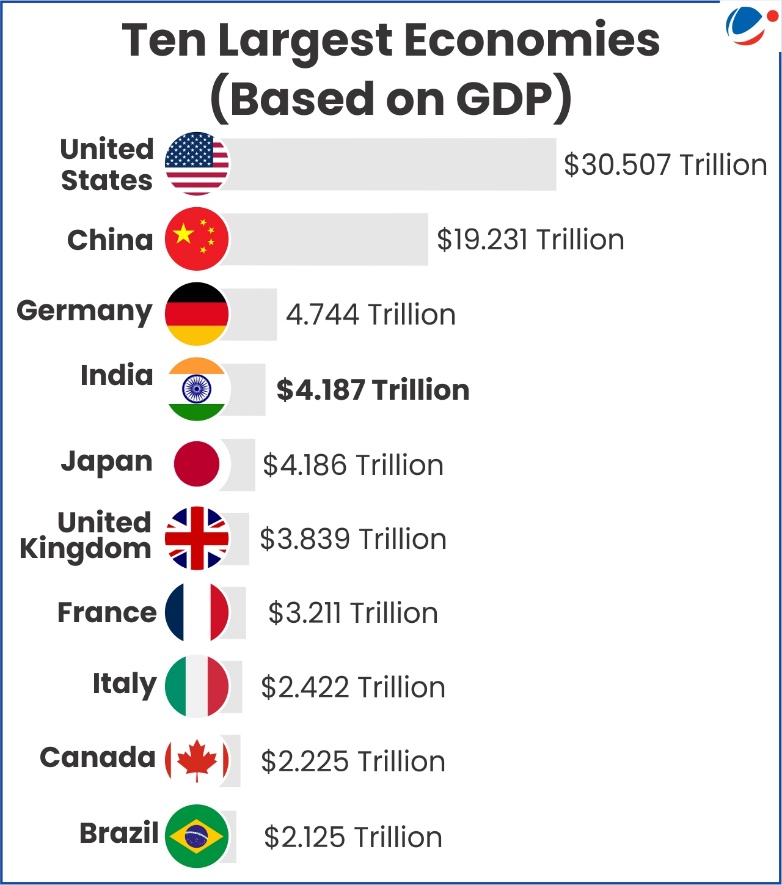
As per the recent World Economic Outlook of the IMF, India has surpassed Japan to become 4th largest economy worldwide.
Key drivers for India’s Economic Leap
- Structural: Urbanization and rising aspirations leading to rise in per capita income and lifestyle consumption, demographic dividend (India’s current median age is ~29 years), strong domestic demand (private consumption contributes nearly 70% to GDP), etc.
- Policy: Taxation and business reforms (implementation of GST, IBC, Corporate Tax cuts, etc.), push for infrastructure (National Infrastructure Pipeline, PM Gati Shakti, etc.), Atmanirbhar Bharat and Production-linked incentive, etc.
- Technological: Digital Public Infrastructure (UPI, JAM Trinity, etc.), strong global demand for Indian IT, software exports, and consulting services, etc.
- External and global factors: Increased FDI inflows, Global supply chain rebalancing with strategies like ‘China Plus One’ and Supply Chain Resilience Initiative, etc.
Future prospects for the Indian Economy
India is well positioned to become 3rd largest economy in the coming 2.5 to 3 years due to factors like:
- Energy transition: Rapid growth in renewable energy capacity (targeting 500 GW by 2030) and leadership in global platforms like the International Solar Alliance (ISA) positions India as a green growth leader.
- Regulatory stability: Reforms in banking sector (e.g., bank recapitalization) and strong regulatory institutions like RBI ensure macroeconomic stability.
Article Sources
1 sourceUS House Approves 'One, Big, Beautiful Bill' with 3.5% outward remittance tax provision
- Called the ‘Excise tax on remittance transfers’, the newly proposed provision will be effective from January 1, 2026.
Remittances
- Definition: The movement of funds from the country of work back to a home country is known as remittances.
- In 2023, remittances back to home countries totalled about $656 billion.
- India got 14.3% of global remittances in 2024 (its highest ever).
Key highlights of the Bill
- Remittance tax (excise tax) will apply only to non-US citizens and US citizens are exempted.
- Affected groups include Visa holders (H-1B, F-1), Green card holders, etc.
- The bill reduced the Outward remittance tax from 5% (which was previously proposed) to 3.5%.
Impact of Excise tax on remittance transfers’
- Global Economic ripple: Countries like El Salvador, Mexico, India, which rely on US remittances, may face economic setbacks.
- The proposal may also discourage foreign workers from maintaining assets or employment in the US.
- Dent India’s Inward Remittance Flow: The United States is the largest source of remittances to India, accounting for $32.9 billion of the total remittance inflows in 2023-24.
- A remittance tax could push some funds from Indians in the U.S. to grey or black markets, bypassing regulation.
Related NewsStudent remittances under the Liberalised Remittances Scheme (LRS) in FY2025 dropped to a five-year low ($2.92 billion), indicating reduced student outflows (RBI) About Liberalised Remittances Scheme
|
RBI has revised the rules for investment in Alternative Investment Funds.
About AIFs
- Any fund incorporated in India which is a privately pooled investment vehicle which collects funds from sophisticated investors, whether Indian or foreign, for investing it in accordance with a defined investment policy for the benefit of its investors.
- AIFs are regulated by the SEBI, as per the SEBI (Alternative Investment Funds) Regulations, 2012.
Categories of AIFs
- Category I AIF: Invest in start-ups, early-stage ventures or sectors considered socially or economically beneficial.
E.g. Venture Capital Funds, Angel funds, SME Funds, Infrastructure Funds
- Category II AIF: They do not use leverage or debts other than to cover their day-to-day operational expenses.
E.g. Private Equity Funds, Debt Funds, Real Estate Funds.
- Category III AIF: It may use leverage including through investment in listed or unlisted derivatives.
E.g. Hedge Funds, Private investment in public equity (PIPE).
Recently, Competition Commission of India has notified the Cost Regulations, 2025 providing new definitions to curb predatory pricing.
About Predatory Pricing
- Definition: The sale of goods or provision of services at a price below the cost with a view to reduce competition or eliminate competitors.
- Section 4(2) of the Competition Act, 2002 identifies predatory pricing by a dominant enterprise as an abusive practice.
- Impact of predatory pricing:
- On customers: Beneficial in the short term with lower prices but they suffer in the long term due to lesser options and higher prices.
- On Companies: Harms all companies in the short term but once competitors are driven out, the monopolised companies raise prices and recover lost profits.
Article Sources
1 sourceThe Reserve Bank of India (RBI) notified the Payments Regulatory Board Regulations, 2025, under Payment and Settlement Systems Act, 2007.
- These regulations replace the earlier Board for Regulation and Supervision of Payment and Settlement Systems Regulations, 2008.
About Payments Regulatory Board
- Composition
- Chairperson: RBI Governor
- Ex-officio Members: Deputy Governor in charge of payment systems, 1 RBI-nominated officer.
- 3 members nominated by Central Government.
- Board may also invite experts from fields like payments, IT, cybersecurity, law etc.
- Tenure of Members: Government-nominated members will have a fixed tenure of 4 years and no re-nomination is allowed.
- Meetings: At least twice a year.
- Quorum: Minimum of 3 members, including Chairperson or Deputy Governor.
- Decisions: by majority vote. In case of a tie, Chairperson has a casting vote.
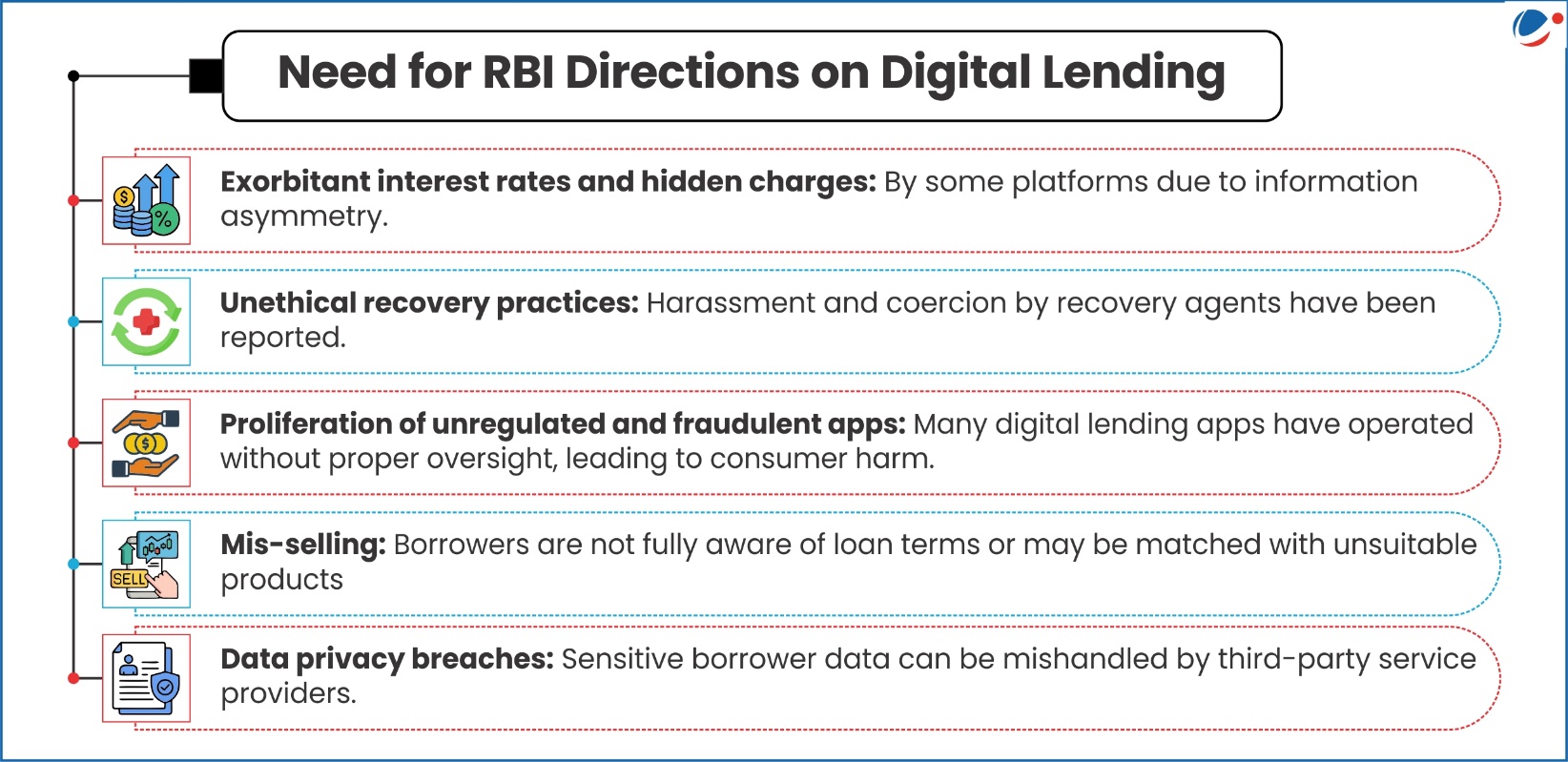
Key objectives of directions include enhancing borrower protection, ensuring data transparency, and promoting responsible Digital lending practices.
Key Highlights of the RBI Directions
- Defines digital lending as a remote and automated lending process by use of digital technologies for customer acquisition, credit assessment, loan approval, disbursement, recovery etc.
- Applies to: Commercial Banks, Primary (Urban)/State/Central Co-operative Banks, NBFCs (including Housing Finance Companies) and All-India Financial Institutions.
- Mandatory reporting of Digital Lending Apps (DLAs): via the RBI’s Centralized Information Management System (CIMS) portal to create a transparent public directory of legitimate DLAs.
- Enhanced due diligence: BY the financial entities on Lending Service Providers’ (LSPs) technical capabilities, data privacy, borrower conduct, and regulatory compliance.
- LSP is an agent of a financial entity who carries out digital lending functions on their behalf.
- Disclosures to borrowers: Financial entities and LSPs must disclose key details such as terms and conditions, privacy policies etc. allowing borrowers to make informed choices.
- Grievance redressal Officer: To be appointed by LSPs to deal with digital lending-related complaints and issues.
The Securities and Exchange Board of India (SEBI) has cautioned investors against dealing with opinion trading platform.
About Opinion trading platforms
- Concept: These platforms allow participants to earn money by investing in their predictions on any sports, political, weather, or crypto events,
- Participants can bet on any event based on their predictions.
- If the predictions are correct, a participant makes money, and in case the prediction goes wrong they lose.
- Legal Status: not regulated by SEBI because the items being traded are not classified as securities under Indian law.
- Economy: These platforms have registered transaction volumes of over Rs 50,000 crore a year with a user base of more than 5 crore people.
As per the RBI, India’s total exports (Merchandise + Services) have reached $824.9 billion in 2024-25 rising by 6.01 % from $778.1 billion in 2023–24.
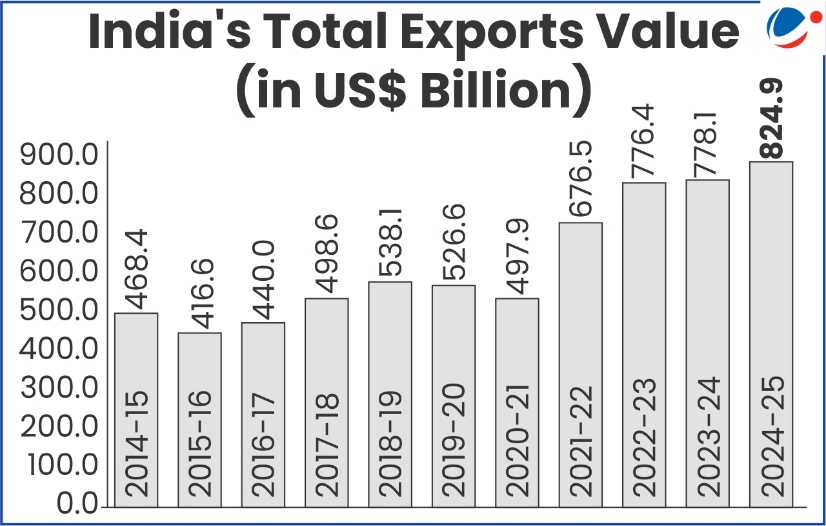
- This is despite global slowdown triggered by trade disruptions due to Red Sea crisis, Ukraine war, drought in Panama Canal, increase in Non-Tariff Measures, rising energy prices etc.
Key data and trends
- Merchandise Exports: Have marginally increased to US$437.4 billion, from US$437.1 billion in 2023-24.
- Services Exports: Reached a historic high of US$387.5 billion in 2024–25, up 13.6% from US$341.1 billion in 2023-24.
- Key sectors included telecommunications, computer and information services, transport, travel, and financial services.
Factors Driving Export Growth
- Policy Push: Government boosted exports via New Foreign Trade Policy, sector-specific schemes, Trade Facilitation, Districts as Export Hubs Initiatives and MSME support.
- Diversification of export markets: Rising demand from Southeast Asia, Africa, and Latin America offset global slowdowns.
- Trade Agreements: New bilateral and multilateral deals, such as India-UAE Comprehensive Economic Partnership Agreement (CEPA), opened markets and lowered barriers, particularly for services and electronics.
- Supply Chain Realignment: India became a reliable alternative in China-plus-one strategies, attracting global companies.
Article Sources
1 sourceIndia assumed the role of a Country Champion at the World Bank Land Conference 2025.
- During the conference, global attention was drawn towards India’s flagship land management initiatives like SVAMITVA Scheme and Gram Manchitra platform, as models of inclusive, technology-driven rural governance.
- With 68,000 sq. km surveyed and Rs.1.16 trillion worth of land monetized, SVAMITVA stood out as a scalable model for inclusive economic transformation at the global level.
- SVAMITVA aims at establishment of clear ownership of property in rural areas by mapping of land parcels using drone technology.
- Gram Manchitra’s role in promoting climate resilience, infrastructure planning, and convergence of schemes drew appreciation for its applicability in global south context.
- Gram Manchitra is a geospatial planning platform that empowers Gram Panchayats to prepare data-driven, localized development plans.
Efficient Land Management Systems and Economic Growth
- Jobs and Growth: Streamlined access to property facilitate entrepreneurship, expansion, wealth reinvestment and alternate livelihoods.
- Private Capital: Registered property rights provide landowners with collateral access, boosting private credit and investment opportunities.
- Infrastructure Funding: Generate stable government revenue for essential public services and infrastructure.
- Land and property taxes generate just 0.6% of GDP in low-income countries, compared to 2.2% in industrialized nations.
- Urban Management: Help cities plan for growth, protecting public spaces, identify development opportunities, and manage disaster risks.
- Food Security: Improving women’s access to land can increase agricultural outputs by 4%.
Article Sources
1 source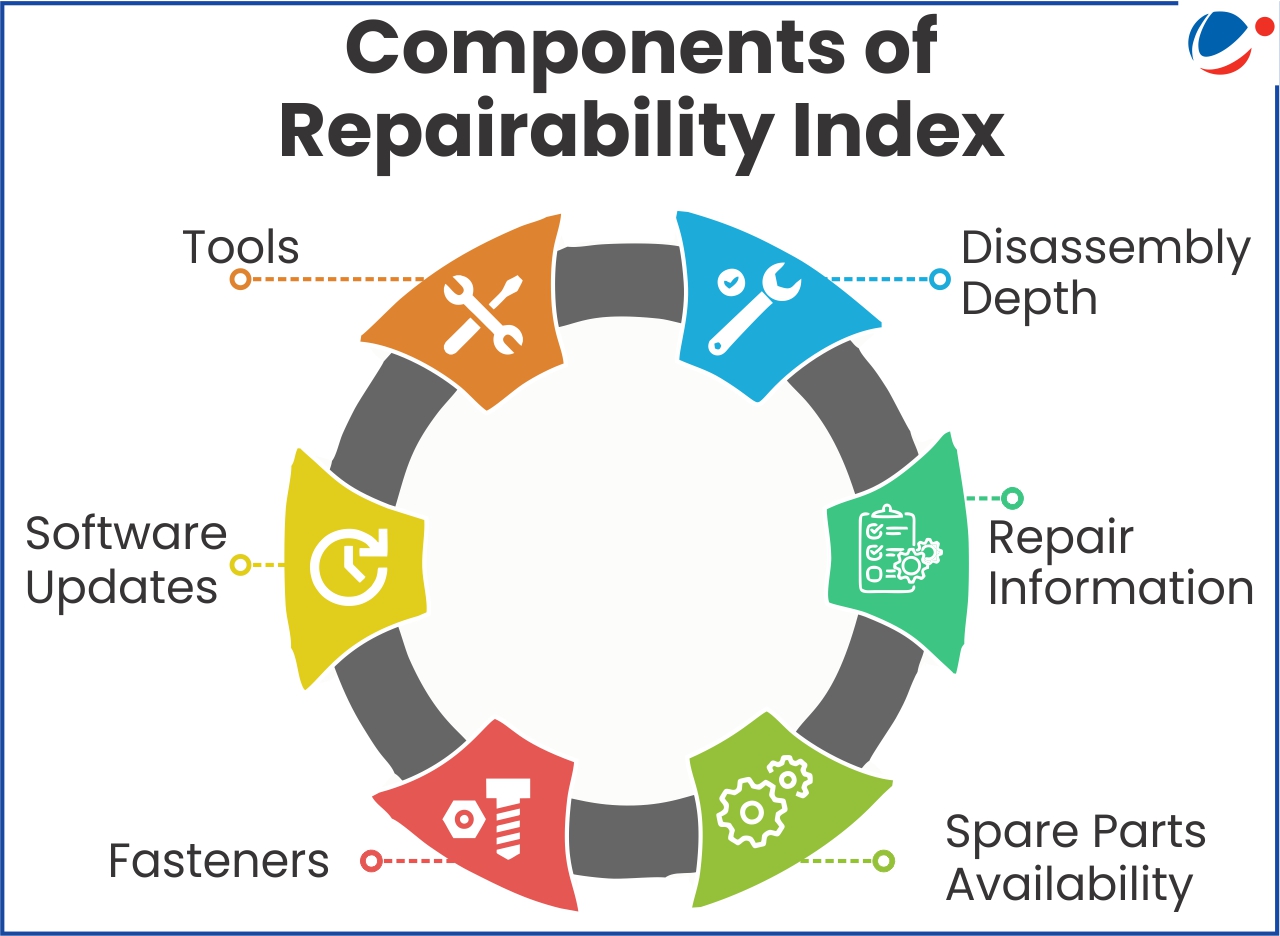
Committee formed under chairmanship of Bharat Khera to develop a framework for a Repairability Index (RI) in mobile and electronic sector has submitted its report to Department of Consumer Affairs (DoCA).
About RI Framework (Recommended by Committee):
- Original Equipment Manufacturers (OEMs) are required to self-declare RI based on standards scoring criteria provided in framework.
- RI should be displayed at point of sale/purchase, E-commerce platforms and in form of QR code on packaged products.
- Committee identified smartphones and tablets as priority categories for the initial phase of RI.
- RI is assessed on six core parameters (Refer Infographic).
- Scoring criteria and weightages were developed for each parameter.
- A RI on a five-point numeric scale is calculated after aggregating weightages for priority parts.
Significance of RI:
- Improved repair accessibility: There has been significant rise in complaints in mobiles and tablets product category from 19,057 in 2022-2023 and further to 22,864 in 2024-2025.
- Promoting Sustainable Economy: RI emphasizes on LiFE (Lifestyle for the Environment) movement through Promoting sustainable consumption.
- Address issue of ‘planned obsolescence’: i.e. devices are designed specifically to last a limited amount of time and to be replaced.
- Employment generation: By allowing third-party repairs.
About Right to Repair:
- It calls for companies to make spare parts, tools and information on how to repair devices available to customers and repair shops to increase lifespan of products.
- DoCA launched Right to Repair Portal India in 2022, to facilitate relevant repair associated information.
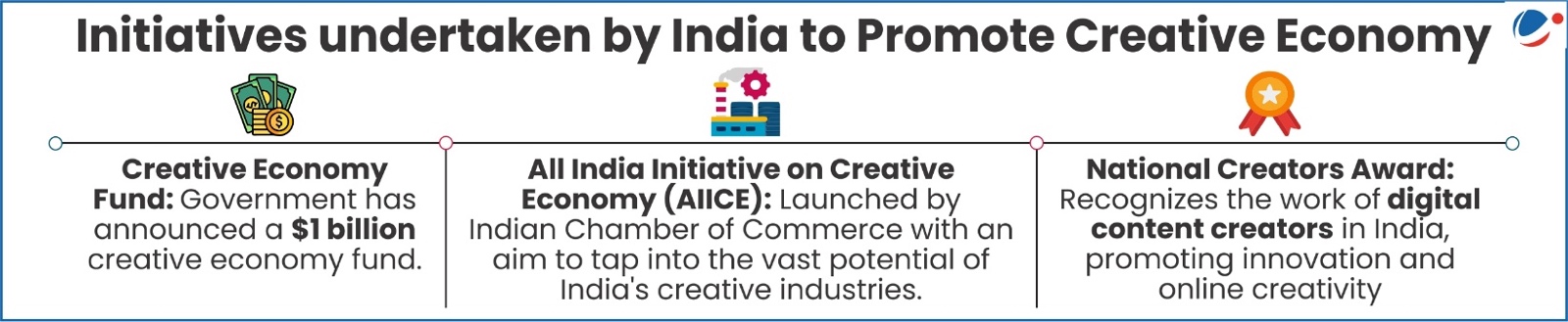
At the inaugural WAVES Summit 2025 in Mumbai, Prime Minister highlighted the India’s creative economy as a powerful driver of future GDP growth, innovation, and inclusive development.
- WAVES aims to unlock a $50 billion market by 2029, positioning India as a major player in the global entertainment economy.
- During the summit, government announced the launch of the Indian Institute of Creative Technology (IICT) for the creative sector.
- It is being established by Ministry of Information and Broadcasting in strategic partnership with FICCI & CII, envisioned as a National Centre of Excellence.
What is Creative Economy?
- Definition: Creative economy (orange economy) is an evolving concept based on the contribution & potential of creative assets to contribute to economic growth and development.
- It includes Media & Entertainment, Advertising and Marketing, Animation, Visual Effects, Gaming, Comics, and Extended Reality (AVGC-XR) etc.
- The United Nations declared 2021 as the International Year of Creative Economy for Sustainable Development, emphasizing its global importance.
India’s Creative Economy
- Contribution: $30 billion to GDP, employing 8% of the workforce. Creative exports exceed $11 billion annually.
- Challenges: Misinformation, copyright, intellectual property, privacy, and market monopolization, limited rural digital access, and lack of formal financing.
Indian Institute of Creative Technology (IICT) has been launched by Ministry of Information and Broadcasting in collaboration with FICCI and CII.
About IICT:
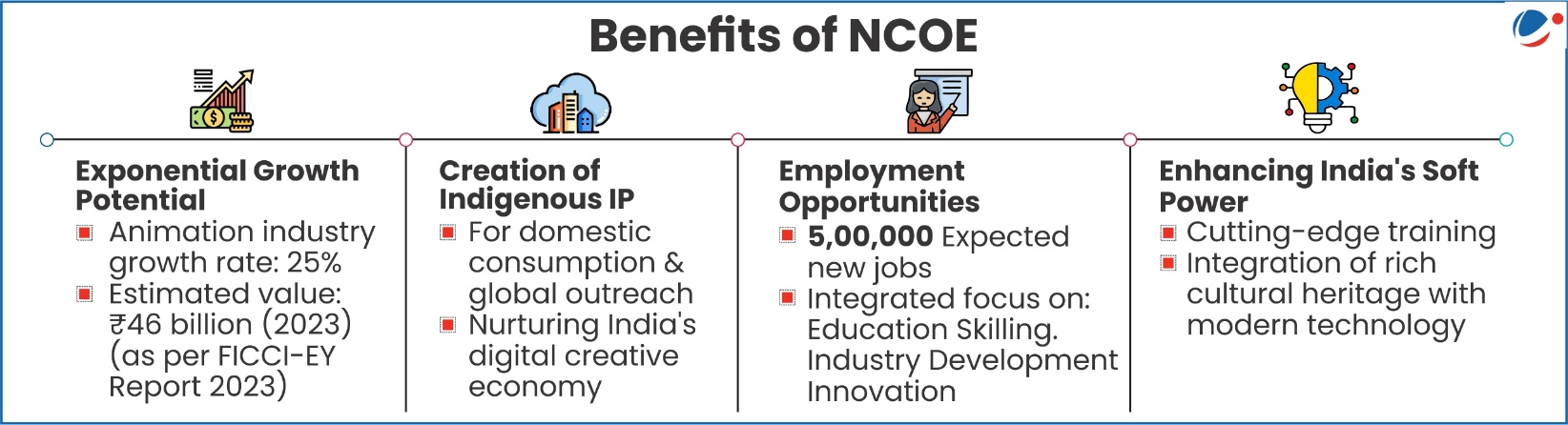
- It will serve as a National Centre of Excellence (NcoE) dedicated exclusively to Animation, Visual Effects, Gaming, Comics, and Extended Reality (AVGC-XR) sector.
- Extended Reality (XR) technologies blend physical and digital worlds e.g. Virtual Reality (VR), Augmented Reality (AR), and Mixed Reality (MR).
- It will follow same template as IITs and IIMs in India to transform itself into a massive world-class education and training hub for students who aspire to be professionals in AVGC-XR sector.
Status of AVGC-XR sector
- Globally AVGC-XR market was valued at over $366 billion in 2021.
- India: Currently accounts for less than 1% of the global market. Indian AVGC-XR market could reach $26 billion by 2030.
- Karnataka, recognized as India’s IT hub, is carving out a leadership position in the AVGC-XR sector.
Emerging key growth drivers of AVGC-XR sector in India
- Growing OTT User base: In 2024, India had an estimated 547 million OTT users, representing a penetration rate of 38.4%.
- Growth of Smartphone Users: India is set to have over 900 million internet users by 2025, with a majority from rural areas, according to the IAMAI and Kantar report.
- Wider Spectrum of Applications: Animation and VFX sector can be used in Gaming, EdTech, Architecture etc.
- Advent of New Technologies: E.g. Investment in AR and VR is increasing year on year.
Other reasons: Increased R&D Investments


