


Introduction
Recently, former chairman of Tata Group, Ratan Naval Tata passed away marking the end of an era. He was one of the most influential business magnates known for his charismatic and transformative leadership styles. It was for his exceptional and distinguished services that he was awarded the Padma Vibhushan (2008) and Padma Bhusan (2000).
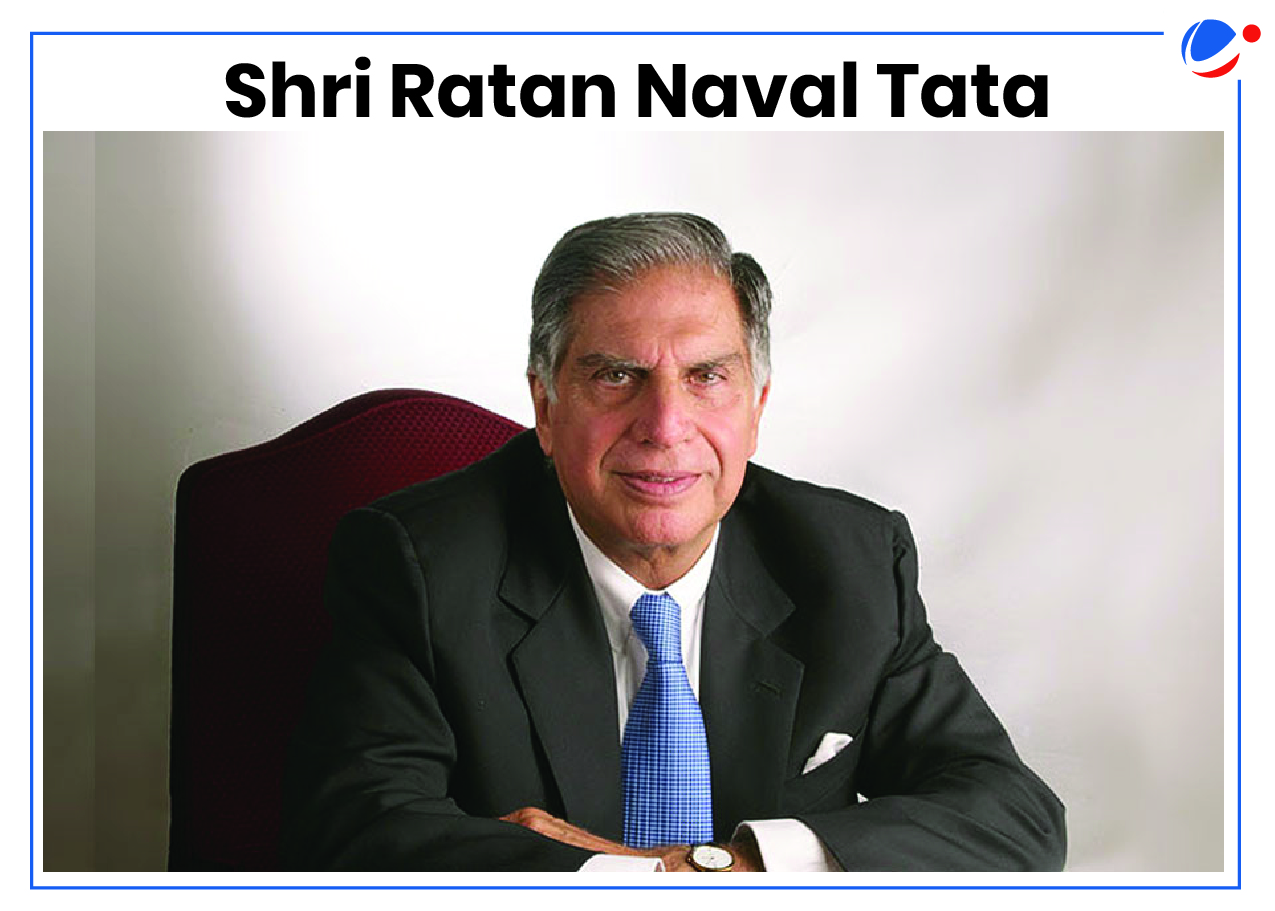
Early life
- Birth: December 28, 1937 in Mumbai.
- Graduation: He earned a degree in architecture and structural engineering from Cornell University, along with completing an advanced management program at Harvard Business School.
- Career: After returning to India, he was offered a job at IBM. Instead, he decided to join Tata Industries in 1962 at J.R.D. Tata insistence.
Key values associated with the life of Ratan Tata
- Profound Simplicity: Ratan Tata preferred to maintain a low profile, avoiding the limelight and focusing on his work.
- In today's vanity-driven, consumerist society, he exemplified simple living and profound thinking.
- Resilience and Preservance: Despite several hurdles, Ratan Tata launched the Tata Nano project in 2008, providing affordable cars to middle-class Indians.
- Visionary: His strategic thinking saw the expansion of the Tata Group, Under his leadership the Tata Group rose from $4 billion to $100 billion in revenue.
- Leadership: His leadership was defined by humility and hands-on involvement.
- He began his career at Tata in 1962, working on the shop floor of Tata Steel to understand the intricacies at the grassroots level.
- Empathy: Under his leadership, the Tata Trust expanded its philanthropic work, reflecting a deep sense of responsibility toward society.
- He and his organization were at the forefront of the relief efforts during the times of natural disasters and calamities.
- Spirit of service: As Chairman of the Tata Group, he spearheaded the restoration of the Taj Hotel and provided personal support to affected employees.
Key lessons from the life of Ratan Tata
- Compassionate Capitalism: He embodied the spirit of "compassionate capitalism" contributing immensely to society and industry transcending across borders and boardrooms.
- He ensured that the Group's wealth served the nation, with 60-65% of Tata Sons's dividends directed to charitable causes like health and education.
- Corporate Social Responsibility: Based on pillars like participative and bottom-up approach, focusing on disadvantaged sections.
- Contribution to Social Well-Being: Ratan Tata was deeply committed to philanthropy beyond his business endeavours.
- He pioneered India's first cancer hospital.
- Business Ethics: He was a firm believer in ethical leadership and prioritised strong ethical principles, integrity, and social well-being over short-term profits.
- He emphasized that business is not only about making money but also doing right for customers and stakeholders ethically.
- Promoting Entrepreneurship: He invested in many of the startups, such as Cashkaro, Snapdeal, Ola cabs, Dogspot, Teabox, etc encouraging a culture of innovation.
- Promoted Sustainability: The Tata group's carbon neutrality target is to achieve net zero emissions by 2045.
- PETA India awarded Tata Motors the Cow-Friendly Future award for using vegan interiors in AVINYA concept car.
- Global Footprint: Under him, the Tata group expanded internationally with acquisitions like Jaguar Land rover and Corus, positioning itself on the global stage.
Conclusion
Life of Ratan Tata was a beacon of ethical leadership, offering valuable lessons in compassion, resilience, humility, and perseverance. He created many reforms in the Tata companies, from giving equal opportunities to LGBTQ. Life of Ratan Tata therefore offers valuable lessons and insights to all sections including youngsters, businesses and civil servants, etc.

