


Why in the News?
The Royal Swedish Academy of Sciences has awarded the 2024 Nobel Prize in Chemistry to David Baker for computational protein design and jointly to Demis Hassabis and John Jumper for protein structure prediction.
David Baker's work on computational protein design
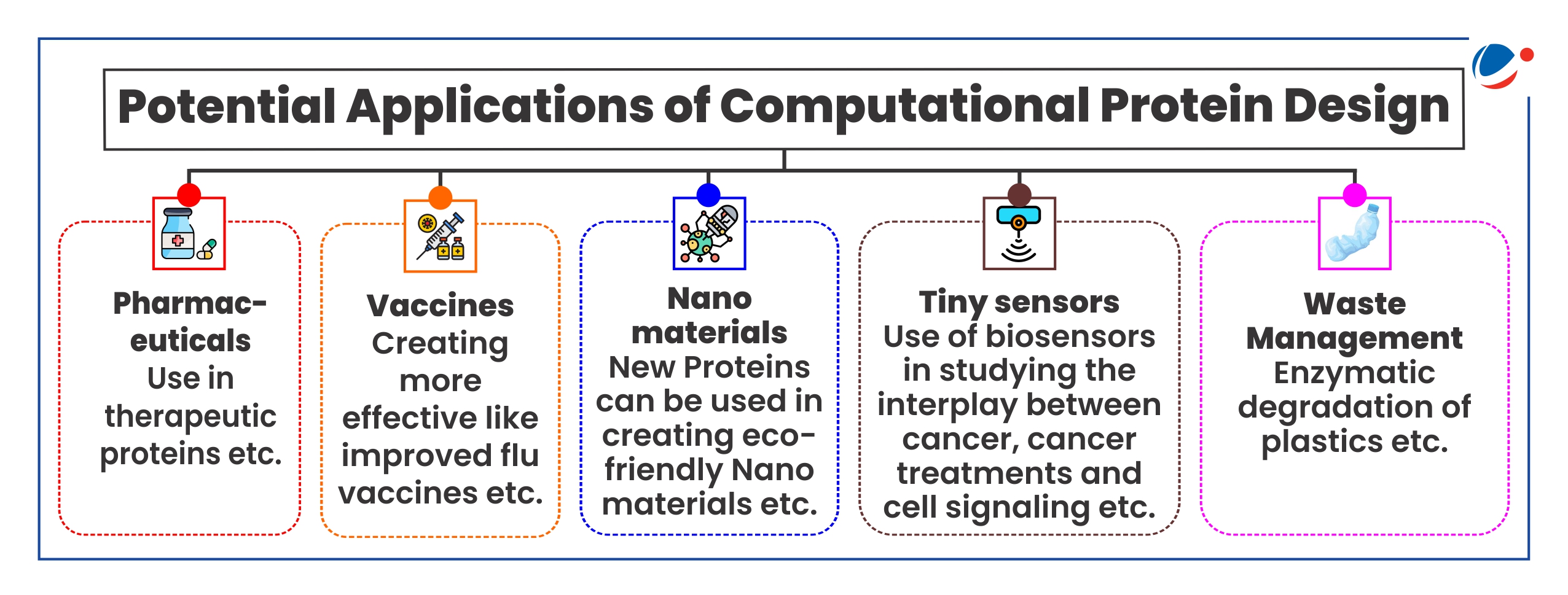
- Computational protein design (CPD) aims to create new proteins with novel functions or properties not found in nature.
- The first successful design of a small protein via computation was published by Dahiyat and Mayo in 1997.
- David Baker successfully created new proteins (synthetic proteins), starting with his first designed protein 'Top7' in 2003.
- It was an entirely new protein, both structurally and sequence-wise, designed by automated computation.
- Rosetta software developed by Baker and his team in 1999, assembles proteins from short structural fragments, enhancing structure prediction and design.
Work of Demis Hassabis and John Jumper on protein structure prediction
- Demis Hassabis and John Jumper used Artificial Intelligence (AI) to solve a 50-year-old problem of predicting proteins' complex structures i.e., how proteins fold into shapes that determine their functions.
- Significance of discovery: Knowing protein shapes is key to understanding cell function and better structure prediction aids in areas like drug design, understanding antibiotic resistance, developing enzymes to break down plastic, crop resilience etc.
About Proteins
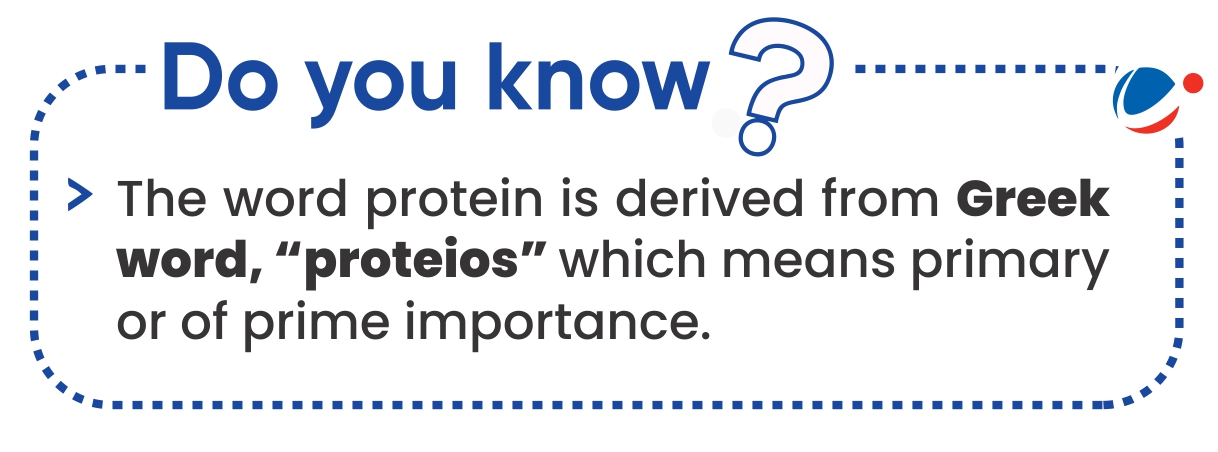
- Proteins are one of the four major types of biomolecules (the other three being carbohydrates, lipids and nucleic acids).
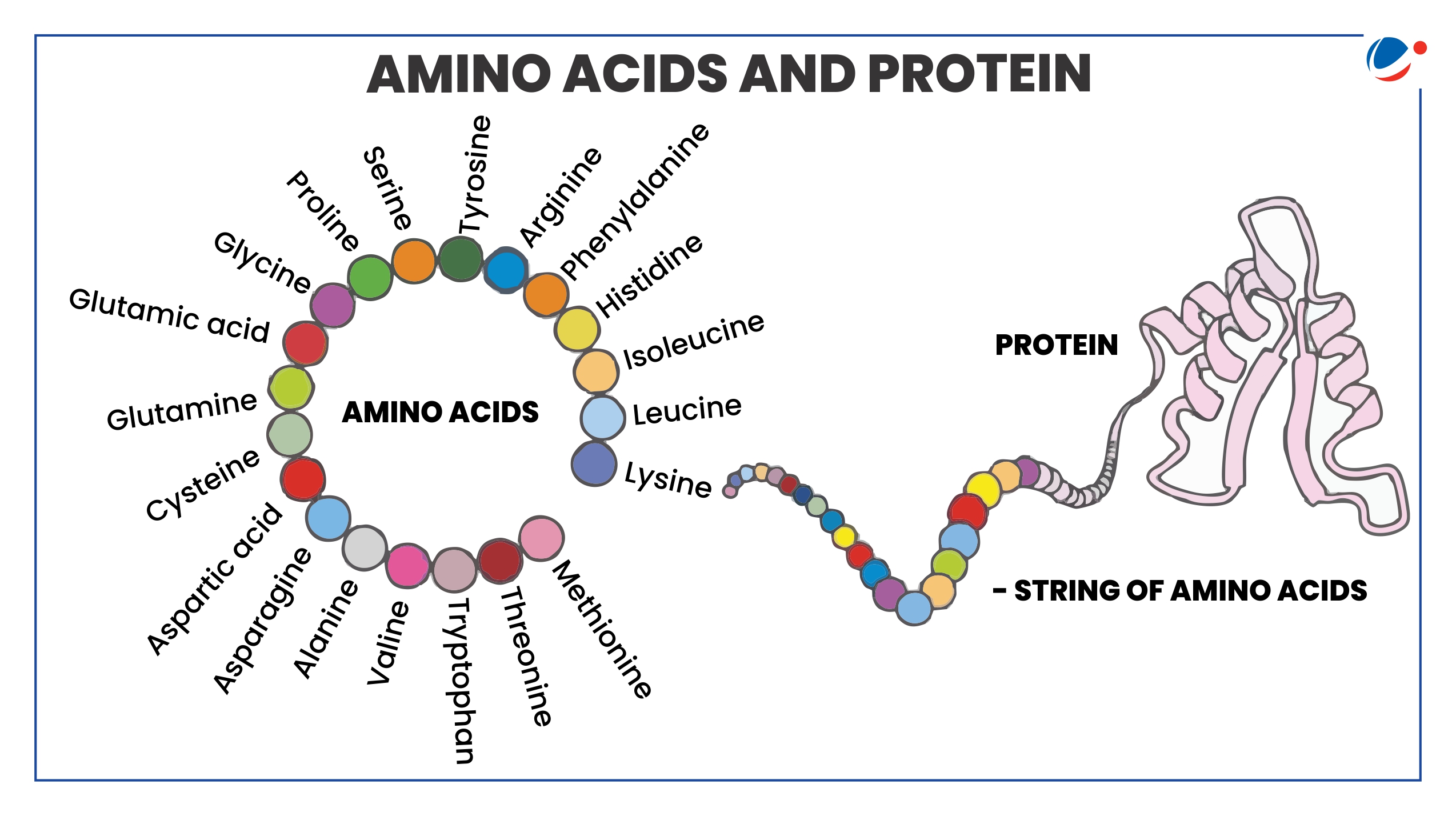
- They are biopolymeric structures, composed of linear chains of 20 naturally occurring amino acids, linked by peptide bonds (see infographic).
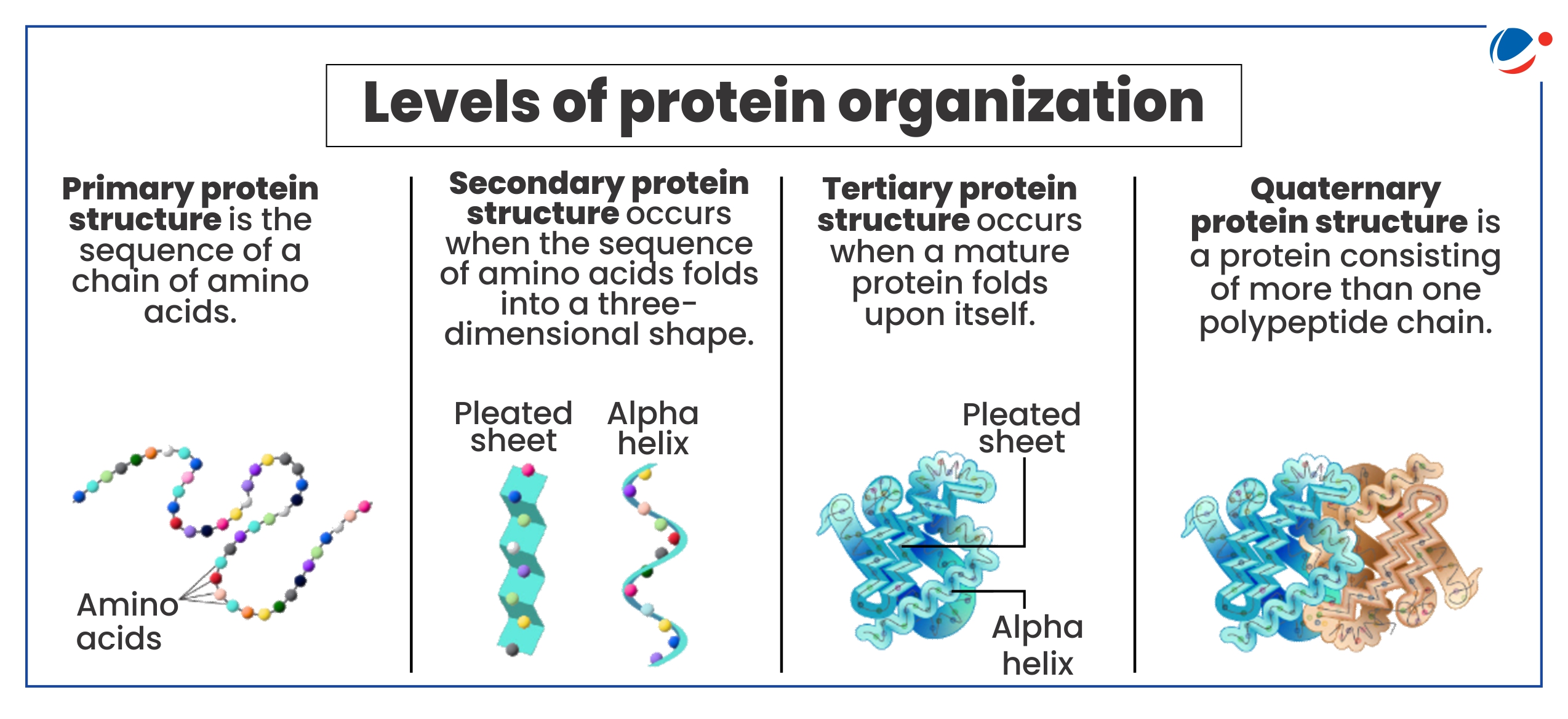
- Composition of amino acids and their order in proteins decide the structure of a protein.
- Peptide bond is formed when the carboxyl (-COOH) group of one amino acid reacts with the amino (-NH2) group of the next amino acid with the elimination of a water moiety (process called dehydration).
- Proteins are one of the most abundant macromolecules present in all cells from simplest bacteria to human beings and plants.
- Collagen is most abundant protein in animal world and Ribulose bisphosphate Carboxylase-Oxygenase (RuBisCO) is the most abundant protein in the whole of the biosphere.
Key Functions of proteins
- Structural Support: Proteins provide structure and support for cells. E.g., Actin, found in the filaments of muscle fibres, provides mechanical support and determines cell shape.
- Catalysts: Proteins act as enzymes, facilitating biochemical reactions. E.g., amylase breaks down starches into sugars during digestion.
- Hormones: Some proteins function as chemical-signaling molecules called hormones. E.g., Insulin plays a key role in regulating metabolism.
- Antibody: Antibodies bind to specific foreign particles, such as viruses and bacteria, to help protect the body. E.g., Immunoglobulin G (IgG) etc.
- Transport/storage: These proteins bind and carry atoms and small molecules within cells and throughout the body. E.g., Ferritin stores iron in cells and GLUT-4 enables glucose transport into cells.


