


Why in the News?
Stampede outside Chinnaswamy stadium where people gathered to celebrate Royal Challengers Bangalore's (RCB) IPL victory resulted in several fatalities and injuries.
About Stampede
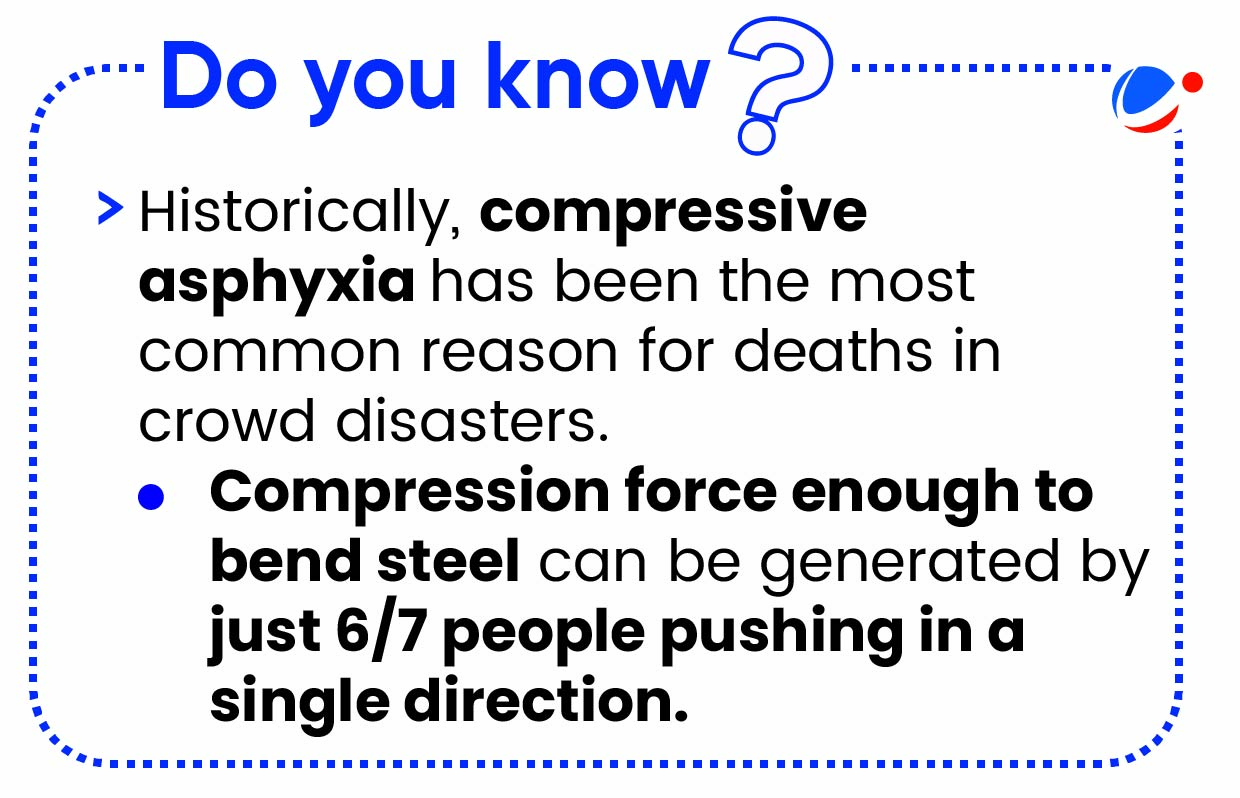
- Stampede (a type of crowd disaster) or crushing is the surge of individuals in a crowd, in response to a perceived danger or loss of physical space. [United Nations Office for Disaster Risk Reduction (UNDRR)]
Crowd Management Failures and Triggers
- Crowd Control Failures:
- Overcrowding: E.g., Chinnaswamy stadium, 2025 2.5 lakh crowd gathered as against the 34,600 capacity.
- Lack of Stakeholder Coordination: E.g.,RCB's social media announced free entry passes at stadium gates without proper coordination with Police.
- Crowd Behaviour Triggers:
- Panic an structural issues: E.g., Elphinstone Road Station, Mumbai (2017), panic triggered by a rumour of bridge collapse on an overcrowded, slippery footbridge during heavy rain.
- Fire/Electricity related: E.g., In Dabwali Fire Tragedy, Haryana (1995), stampede was triggered due to fire in a tented venue and narrow exit.
- Tussle to catching a glimpse of a celebrity: E.g., stampede at the "Pushpa 2" premiere in Hyderabad (2024).
National Disaster Management Authority (NDMA) Guidelines on Planning for Crowd management
Preparedness
- Risk Assessment and Planning: Conducting Failure Mode and Effect Analysis (FMEA)- rating every possible hazard on the dimensions of Severity, Frequency of Occurrence, and Difficulty of detection.
- E.g., learning from Mumbai's efficient handling of the 2024 T20 World Cup roadshow.
- Crowd Density Norms: Specify permissible crowd per square metre and evacuation triggers (e.g., barricade breach).
- Model Example: New York mandates trained crowd control managers for events with 1,000+ attendees.
- Infrastructure Development: E.g., Stadiums, ghats, temples must be re-engineered with multiple wide entry/exit points; Multilingual signage and public address systems, etc.
- Facilities and Emergency Medical Services: E.g., Maha Kumbh 2025 had articulating water towers (AWT) to prevent and tackle fire incidents, water ambulance, multi-disaster response vehicle etc.
Response
- Information System: E.g., Mobile updates, loudspeakers, Signage, digital boards etc. for crowd guidance and informing public about delays, diversions, and hazards instantly.
- Safety and Security measures: E.g., Watch towers at all vantage locations with reserve with wireless communication network, CCTV monitoring etc.
How Technology Can Prevent Stampedes in India?
|
Conclusion
Effective crowd management is a multidisciplinary responsibility requiring meticulous planning, inter-agency coordination, stakeholder engagement, and the integration of modern technology. As public gatherings in India increase in size and frequency, strict adherence to NDMA guidelines—including risk-based planning—is essential.



