


Introduction
In the mid-1960s, Pandit Deendayal Upadhyaya introduced Ekatma Manav Darshan (Integral Humanism) as an indigenous ideological framework for India's post-independence development. As we navigate the complexities of the modern world, Integral Humanism philosophy serves as a guiding light, reminding us of the intrinsic value of human dignity, harmony, and solidarity in shaping an equitable and prosperous society.
About Integral Humanism Philosophy (or Ekatma Manav Darshan)
- The aim of Integral Humanism is to ensure dignified life for every human being while balancing the needs of individual and society.
- This framework emphasized the integration of spiritual, social, and economic aspects of human life, aiming to create a harmonious society.
- At the heart of Integral Humanism lies the concept of Purusharthas – the four cardinal goals that delineate the purpose and trajectory of human existence
- Purusharthas refer to the four aims or goals of human life: Dharma (righteousness), Artha (wealth/prosperity), Kama (pleasure/desire), and Moksha (liberation).
- The doctrine of 'integral humanism' was born from the desire to have 'uniquely Indian' ideas guiding the journey of the newly independent nation, as opposed to the many Western 'isms.
- Deendayal Upadhyaya rejected the approach of excessive Capitalist Individualism and the rigid Marxist Socialism.
- The philosophy of integral humanism is based on the following three principles:
- Primacy of whole, no part
- Supremacy of Dharma
- Autonomy of society
Core tenets of Integral Humanism in contemporary times
- Cultural nationalism (Bharatiyata): Integral Humanism advocates for a development approach that respects and integrates indigenous knowledge, traditions, and lifestyles while embracing modern advancements.
- Social integration and harmony: It calls for social harmony and the eradication of caste discrimination, aiming to build a society based on equality and justice.
- Antyodaya (Upliftment of the Last Person): It argued that economic policies should first uplift the poorest sections of society rather than focus solely on industrial and urban growth.
- His vision of 'education for all' and 'har hath ko kam, har khet ko pani' was seen culminating in his idea of Economic Democracy.
- Ethical Governance: The concept of Model State (Dharma Rajya) is not confined to freedom for religious practices but represents righteousness, moral values, and transparent governance.
- Decentralization: It proposed a self-reliant village-based economy. It allows the communities to manage their own development based on their unique needs and resources.
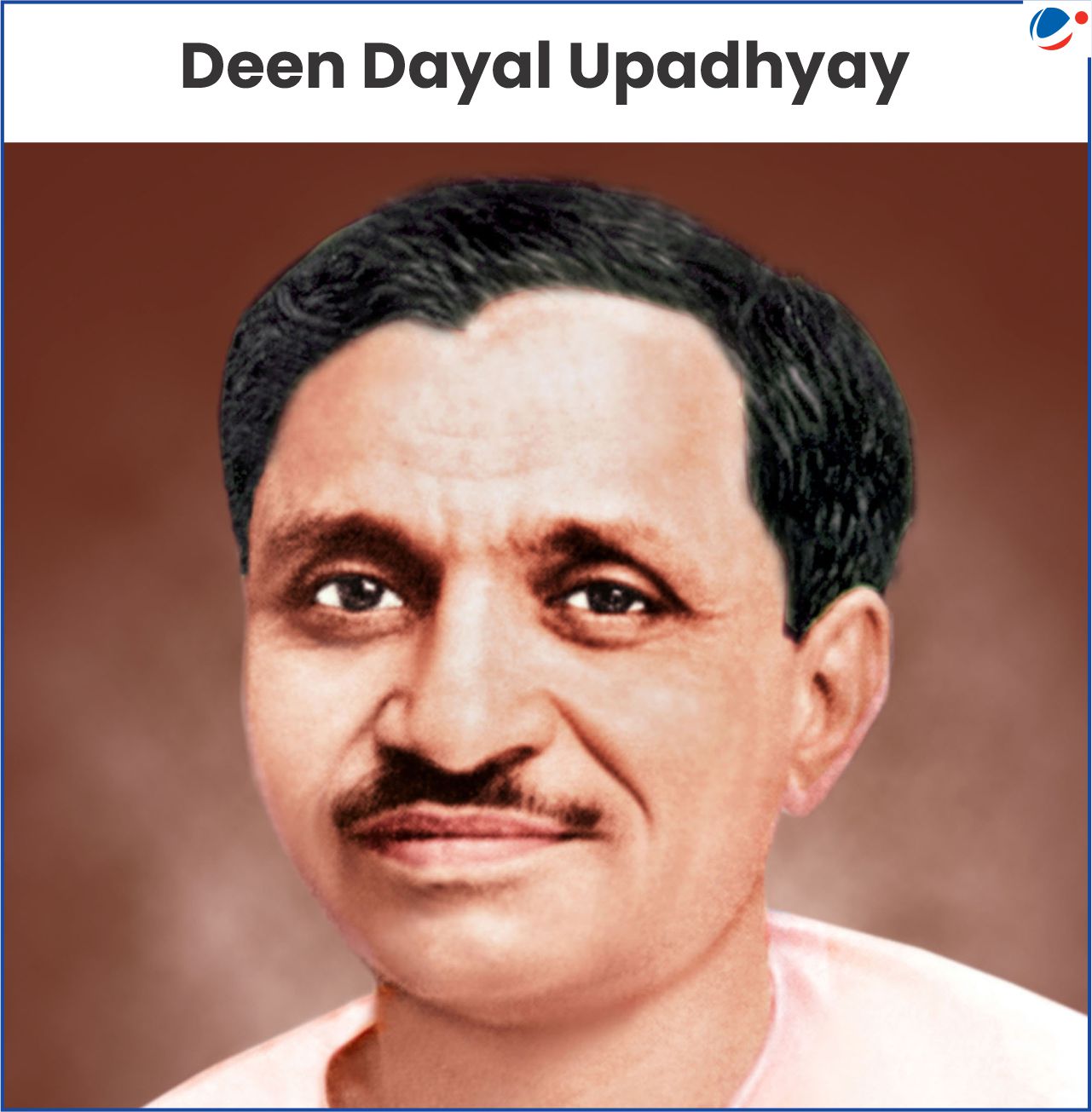 About Pandit Deen Dayal Upadhyay (1916–1968)
|


