


Why in the News?
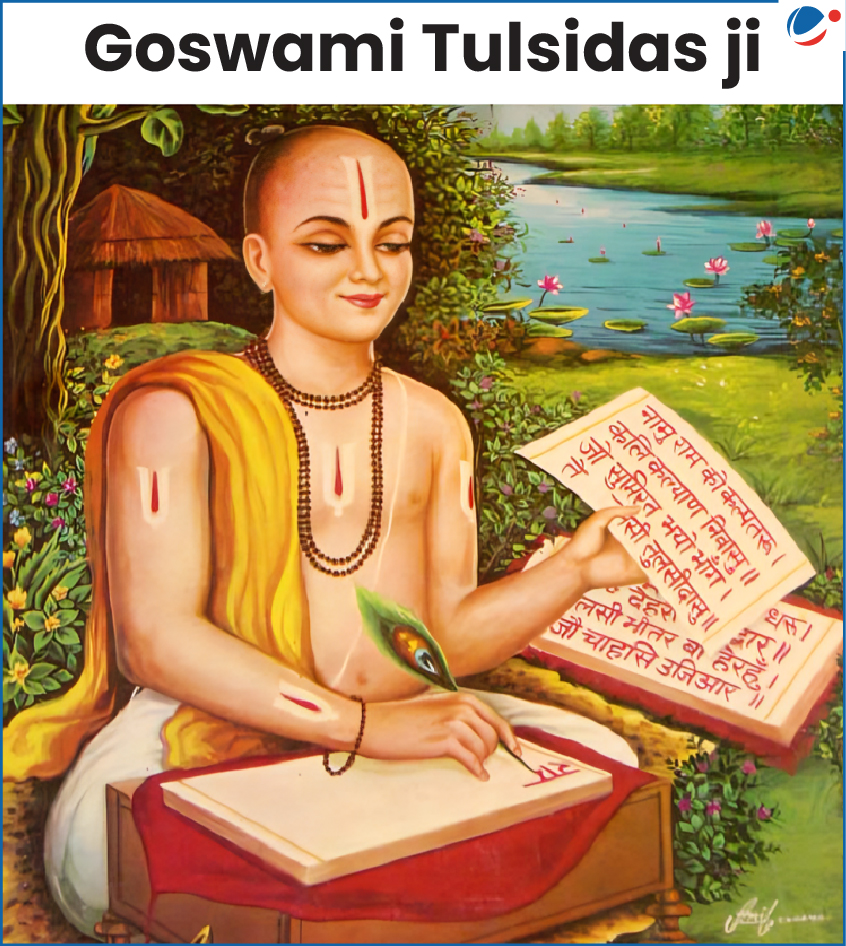
Recently, the 500th birth anniversary of Goswami Tulsidas was celebrated in Chitrakoot.
About Goswami Tulsidas
- Birth: Believed to be born in Rajapur Village, Banda District, Uttar Pradesh.
- Real Name: Rambola Dubey
- Father: Aatmaram.
- Mother: Hulasi.
- Teacher: Shri Narharidas Ji
Key Contributions:
- Literary Contribution:
- He wrote the Ramcharitmanas on the banks of the Ganga at Assi, Varanasi, in the Awadhi dialect of Hindi.
- Ramcharitmanas is included in UNESCO's Memory of the World Asia-Pacific Regional Register.
- He composed Vinay Patrika and Kavitavali in the Braj dialect of Hindi.
- Other major works include Gitavali, Dohavali, Janaki Mangal, Parvati Mangal, Barvai, Hanuman Chalisa, and others.
- He wrote the Ramcharitmanas on the banks of the Ganga at Assi, Varanasi, in the Awadhi dialect of Hindi.
- Bhakti Movement:
- Tulsidas was a reformer and philosopher from the Ramanandi Sampradaya in the lineage of Jagadguru Ramanandacharya.
- He was a Vaishnava Hindu saint and poet of the Saguna Bhakti tradition, renowned for his devotion to the Lord Rama.
- Saguna bhakti tradition: Worship of deities like Shiva, Vishnu (and his avatars), and the Goddess, often in anthropomorphic forms.
- He also believed that Nirguna (devotion to a formless, attribute-less, and abstract God) and saguna are not opposed to each other; in fact, they complement each other.
- Promotion of Regional dialects: The use of Awadhi and Braj languages in his major work helped in the promotion of these dialects.
- Temple building: Established the famous Sankatmochan Temple dedicated to Lord Hanuman in Varanasi.
- Ramlila: It is the traditional theatrical performance of the Ramayana, based on Tulsidas' Ramcharitmanas. It was started by the disciples of Tulsidas after his death.
- One sect of historians believes that the first person to have started the tradition of Ramlila was Megha Bhagat, a student of Tulsidas in 1625.
- While other sects hold a view that it was started in Ramnagar (Banaras) around 1200-1500 CE.
- Ramlila is on the UNESCO Representative List of the Intangible Cultural Heritage of Humanity.
- One sect of historians believes that the first person to have started the tradition of Ramlila was Megha Bhagat, a student of Tulsidas in 1625.
Teachings of Tulsidas
- Navavidha Bhakti (Nine kinds of devotion): It includes principles like keep company of saints and devotees, take deep interest in the Lord's life (lila), serve the Guru, etc.
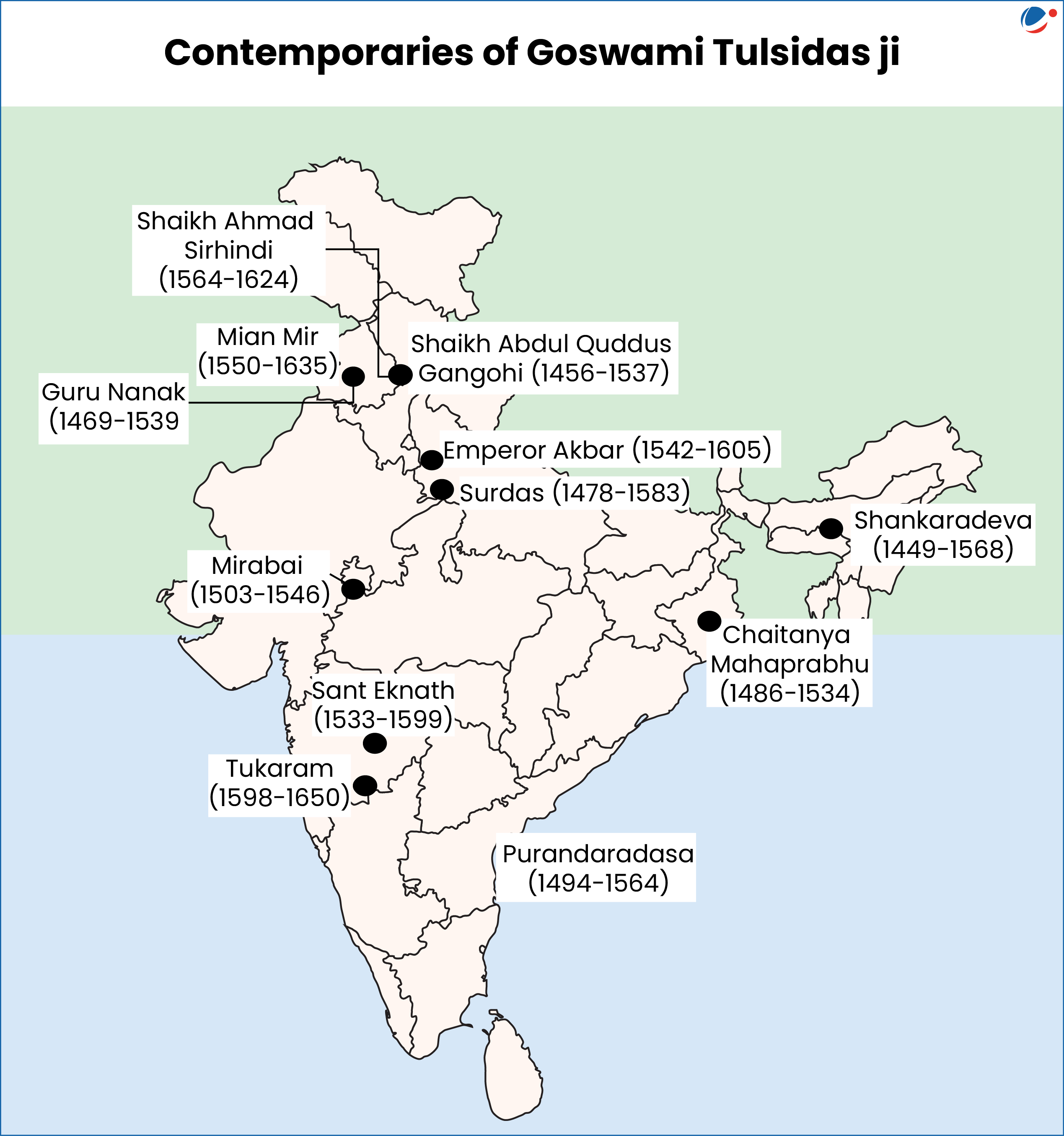
- Social Concerns:
- He propounded two principles that promoted social integration and the general acceptability of his works:
- Social Equality: Devotion, not birth, makes one dear to Lord Rama. He attacked the caste system, saying: "None will question your caste or creed; if you devote yourself to God, you belong to Him."
- Unity of Shaivism and Vaishnavism: He saw Shiva and Rama as one.
- He propounded two principles that promoted social integration and the general acceptability of his works:
- Formless Rama (Adwaita idea): He adopted Monoism (Adwaita), which says the Supreme reality is formless and propertyless. He also adopted the concept of Rama, without a body, as per the principle of Monoism.
- On taxation: Believes that as the sun draws water from the earth, which then turns into clouds and returns as rain on the earth, bringing prosperity. The tax system should be similar in nature.
Conclusion
Tulsidas's life and works reflect the essence of devotion, humility, and social harmony. His message of equality, unity, and unwavering faith continues to inspire generations. By stressing love for God above all divisions, he transformed spiritual practice into a force of moral guidance and collective upliftment.

