


The recent Indigo fiasco in the aviation sector highlighted the issues and concerns faced due to duopoly in delivery of commodities and services.
What is Duopoly?
- It refers to a scenario in which two suppliers dominate the market for a commodity or service.
- In India, markets with just two suppliers in operation are becoming more common. E.g., Duopoly of Ola and Uber in cab services.
- Reason for Rise of Duopoly
- High capital requirements: Makes entry and survival difficult for smaller firms. E.g., Aviation sector.
- Network effects: Big firms spend early on to acquire customers, squeezing out competitors. E.g., Telecom sector
- Regulatory Gaps: Allows dominance to deepen.
Challenges posed by Duopoly
- Inflated Pricing and Reduced Affordability: Lack of competitive pressure lets dominant firms raise prices with little resistance, increasing consumer costs. E.g., Food delivery.
- Limited Consumer Choice and Market Options: Shrinks the presence of smaller players leaving consumers with very few alternatives.
- Stagnation in Innovation: Innovation is driven by staying slightly ahead of the lone rival, not by fear of disruptive new entrants. E.g., Telecom sector.
- Excessive Lobbying Power and Regulatory Influence: Powerful duopolistic firms can use their significant influence to protect their interests and block new technologies. E.g., e-commerce sector.
- Systemic Vulnerability and Capacity Failures: Failure of one player in a duopoly can lead to economy-wide losses and unsatiated demand. E.g., Recent Indigo crisis in aviation sector.
Conclusion
Addressing India’s emerging duopolies requires moving beyond post-facto regulation to proactive market design. This includes strengthening CCI’s ex-ante powers, improving coordination between CCI and sectoral regulators, lowering entry barriers through regulatory sandboxes and shared infrastructure, and ensuring transparent pricing and data portability to empower consumers.
Existing Regulatory Mechanism
|
According to the Report on Trend and Progress of Banking in India 2024-25 of RBI, the NPA of Indian banks has reached a multi-decade low, with the gross NPA ratio dropping to 2.1% by late 2025.
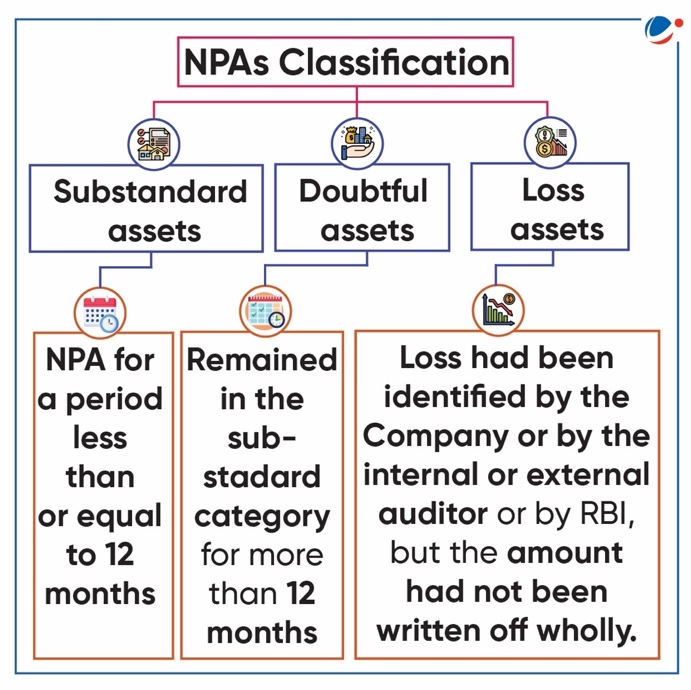
- The net NPA (NNPA) ratio also declined to 0.5 % at the end of March 2025
- GNPA ratio of banks started reached its peak in 2018 at 11.18%.
What is Non-Performing Assets (NPAs)?
- NPAs are loans or advances for which the principal or interest payment remains overdue for a period of more than 90 days.
- Gross NPA is the total value of loans where interest or principal remains overdue and Net NPA is obtained by subtracting provisions (the funds the bank sets aside to cover expected losses) from GNPA.
- Key Drivers of NPA: Economic slowdowns, fraudulent borrowers, poor monitoring, etc.
- Challenges associated with NPAs: high provisioning, reduced lending capacity, etc.
Key initiatives that have played a crucial role in reducing NPAs
- Insolvency and Bankruptcy Code (IBC), 2016: Created a time-bound and creditor-driven resolution framework for stressed assets
- Securitisation and Reconstruction of Financial Assets and Enforcement of Security Interest Act, 2002 (SARFAESI Act): It allows secured creditors to take possession of collateral, against which a loan had been provided, upon a default in repayment.
- Asset Reconstruction Companies (ARCs): Banks continued to clean their balance sheets by selling NPAs to ARCs
- Other: Indradhanush plan (launched for revamping PSBs, envisaging infusion of capital in PSBs), Debt Recovery Tribunals (DRTs), etc.
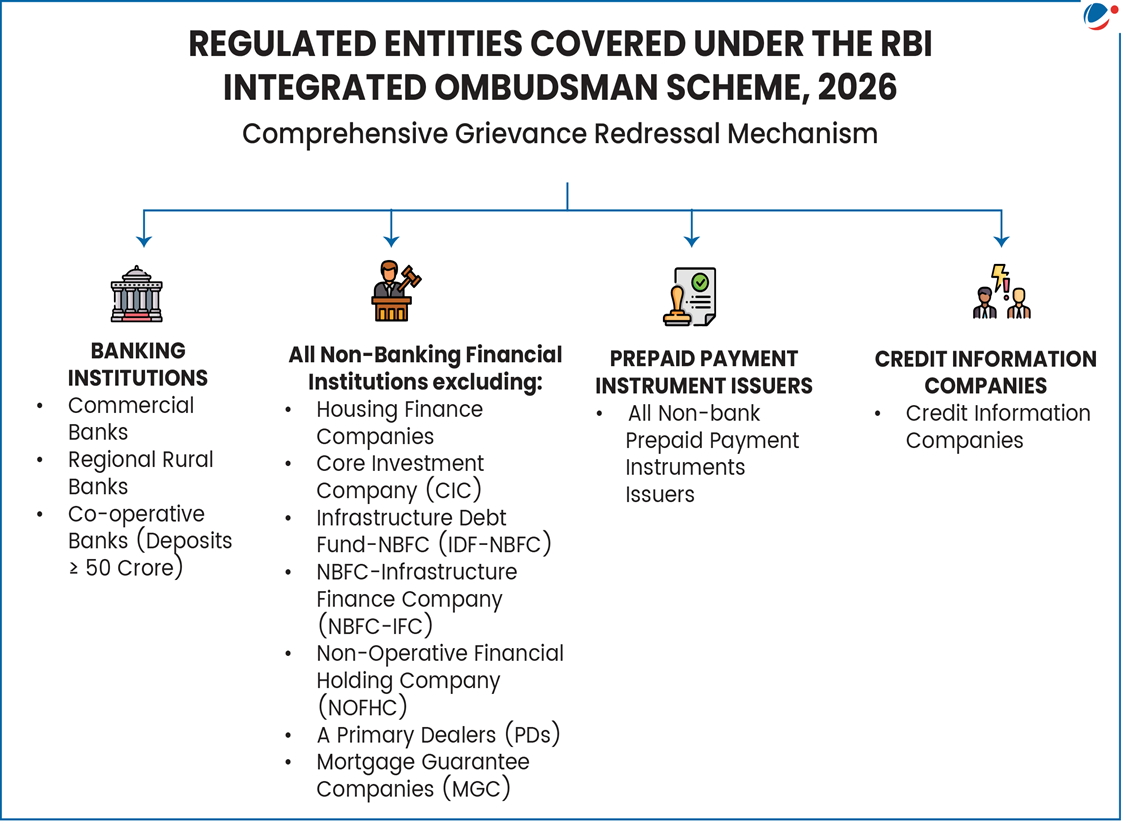
RB-IOS 2026, a scheme for resolving customer grievances in relation to services provided by entities regulated by RBI, will come into effect from July 1, 2026.
Key Features of RB-IOS 2026
- Aim: To provide a cost-effective, expeditious, non-adversarial alternate grievance redress mechanism for the resolution of complaints against Regulated Entities.
- RBI Ombudsman: RBI may appoint one or more of its officers as RBI Ombudsman and RBI Deputy Ombudsman, generally for a period of three years.
- Centralised Receipt and Processing Centre (CRPC): To be established by RBI to receive and process the complaints.
- Powers of Ombudsman:
- No limit on dispute amount that can be brought before RBI Ombudsman.
- Power to provide a compensation up to ₹30 lakh.
- Grounds of Complaint: Act or omission of a Regulated Entity resulting in deficiency in service.
- Appeal: Regulated Entity or Complainant may file an appeal before the Appellate Authority within 30 days.
- Nodal Officer: Regulated Entity shall appoint a Principal Nodal Officer at their head office for furnishing information on its behalf in respect of complaints filed.
RBI issued Reserve Bank of India (Priority Sector Lending – Targets and Classification) Directions, 2025.
- PSL ensure that vulnerable sections of society and underdeveloped areas get access to credit.
Key Features of the Latest RBI PSL Guidelines
- Enhanced Compliance & External Audit: RBI requires banks to obtain certification from external auditors (or CAG-empanelled auditors for specific entities like NCDC).
- This audit ensures that the same underlying loan exposure is not claimed as PSL by both the originating bank and the intermediary (such as an NBFC or Cooperative).
- Revised Sector Targets: The PSL target for Small Finance Banks (SFBs) has been adjusted from 75% to 60% of their Adjusted Net Bank Credit (ANBC).
- Inclusion of NCDC for Rural Credit: Loans provided by banks to the National Cooperative Development Corporation (NCDC) for the purpose of on-lending to cooperative societies are now officially classified as PSL.
- Other
- Banks are also permitted to enter into co-lending arrangements to meet PSL targets.
- Allowed banks to treat export credit to agriculture and MSMEs as PSL loans.
Targets for PSL for Different Types of Banks | |||
Categories | Domestic commercial banks & foreign banks with 20 branches and above | Foreign banks with less than 20 branches | Regional Rural Banks |
Provisions | 40% of ANBC or Credit Equivalent of Off-Balance Sheet Exposures (CEOBE), whichever is higher | Same as Domestic commercial bank (32% can be in the form of Export Credit and not less than 8% can be to any other priority sector) | 75% of ANBC or CEOBE whichever is higher. Lending by to Medium Enterprises, Social Infrastructure, and Renewable Energy is now capped at 15% of ANBC. |
New revised star rating of the Bureau of Energy Efficiency (BEE) comes into force.
- BEE is established as the statutory body under Energy Conservation Act, 2001.
About BEE Star Ratings
- It is a key feature of the Standards and Labelling (S&L) Programme.
- Objective: To provide the consumer with an informed choice about energy saving and thereby the cost-saving potential of the relevant marketed appliance.
- Mandatory Appliances: Ceiling fans, Electric geysers, Tubular fluorescent lamps, Colour Television, etc.
- Voluntary Appliances: General Purpose Industrial Motor, Computer, Microwave Oven etc.
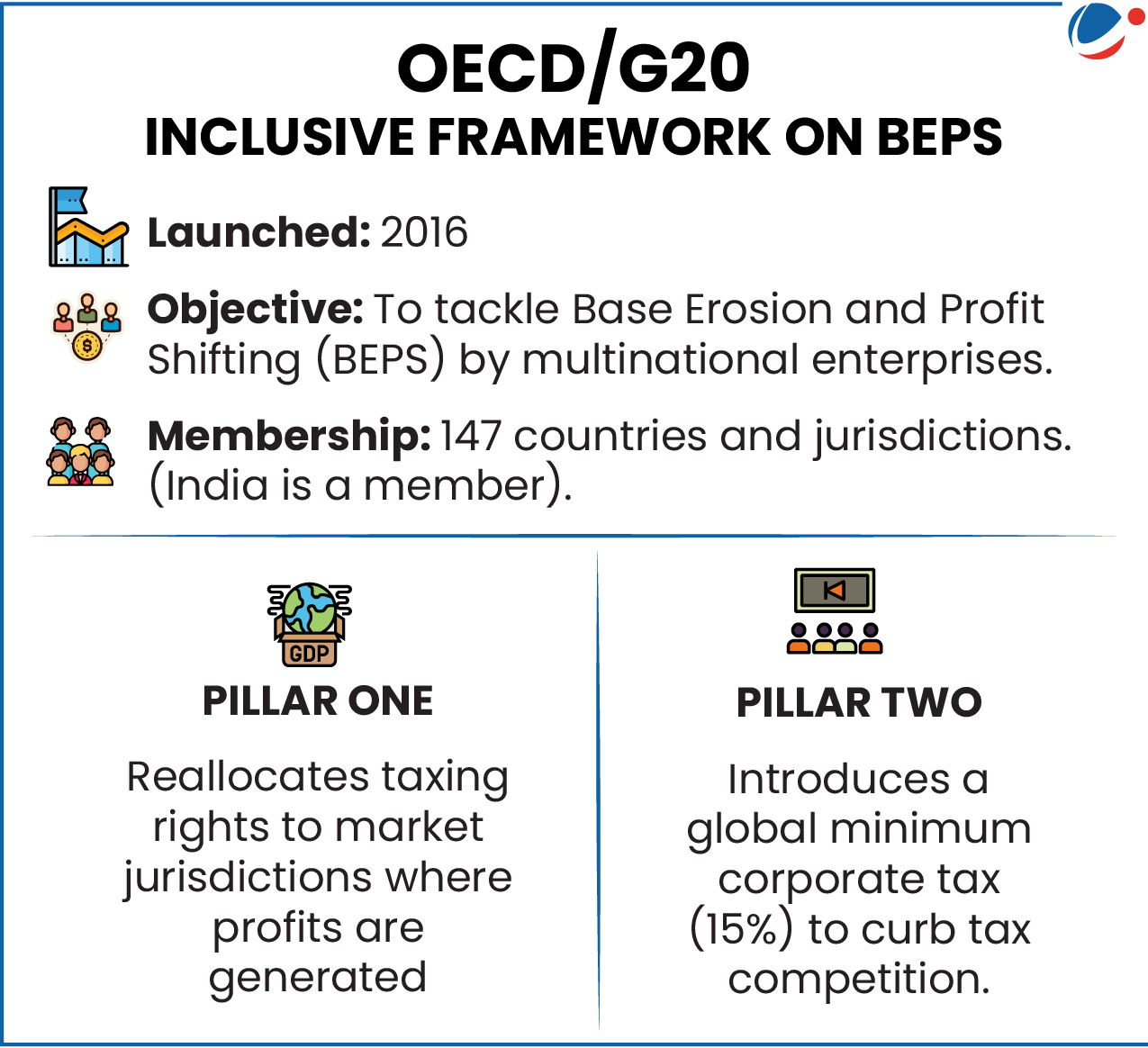
OECD/G20 Inclusive Framework on Base Erosion and Profit Shifting (BEPS) have agreed on a side by side arrangement package for the co-ordinated operation of global minimum tax arrangements.
- Global Minimum Tax: It is based on Global Anti-Base Erosion (GloBE) Model Rules. It aims to ensure that large multinational enterprises pay a minimum level of tax on their income in each jurisdiction where they operate, thereby reducing the incentive for profit shifting and placing a floor under tax competition, bringing an end to the race to the bottom on corporate tax rates.
- BEPS refers to tax planning strategies that multinational enterprises use to exploit loopholes in tax rules to artificially shift profits to low or no-tax locations as a way to avoid paying tax. (E.g. through deductible payments like interest or royalties).
Global Minimum Tax Package
- The package includes five key components
- Simplification measures: Reduces compliance burdens for multinational enterprises (MNEs) and tax authorities.
- MNEs are groups of companies and generally operate worldwide through locally incorporated subsidiaries or permanent establishments.
- Tax incentive alignment: Introduces a targeted substance-based tax incentive safe harbour to align global treatment of tax incentives.
- Safe harbours for qualifying MNEs: Available to MNE Groups with ultimate parent entities in eligible jurisdictions meeting minimum taxation requirements.
- Level playing field: Includes evidence-based stocktake process to ensure fair treatment for all Inclusive Framework Members.
- Domestic minimum tax protection: Reinforces qualified domestic minimum top-up tax regimes as the primary mechanism for protecting local tax bases, particularly in developing countries.
- Simplification measures: Reduces compliance burdens for multinational enterprises (MNEs) and tax authorities.
A NCPF for 2026-2031 has been signed between India and the World Bank for a provision of $8-10 billion.
About NCPF
- The partnership prioritises private sector-led job creation by upgrading skills, reducing barriers for small and medium enterprises, and expanding opportunities-particularly for youth and women
- The partnership identifies four strategic outcomes:
- Boosting rural prosperity and resilience: By diversifying incomes beyond agriculture.
- Supporting urban transformation: As the country's urban population is projected to double to 800 million by 2050;
- Investing in people: Across health, education and skills.
- Strengthening energy security, core infrastructure and climate resilience: Including renewable energy, e-mobility and green hydrogen.
- Global Economic Prospects: Released by the World Bank.
- Published twice a year (January and June) assessing global growth prospects.
- Revision in India’s growth forecast: 7.2% for fiscal year 2025-26 from 6.3% projected last June.
- Reasons: Robust local demand, strong private consumption, tax reforms and rising real household incomes in rural areas.
- Global trade growth: Projected to decelerate from 3.4% in 2025 to 2.2% in 2026
- Record Debt Levels: Government debt in emerging market and developing economies (EMDEs) has climbed to a 55-year high of nearly 70% of GDP.
- Employment and Social Trends 2026 Report: Released by International Labour Organisation.
- Progress in employment quality has stalled: Between 2015–2025, extreme working poverty fell marginally by 3.1%.
- Increase in Informality of Work: By 2026, 2.1 billion workers globally are projected to be informally employed.
- India accounts for 3% of the world’s manufacturing.
- Global Investment Trends Monitor (GITM): Released by the United Nations Conference on Trade and Development (UNCTAD).
- FDI inflows in India surged by 73% to $47 billion in 2025.
- Reason: due to large investments in services including finance, IT, and R&D as well as manufacturing, supported by policies aimed at integrating India into global supply chains.
Coking coal has been included in Part D of First Schedule of MMDR (Mineral under the Mines and Minerals (Development and Regulation)) Act which lists Critical and Strategic Minerals.
- This decision recognises the strategic role of coking coal in ensuring mineral security and meeting the requirements of the domestic steel sector.
- Currently, around 95% of the coking coal requirement of steel sector is met through imports, leading to significant foreign exchange outgo.
- This decision is expected to facilitate faster approvals, improve ease of doing business, and accelerate exploration and mining activities, including of deep-seated deposits.
About Coking Coal
- Coking Coal is a vital raw material in steel production through blast furnace route and is also used in cement, chemicals, petrochemicals industries.
- Reserves: Estimated 37.37 billion tonnes of reserves, mainly in Jharkhand, and in Madhya Pradesh, West Bengal and Chhattisgarh.
- Challenges: Insufficient domestic production, high ash content and surface levels, legacy mine issues like underground fires and land subsidence, limited geological data, land acquisition challenges etc.
- Initiatives: Mission Coking Coal, 100% FDI in commercial coal mining, revenue-sharing auctions, 39 First Mile Connectivity Projects etc.
About MMDR Act 1957
|
Global Trade Research Initiative (GTRI) highlighted that India must enhance silver processing and diversify imports to reduce reliance on finished silver.
- India imported about 21.4% of global silver trade in 2024, making it the world's largest consumer of finished silver.
About Silver
- It is a relatively soft, shiny metal.
- Applications: Highest electrical and thermal conductivity makes it indispensable for electronics, circuit boards, connectors, batteries, and automotive systems.
- Silver's antibacterial properties are used in wound dressings, medical-device coatings, catheters, surgical instruments, water purification systems, and pharmaceutical compounds.
- Natural Abundance: Silver occurs in ores such as argentite and chlorargyrite (horn silver).
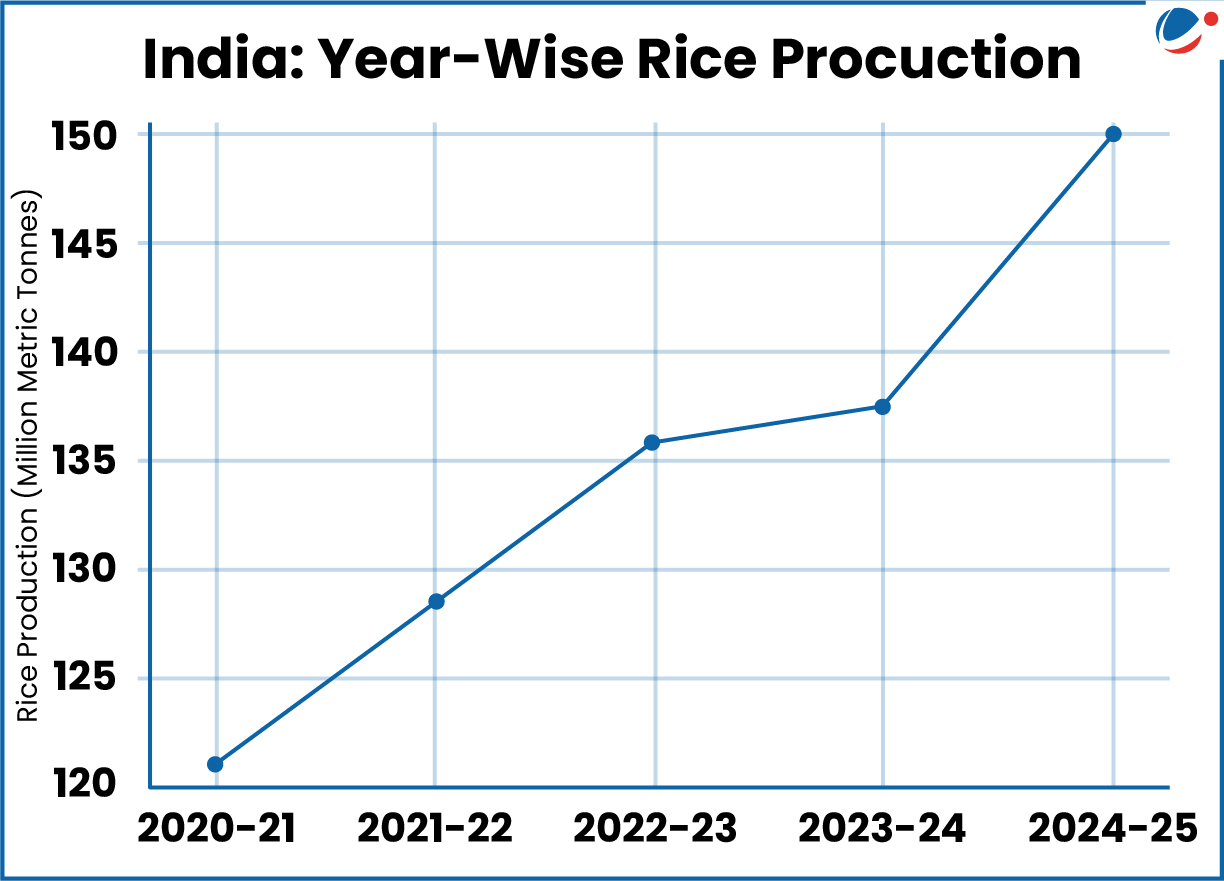
Status of Rice Production and export:
- Major producers of rice: India (150 MT),China, Indonesia, Bangladesh, Japan, Sri Lanka and Egypt.
- State wise Production in India (2024-25): Uttar Pradesh (13.8%), Telangana (11.6%), West Bengal (10.6%), Punjab (9.5%), Chhattisgarh (7%) etc.
- Export: India is the world's largest rice exporter (exporting 20.1 million metric tonnes of rice in 2024–25).
- Major export destinations of India's Rice: Saudi Arabia, Iran, Iraq, Benin, United Arab Emirates etc.
About Rice Crop
- Type: Major food crop of the world and staple diet of the tropical and sub-tropical regions.
- Growth Conditions:
- Rice is grown under varying conditions in India from 8°N to 30°N latitude and from sea level to about 2,500 metre altitude.
- Grown in variety of soils including silts, loams and gravels and can tolerate acidic as well as alkaline soils.
- Abundant rainfall (100-150cm), high humidity and high temperature (30°C during day and 20°C at night).
- Paddy is a semi-aquatic plant that requires standing water (averaging 10–15 cm) for three-quarters of its growing season.
- It grows best in impermeable subsoil with a pH between 5.5 and 6.5.
- Cropping Seasons in India: Rice is grown in three distinct seasons based on the region:
- Aman (Winter rice): Sown in June–July and harvested in November–December.
- Aus (Autumn rice): Sown in May–June and harvested in September–October.
- Boro (Summer rice): Cultivated between November and May, often in areas that remain moist during winter.
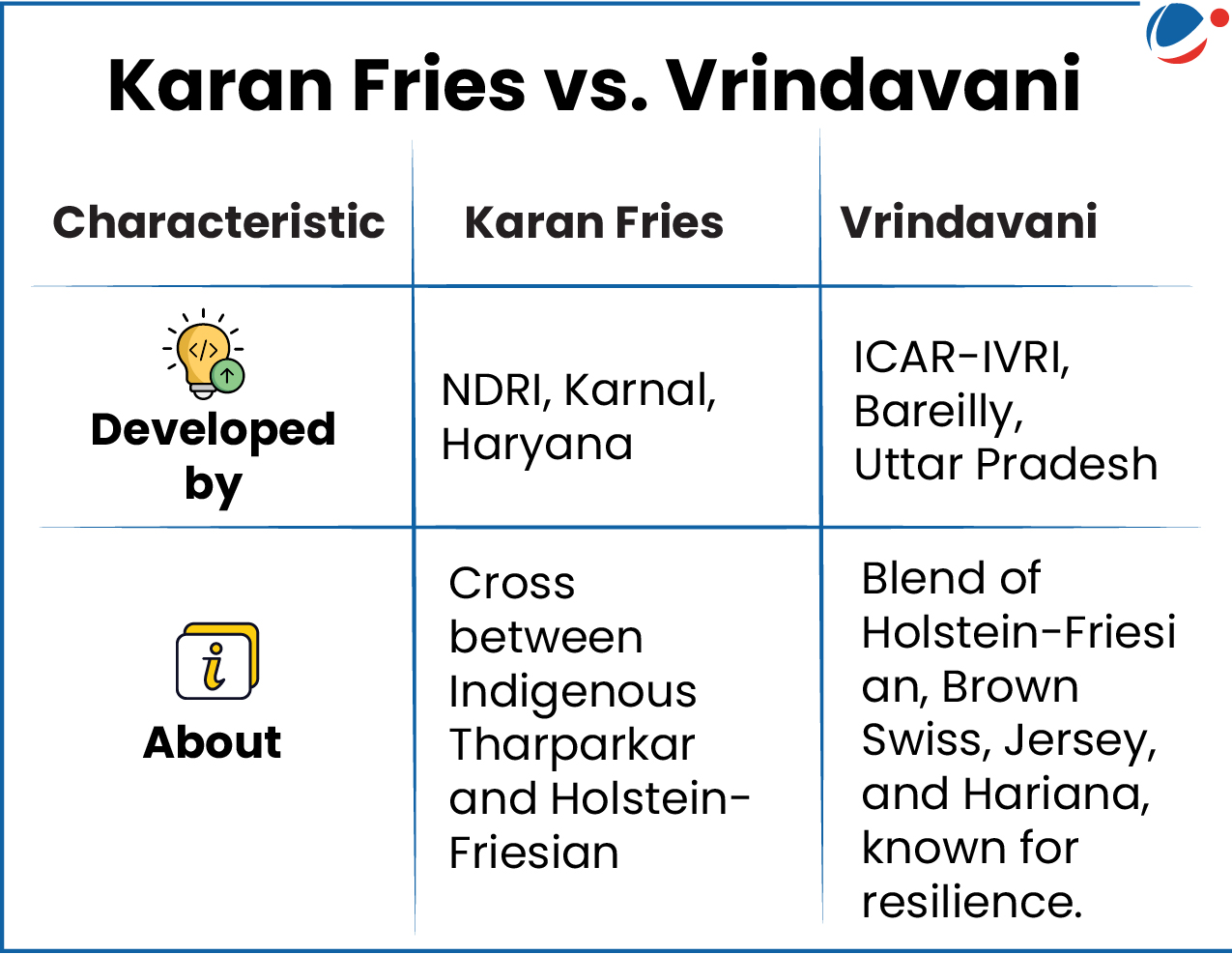
The government has registered two high-yielding synthetic cattle breeds, Karan Fries and Vrindavani.
- Also, new indigenous breeds of cattle and buffalo have been recognised, such as Medini (Jharkhand), Rohikhandi (Uttar Pradesh), and Melghati (Maharashtra).
Significance of synthetic cattle breeds: Enhanced milk productivity without compromising climate adaptability and disease resistance.
The reports offers a working definition for Affordable House as a dwelling unit with a carpet area and value of up to 60 sq. m. and ₹60 lakh (metropolitan cities) and 90 sq. m. and ₹45 lakh (non-metropolitan areas).
- Pradhan Mantri Awas Yojana Urban (PMAY- U) 2.0, 2024 defines affordable housing with the same carpet area as above and value not exceeding ₹45 lakh.
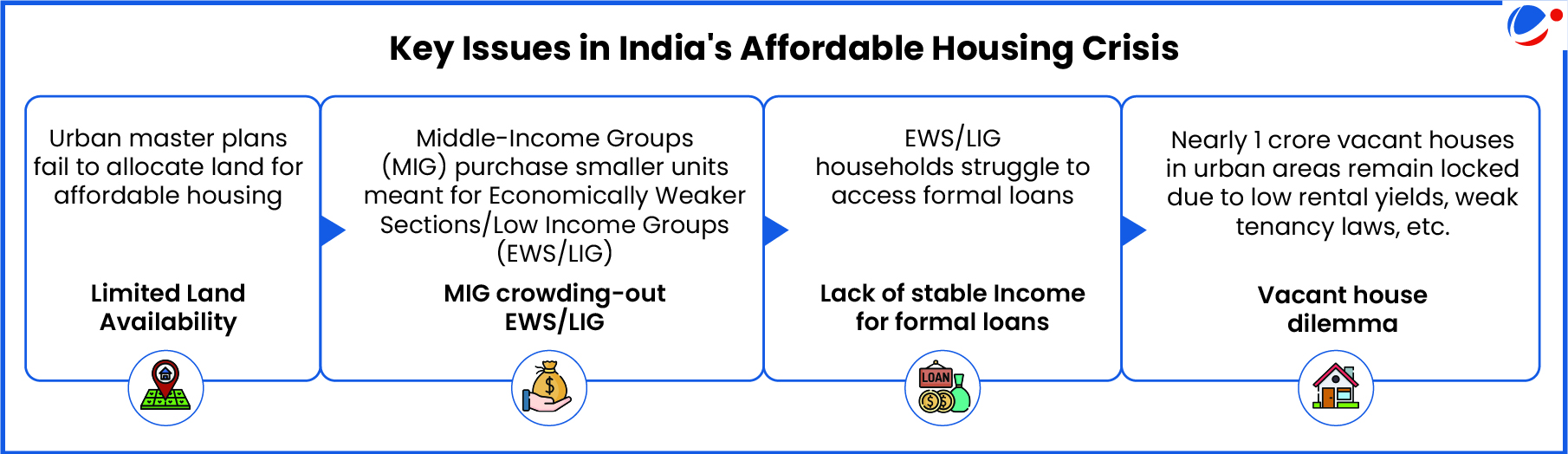
Key Recommendations on Affordable Housing
- Zoning Reforms: Designate Affordable Housing Zones within city Master Plans and Town Planning Schemes, with at least 10% of all residential land marked for affordable housing E.g. Vienna and South Korea adopts such approach.
- Transit-oriented development (TOD): Cities should earmark areas near metro and mass transit stations exclusively for mixed-use development, combining offices, commercial spaces, and affordable housing.
- Reservation for EWS/LIG housing: Mandatory reservation of 10-15% of the built-up area for EWS/LIG housing in all housing & commercial projects exceeding 10,000 sqm built-up area or 5,000 sqm plot area.
- Reforms in rental housing legal framework: States should adopt dedicated rental housing stock policies through Public–Private Partnership (PPP) models, in line with PMAY-U 2.0 Affordable Rental Housing (ARH) vertical.
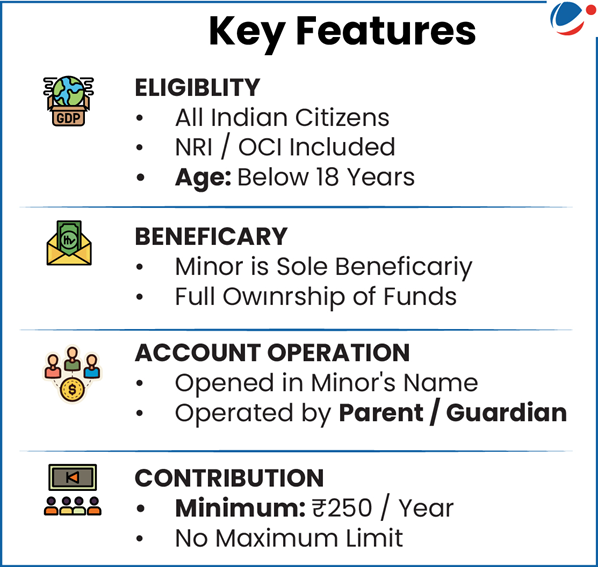
Pension Fund Regulatory and Development Authority (PFRDA) issued guidelines for the NPS Vatsalya Scheme, 2025.
NPS Vatsalya Scheme, 2025
- Nodal Ministry: Union Ministry of Finance.
- Regulator: Pension Fund Regulatory and Development Authority (PFRDA).
- Core Objective: To inculcate a habit of early and disciplined long-term savings among children, ensuring financial security and pension preparedness from a young age.
These pilot schemes form part of NIRYAT PROTSAHAN component of the Export Promotion Mission.
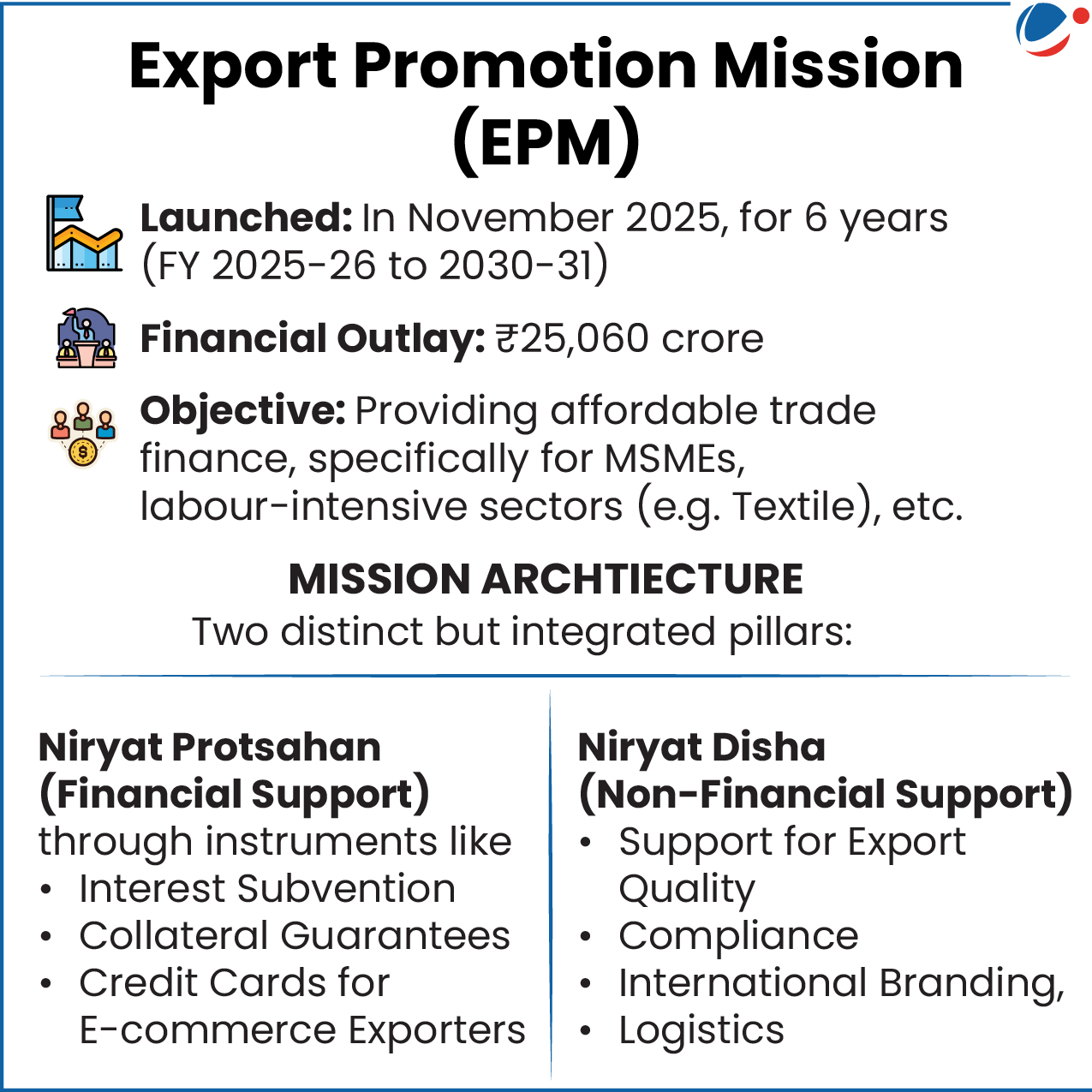
About New Schemes
- Interest Subvention for Pre- and Post-Shipment Export Credit: Provides interest subvention of 2.75% (as base rate) on rupee export credit.
- Additional incentive for exports to notified under-represented or emerging markets.
- Annual cap: ₹50 lakh for FY 2025–26.
- Eligibility: restricted to exports under a notified positive list of tariff lines (at HS 6-digit level), covering ~75% of India's tariff lines.
- Collateral Support for Export Credit: Implemented in partnership with the Credit Guarantee Fund Trust for Micro and Small Enterprises (CGTMSE).
- It provides guarantee coverage:
- Up to 85% for Micro and Small exporters.
- Up to 65% for Medium exporters.
- Maximum limit: ₹10 crore outstanding guaranteed exposure per exporter in a financial year.
- Eligibility: same as above.
- It provides guarantee coverage:


