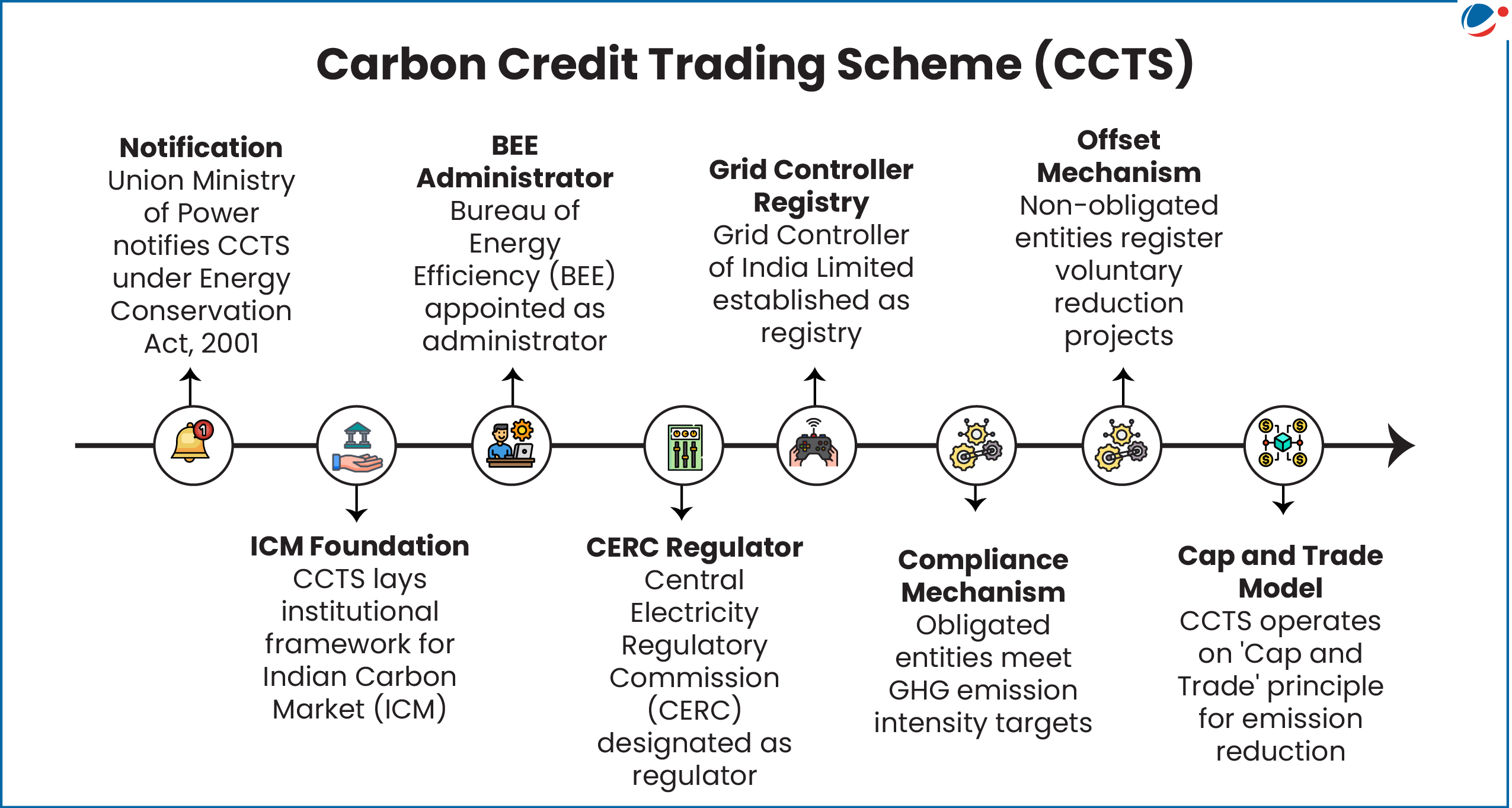
Union Ministry of Environment, Forest, and Climate Change has notified Greenhouse Gases Emission Intensity Target (Amendment) Rules, 2025 under the Environment (Protection) Act, 1986.
Key Details
- Expansion: Addition of four new sectors - Petroleum Refinery, Petrochemicals, Textiles, and Secondary Aluminium, to the list of obligated sectors to cut GHG emissions.
- Previous sectors - Aluminium, Cement, Chlor-alkali, and Pulp & Paper.
- Targets & Timeline: The new rules mandate 208 specific industrial units to reduce their GHG emission intensity (emissions per unit of product) starting from the compliance year 2025-26.
- Reduction Goals: The overall emission intensity reduction targets range from 3% to 7% by 2026-27 (baseline: 2023-24).
- Compliance Mechanism: Units failing to meet targets must purchase Carbon Credit Certificates (CCCs) to cover the shortfall.
- Failure to do so attracts an 'environmental compensation' penalty equivalent to twice the average trading price of CCCs.
- Significance: This move aligns with India's Nationally Determined Contribution (NDC) target of reducing the emissions intensity of its GDP by 45% by 2030 and achieving Net Zero by 2070.
A recent analysis by Centre for Research on Energy and Clean Air (CREA) found that at least one-third of the Delhi’s annual PM2.5 pollution can be attributed to Secondary pollutants, mostly Ammonium Sulphate.
About Secondary Pollutants
- These pollutants are not emitted directly from a source (like vehicles or power plants).
- Instead, they form as a result of the pollutants emitted from these sources reacting with molecules in the atmosphere to form a new pollutant. E.g., Ammonium Sulphate, Ozone, NOX, etc.
- Pollutants that are emitted into the environment from a source are called primary pollutants.
- Formation of Ammonium Sulfate: Sulphur Dioxide (SO₂) gas gets oxidised in the atmosphere to form sulfate. This sulfate then reacts with ammonia to form ammonium sulfate.
The Central Pollution Control Board (CPCB) has classified Common Effluent Treatment Plants (CETPs) as Essential Environmental Services under the Blue Category of Industries.
About Blue Category of Industries
- It includes Essential Environmental Services (ESS).
- ESS are those facilities which are essential to control, abate and mitigate pollution generated from Domestic and Industrial activities.
- Key Examples: Includes STPs, Waste-to-Energy plants, biomining, and composting units.
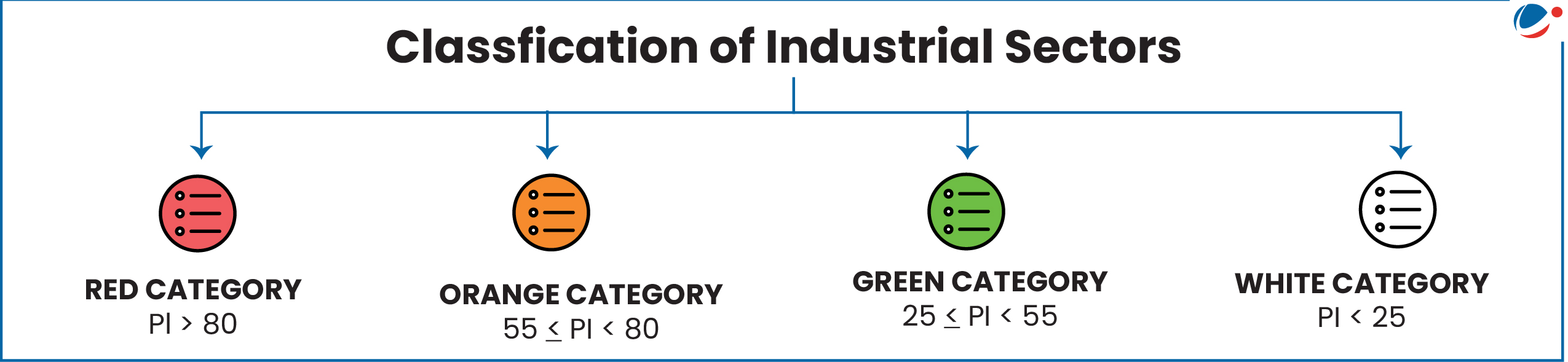
Classification of industrial sectors
- CPCB developed a Pollution Index (PI) -based scoring methodology to classify industrial sectors, guided by the Precautionary Principle.
- PI evaluates potential for water pollution, air pollution, and Waste generation.
ICGS Samudra Pratap, India’s first indigenously designed Pollution Control Vessel (PCV), was commissioned in Goa.
- It is first of two PCVs being built by Goa Shipyard Limited (GSL).
- Largest ship in the Indian Coast Guard (ICG) fleet.
- It is equipped with advanced pollution detection systems, dedicated pollution response boats, pollution control laboratory and modern firefighting capabilities.
Article Sources
1 sourceUnion Environment Minister announces 2 New Wetlands to India's Ramsar List.
- The total wetlands in India is now 98 under the Ramsar Convention.
About Patna Bird Sanctuary
- It is a protected sanctuary in Etah district in Uttar Pradesh. It was founded in 1991.
- It is the smallest bird sanctuary in Uttar Pradesh.
- It inhabits Aquatic birds e.g. Lesser Whistling-Duck, Graylag Goose, Comb Duck, Ruddy Shelduck, Gadwall, Eurasian Wigeon, Indian Spot-billed Duck, Northern Shoveler, Northern Pintail.
About Chhari-Dhand Wetland Reserve
- Located on the edge of arid Banni grasslands and marshy salt flats of Rann of Kutch in Kutch district of Gujarat.
- Chhari means "salty" and Dhand means "shallow wetlands" in kutchi language.
- Home of endangered species: Dalmatian Pelican, Oriental Darter, Black-necked Stork, and Indian Skimmer.
- Area is also famous for "Chir Batti" or ghost lights, an unexplained glowing phenomenon seen on dark nights across the Banni grasslands.
Article Sources
1 sourcePrime Minister recently inaugurated the Kaziranga Elevated Corridor Project designed to ensure safe wildlife movement across the Kaziranga National Park.
About Kaziranga National Park (KNP)
- Location: Between the Brahmaputra River and the Karbi (Mikir) Hills in Assam.
- Status: National Park, Tiger Reserve, Important Bird Area (IBA), and UNESCO World Heritage Site (1985).
- An important area for migratory birds as it is located at the junction of the Australasia and Indo-Asian flyway.
- Biodiversity found: Tigers, elephants, swamp deer, wild buffalo, etc.
- Largest population of Indian one-horned rhinoceros found here.
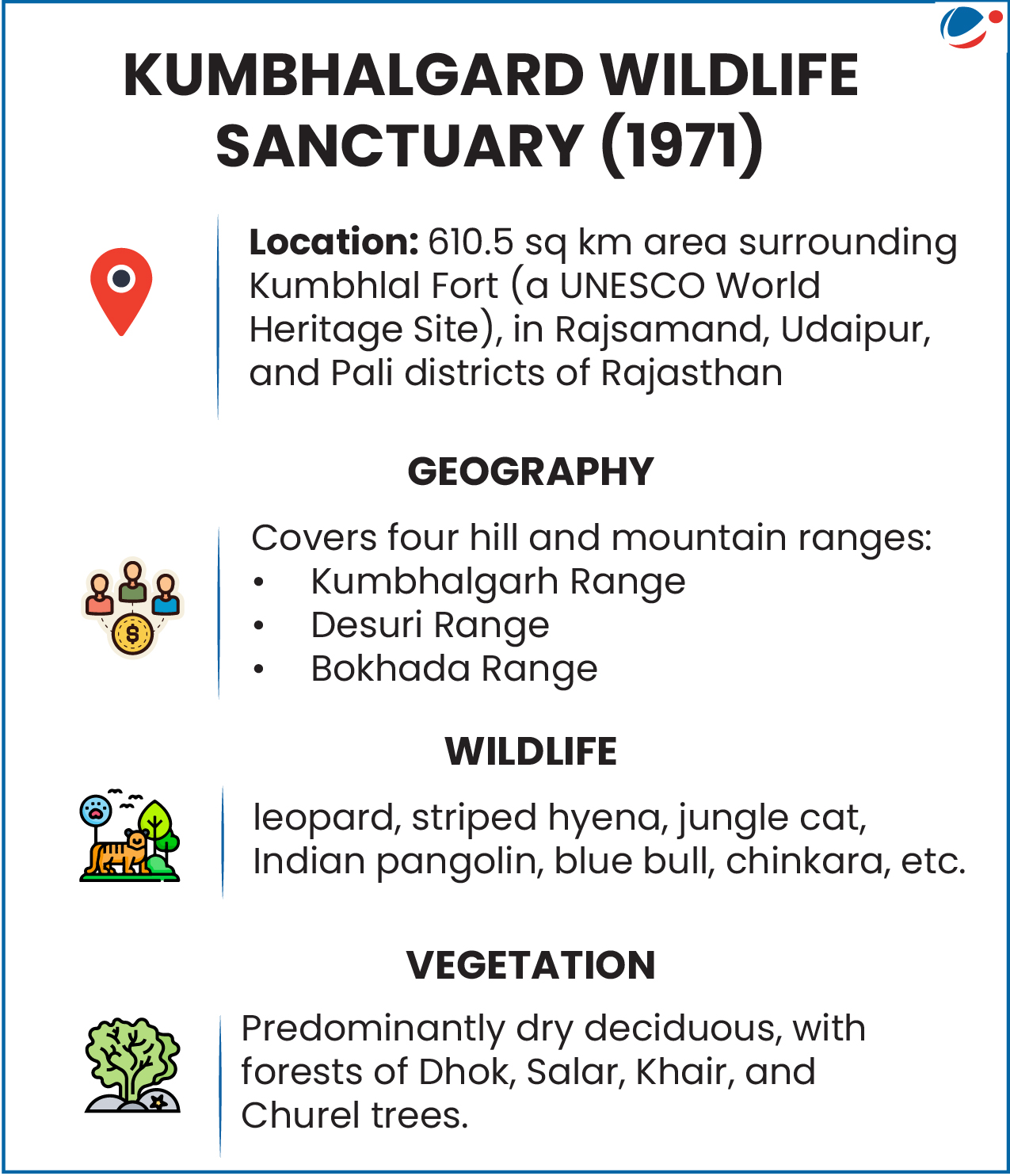
The Ministry of Environment, Forest and Climate Change has issued a notification declaring Kumbhalgarh Wildlife Sanctuary as an Eco-Sensitive Zone (ESZ).
- ESZs are notified under the Environment (Protection) Act, 1986 by the central government as a "transition zone" from areas of high protection to areas involving lesser protection.
- It is generally declared around 10 Km area, but can vary for each site as per the notification.
Andhra Pradesh Government would develop a satellite launching facility as part of the Space City project on the Hope Island (part of Coringa Wildlife Sanctuary).
About Hope Island
- Relatively young island, 16-kilometre-long sand spit from the sand carried by waters of Godavari delta.
- Protects Kakinada city from strong storm surges and acts as sort of natural break water providing tranquillity to ships making Kakinada Port one of the safest natural ports.
About Coringa WLS
- Location: East Godavari District of Andhra Pradesh, at the confluence of Godavari River with Bay of Bengal
- Part of Godavari Mangroves, was declared a wildlife sanctuary by Andhra Pradesh in 1978.
The previous nationwide survey (2021–23) recorded an estimated 6,327 riverine dolphins in India.
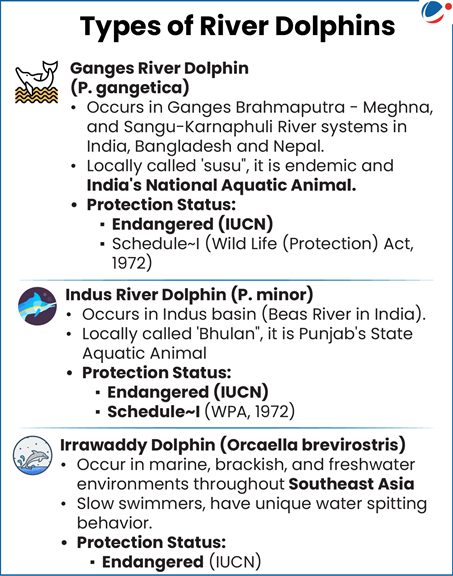
- The ongoing survey will include a new species, Irrawaddy dolphin, in Sundarbans and Odisha, apart from the Gangetic and Indus River Dolphins.
About Project Dolphin
- Launched: 15th August 2020.
- Under Centrally Sponsored Scheme: Development of Wildlife Habitats.
- Aim: To conserve both marine and riverine dolphins, along with associated cetaceans through habitat protection, scientific research, and community awareness.
River Dolphins (superfamily Platinistoidea)
Characteristics:
- Functionally blind, and rely on echolocation to navigate and hunt.
- A long thin snout, rounded belly, stocky body and large flippers.
- As an apex predator, they are key Indicator species of the health of rivers.
Initiatives taken for Conservation of Dolphins:
|
Article Sources
1 source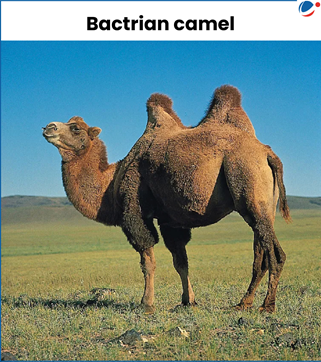
Two Bactrian camels featured in the 2026 Republic Day Parade.
About the Bactrian Camel (Camelus bactrianus)
- Named after Bactria, an ancient Central Asian region, it is large, even-toed ungulate adapted to cold deserts.
- Habitat: Native to the steppes and arid regions of Central Asia (Gobi and Taklamakan deserts).
- About 300-400 exist in India as well, all in the Nubra Valley region of Ladakh.
- Physical Features: Characterized by two humps on its back which store fat.
- Climate Adaptation: Exhibits thick winter fur and tolerance to extreme temperatures ranging from −30°C to 40°C.
- Conservation Status: Endangered by the IUCN.
- The Domesticated Bactrian Camel (Camelus bactrianus) is not considered to be a threatened species.
- However, the Wild Bactrian Camel (Camelus ferus- a distinct species) is Endangered (IUCN).
Amazon’s stingless bees become the first insect to be granted legal rights.
About Stingless Bee (Meliponini)
- Ancient origin: The world's oldest bee lineage, existing for nearly 80 million years.
- Anatomy: They possess stingers, but these are highly reduced and functionally useless for defense.
- Diversity: Nearly 500 species exist globally, with over 170 found specifically within Peru.
- Healing: Their "liquid gold" honey is prized for its potent antibacterial and anti-inflammatory properties.
- Significance: These ancient pollinators sustain 80% of Amazonian flora, including cacao and coffee.
Article Sources
1 sourceScientists have confirmed India’s first case of pufferfish poisoning.
About Freshwater Pufferfish
- They are a diverse group of approximately 30 to 35 species within the family Tetraodontidae that live their entire lives in fresh water.
- Common names: toadfish, patkafish, balloonfish and fugu.
- Distribution: Western Ghats and major basins such as the Ganga, Brahmaputra and Mahanadi.
- Pufferfish are omnivorous and benthic in habitat.
- Uniqueness: Dangerous due to tetrodotoxin (TTX) which is one of the most potent neurotoxins known in nature.
American biologist has been awarded the Tyler Prize for Environmental Achievement for her work on mycorrhizal networks.
- Tyler Prize is also called the "Nobel for the environment".
About mycorrhizal networks
- Definition: These are underground fungal networks in which mycorrhizal fungi connect the roots of multiple plants through hyphae( fungal threads).
- Mycorrhizal fungi form a symbiotic association where plants provide carbohydrates to the fungi, and in return receive enhanced access to water and essential nutrients.
- The underground network of fungi in the forest ecosystem is known as Wood Wide Web.
- Other Ecological Role: They are responsible for drawing down 13 billion tons of CO2 into soil systems every year.
India has become the first country in the world to commercially produce bio-bitumen in road construction.
About Bio-bitumen
- It is an alternative form of bitumen manufactured from organic elements. E.g. agricultural waste, lignin, Bio-char, bio-oil, etc.
- Bitumen is black substance produced through distillation of crude oil, known for its adhesive properties.
- Benefits: Reduced crude oil imports, address the issue of stubble burning, boosting Bio-economy etc.
- It can be used as an addition to bitumen or to reduce the quantity of bitumen in the binder mixture.
- Applications: Paving roads, water proofing etc.
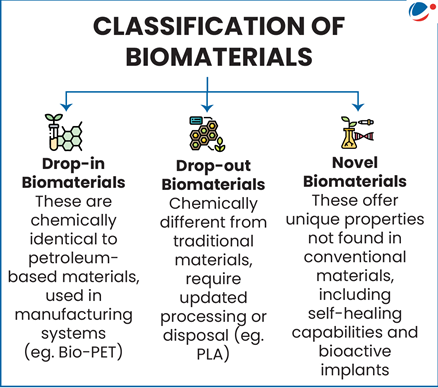
Biomaterials provide sustainable alternatives to traditional, petroleum based products.
About Biomaterials:
- Biomaterials are materials derived entirely or partially from biological sources or created through biological processes.
- Applications: Bioengineering/Biomedicine, Packaging, Agriculture, Healthcare, Textiles etc.
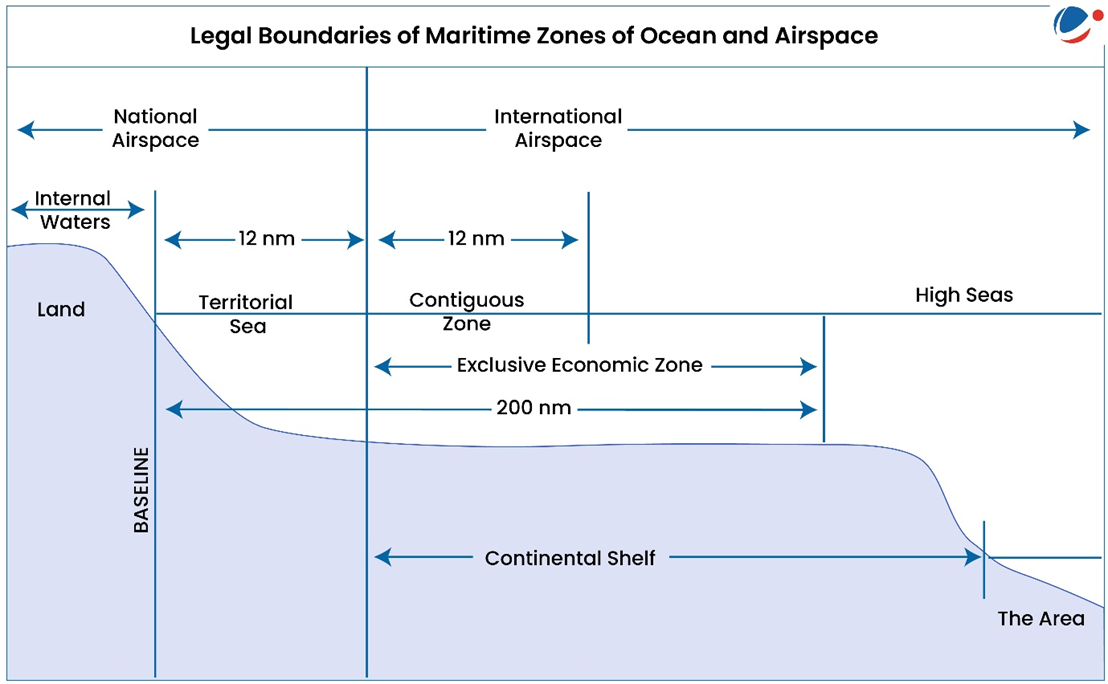
Officially known as the Biodiversity Beyond National Jurisdiction (BBNJ) Agreement, the legally binding UN treaty covers the ocean zones that lie beyond national waters (namely, the “high seas”) and the international seabed area.
- These regions are global common oceans open to all for purposes such as navigation, overflight, laying submarine cables, pipelines etc. and make up over two-thirds of the ocean’s surface.
About BBNJ Agreement
- Adopted in 2023 by the Intergovernmental Conference on Marine Biodiversity of Areas Beyond National Jurisdiction convened under the auspices of the United Nations.
- It becomes third implementing agreement to UNCLOS, in addition to 1994 Part XI Implementation Agreement and 1995 UN Fish Stocks Agreement.
- Objective: Ensure the conservation and sustainable use of marine biological diversity of areas beyond national jurisdiction (ABNJ).
- It addresses four main issues:
- Marine genetic resources, including the fair and equitable sharing of benefits
- Measures such as area-based management tools, including marine protected areas
- Environmental impact assessments
- Capacity-building and the transfer of marine technology
- It establishes a funding mechanism and sets up institutional arrangements, including a Conference of the Parties, a Clearing-House Mechanism and a secretariat.
- Members: 83 nations have ratified the treaty. India signed the agreement but is yet to ratify.
Article Sources
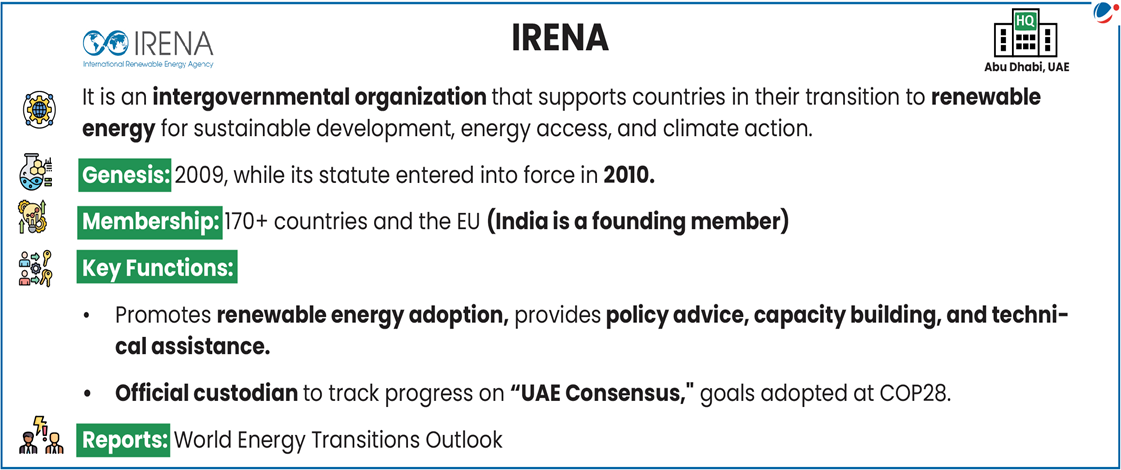
1 sourceThe sixteenth session of the International Renewable Energy Agency (IRENA) Assembly concluded in Abu Dhabi, UAE with adoption of IRENA’s Medium-term Strategy 2023-2027 Evaluation and Work Programme.
- IRENA and International Labour Organization (ILO) jointly released Renewable Energy and Jobs – Annual Review 2025 prior to the assembly session.
Key highlights of the report
- Global renewable energy (RE) employment (2024): 16.6 million jobs (highest in Solar photovoltaic sector) dominated by China.
- India related findings:
- RE Employment: 1.3 million jobs (7.7% global share); 2nd in Solar photovoltaic and Hydropower employment (after China); 4th globally in Liquid biofuels and Wind employment.
- Solar Manufacturing: Holds 4.8% share of global PV module manufacturing.
- Gujarat is the leading state for module manufacturing with 42% of capacity, followed by Tamil Nadu (11%).
Article Sources
1 sourceThe EU implemented the world’s first carbon tax (CBAM) from January 1, 2026, imposing a carbon-related levy on imports of carbon-intensive goods.
About Carbon border adjustment mechanism (CBAM)
- It is the European Union’s (EU) policy to impose a carbon tax on imports of certain products from countries with less stringent climate policies. E.g. Steel.
- CBAM, implemented in 2023, moves from transitional phase to full enforcement by 2026.
- Objective: Prevent Carbon Leakage by stopping firms from shifting production to countries with weaker climate rules.
- Sectors Covered: Cement, aluminium, fertilisers, iron and steel, hydrogen and electricity.
- Trade Impact: Indian exports of steel, aluminium, cement may face higher costs.
The change was enacted by amending the consolidated guidelines of the Van (Sanrakshan Evam Samvardhan) Adhiniyam, 1980 (formerly the Forest Conservation Act).
Key Amendments
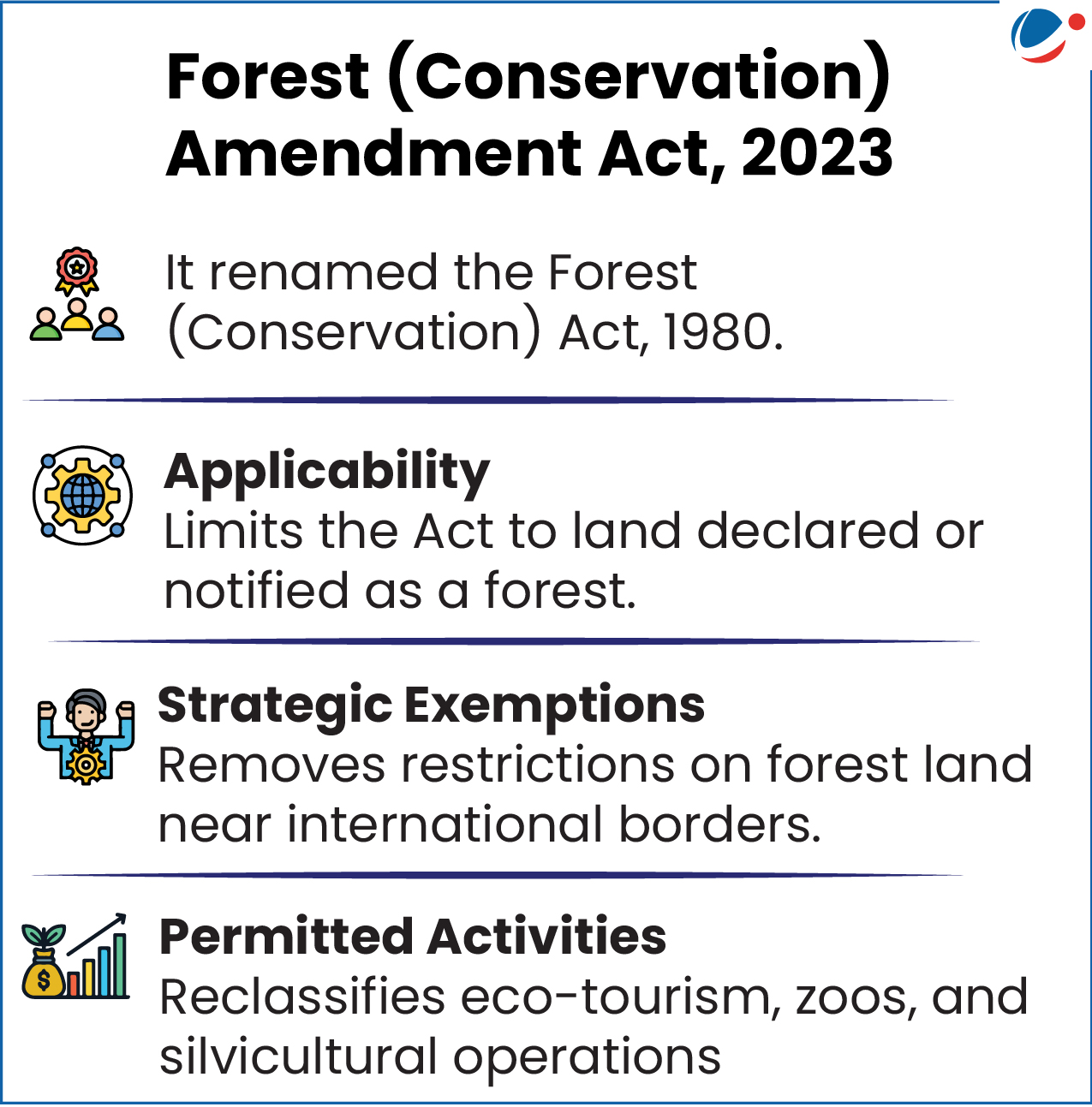
- It allows assisted natural regeneration including afforestation/plantation, carried out by Government or non-Government entities to be treated as “forestry activities”.
- Consequently, on such activities, the requirements of Compensatory Afforestation and payment of Net Present Value (NPV) shall not be applicable to such activities.
- Compensatory Afforestation (CA): CA means afforestation done in lieu of diversion of forest land for non-forest purposes.
- It compensates the loss of 'land by land' and loss of 'trees by trees' and is done on non-forest land.
- Net Present Value (NPV): NPV is a mandatory fee intended to compensate for the loss of ecosystem services like carbon sequestration, water recharge, and biodiversity.
- Funds collected towards CA and NPV are deposited in State Compensatory Afforestation Fund Management and Planning Authority (CAMPA), established under the Compensatory Afforestation Fund (CAF) Act, 2016.
- Compensatory Afforestation (CA): CA means afforestation done in lieu of diversion of forest land for non-forest purposes.
- State government can devise a framework for utilization of such plantations and for revenue sharing.
A new digital platform, Atlas of Climate Adaptation in Indian Agriculture (ACASA-India) has been launched to help farmers plan for climate challenges.
- It has been developed by ICAR-led National Agricultural Research and Extension System (NARES) in collaboration with Borlaug Institute for South Asia (BISA) –CIMMYT to support location-specific, data-driven adaptation planning for climate resilient agriculture.
- Insights from ACASA-India would help government agencies determine future investment requirements for climate risk mitigation and scaling opportunities.
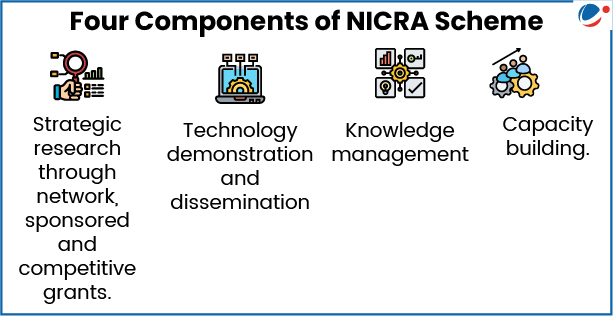
About National Innovations in Climate Resilient Agriculture (NICRA)
- Launched by: Indian Council of Agricultural Research (ICAR) in 2011.
- Objective:
- To enhance resilience of Indian agriculture to climate change and vulnerability
- To validate and demonstrate climate resilient technologies on farmer’s fields.
What is Climate Resilient Agriculture (CRA)?
- It refers to adopting adaptation and mitigation practices in agriculture to enhance system’s ability to withstand climate shocks and recover quickly.
Need for CRA
- Preventing Yield loss: Climate change can reduce yields by 4.5 to 9.0% resulting in around 1.5% GDP loss per year.
- Protecting Livelihoods: Around 57% of rural households depend on farming for income.
- Rainfed Area Vulnerability: 51% of India’s net sown area is rainfed, producing ~40% of food, making it highly sensitive to climate variability.
- Food security: India faces increased issues of undernourishment, child malnutrition, micronutrient deficiency etc.
Article Sources
1 sourceUnion Ministry of Environment, Forest and Climate Change has notified the Environmental (Protection) Fund Rules, 2026 to streamline use of the Environmental Protection Fund.
About Environmental Protection Fund
- Legal Basis: Constituted under Section 16 of the Environment (Protection) Act, 1986, in the Public Account of India.
- Corpus: Accumulates fines under Air (1981), Water (1974), and Environment (1986) Acts.
- Allocation: 75% of funds are remitted to States/UTs, while 25% is retained by the Centre.
- Utilization: Earmarked for monitoring networks, remediation of contaminated sites, and R&D in clean technology.
- Oversight: Managed by a Project Management Unit and audited by the CAG.
- Institutional Capacity: Finances the strengthening of regulatory bodies like CPCB and SPCBs.
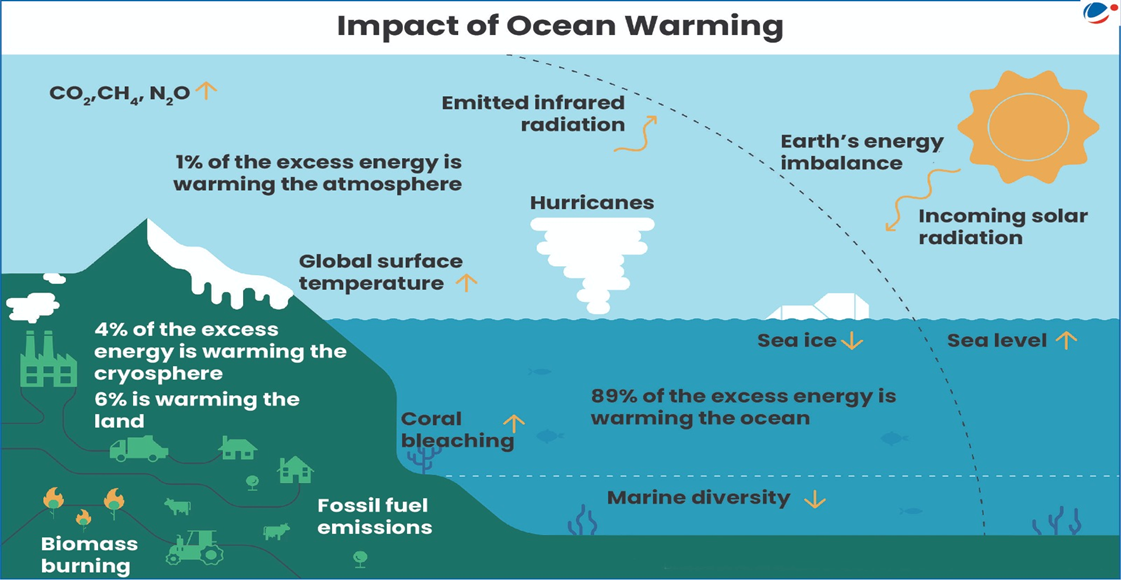
The study highlighted that global ocean warming continued unabated in 2025 in response to increased greenhouse gas concentrations and reductions in sulfate aerosols.
Key Findings of the Study
- In 2025, oceans absorbed additional 23 zettajoules (ZJ) of heat, the highest ever recorded since the 1960s.
- Nearly 90% of excess heat trapped by greenhouse gases is absorbed by the oceans, which confirms oceans as the primary buffer of global warming.
- Global average Sea Surface Temperatures (SSTs) in 2025 were among the highest ever recorded (approximately 0.5°C above the 1981–2010 average).
Major Implications of Ocean Warming
- Increased ocean stratification: Warmer surface waters reduce mixing of water layers, leading to lower oxygen supply to deeper waters, reduced nutrient transport to the surface and decline in ocean productivity.
- Increase in Marine Heat Waves: It can lead to coral bleaching, coral diseases, changes in migration and breeding of marine species etc.
- Intense Storms: Warmer oceans provide more heat and moisture to the atmosphere which can lead to more intense cyclones and hurricanes, bringing heavier rainfall and flooding.
- Threat to Marine Ecosystems: Reduced nutrients threaten phytoplankton, the base of marine food chains.
Article Sources
1 sourceReleased by National Oceanic and Atmospheric Administration, it clearly highlights that the region is warming far faster than the rest of the planet.
Key Highlights

- Arctic Surface Air Temperatures: It was highest on record during the past year (October 2024-September 2025) since 1900.
- The last 10 years are the 10 warmest on record in the Arctic.
- Atlantification: An influx of anomalous water properties and biota from lower latitudes to central Arctic Ocean.
- It weakens the Arctic Ocean stratification enhancing heat transfer, melting sea ice, and threatening ocean circulation patterns.
- Rusting of Rivers: In Arctic Alaska, surface waters have changed from clear to orange in over 200 watersheds due to iron release from thawing permafrost soils, impacting both fishes and water supplies to local communities.
- Greening of the Arctic: First detected in the late 1990s, it is a long-term increase in the productivity and abundance of tundra vegetation.
- It has far-reaching impacts to Arctic landscapes, wildlife habitats, biodiversity, permafrost conditions, and the livelihood of Arctic people.
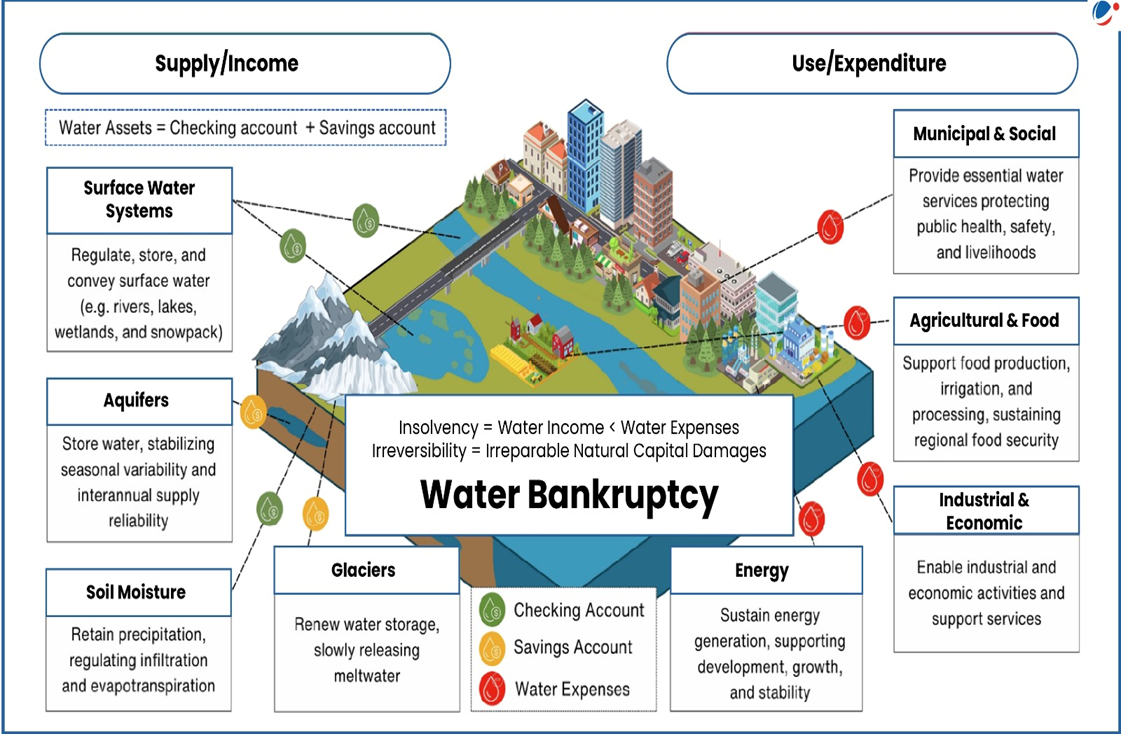
A report by UN University Institute for Water, Environment and Health highlighted that the planet has entered the Global Water Bankruptcy era.
- Water Bankruptcy is a persistent post-crisis condition of human-water system in which long-term water use has exceeded renewable inflows and safe depletion limits, causing irreversible or effectively irreversible degradation.
- Report highlights that parts of the water and natural capital—rivers, lakes, aquifers, wetlands, soils, and glaciers—have been damaged beyond realistic prospects of full recovery.
- In contrast, water stress is a condition of high-water demand relative to supply but impacts are largely reversible and water crisis is where shock-driven disruptions temporarily push water systems beyond capacity but which can be restored through emergency and restoration measures.
Factors leading to Water Bankruptcy
- Slow-onset depletion: Chronic overuse of surface and groundwater slowly degrades storage and quality, with early warning signs ignored until irreversible thresholds are crossed.
- Infrastructure-driven overshoot: Large dams and transfers enable expansion beyond sustainable limits.
- Ecological liquidation: Wetlands, floodplains, forests, and soils are converted or degraded in ways that increase short-term productive capacity while eroding long-term water storage, filtration, and buffering.
- Climate-amplified overshoot: Climate change accelerates existing stress by reducing reliable supply and increasing variability in already overexploited systems.